
EN / JP
At Summer’s End, the Lighthouse Burned Red | Obama, Fukui
Late September, 5:00 a.m.
Takahama Fishing Port, in Takahama on the coast of Fukui Prefecture.
The harbor was still deep in darkness. I walked with only a few small lights to guide me, barely able to see what lay around me. I adjusted the focus of my camera carefully.
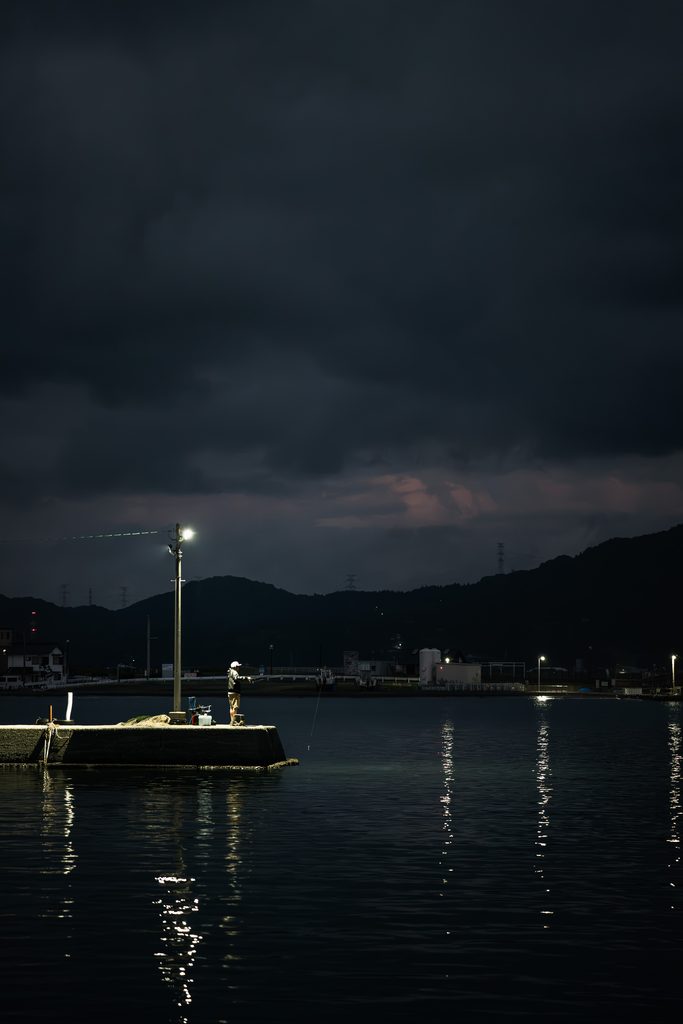
Soon, the sky began to pale beneath the heavy clouds. Several people were already fishing across the wide harbor.
Each time they cast a line, a faint sound carried over the quiet water before dawn.
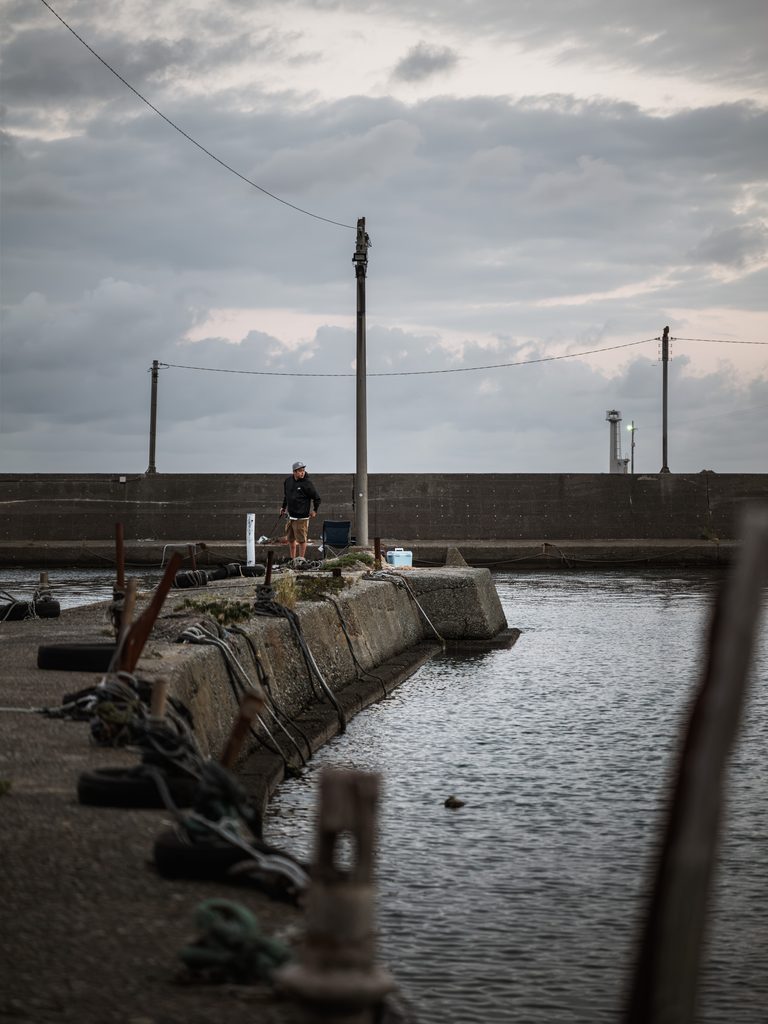
Takahama lies at the western edge of Fukui Prefecture, beside the border with Kyoto. Facing the Sea of Japan, the town has long beaches and several small ports. Here, the sea feels close to everyday life.
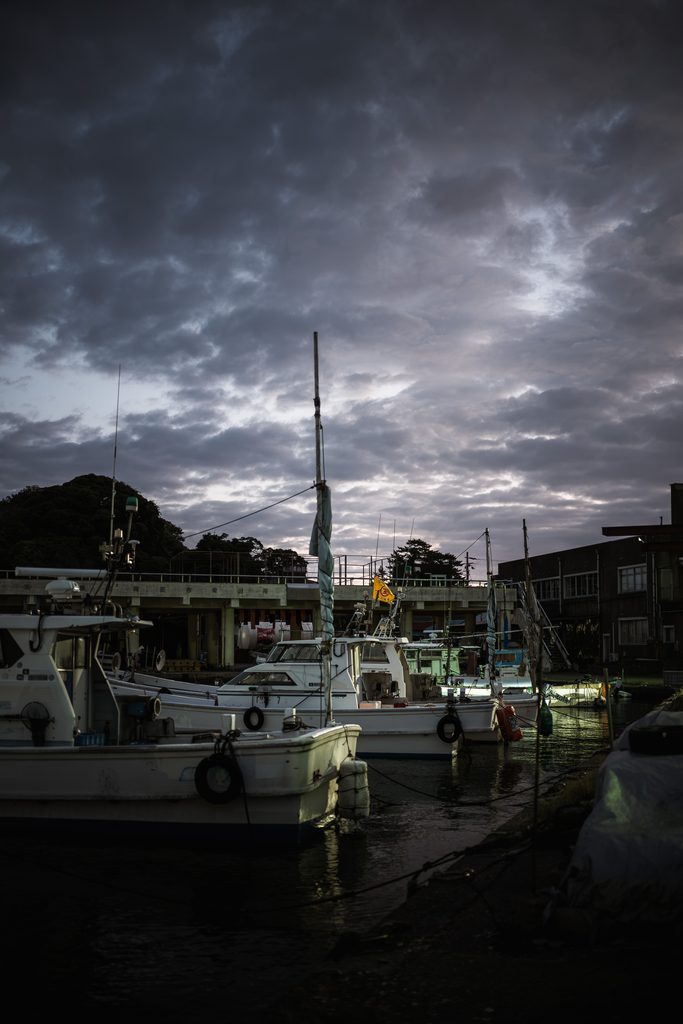
Takahama Fishing Port is one of the places that supports the town’s fishing industry. Bridges lead toward Takashima and Inashima, and the surrounding area is also popular with anglers. That morning, people were fishing throughout the harbor.
It was a holiday.
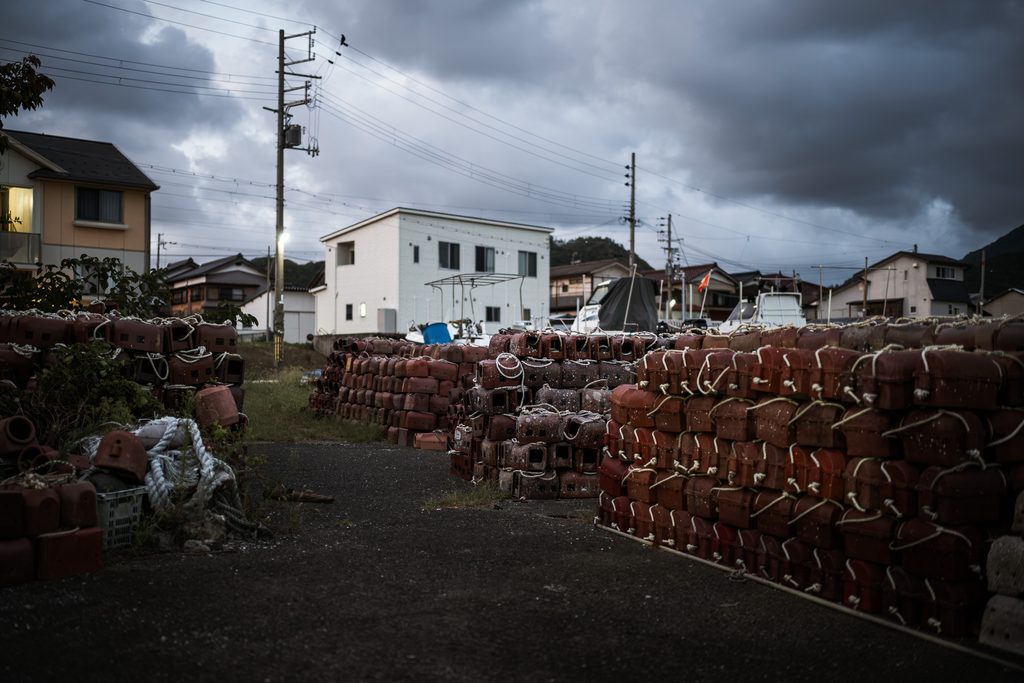
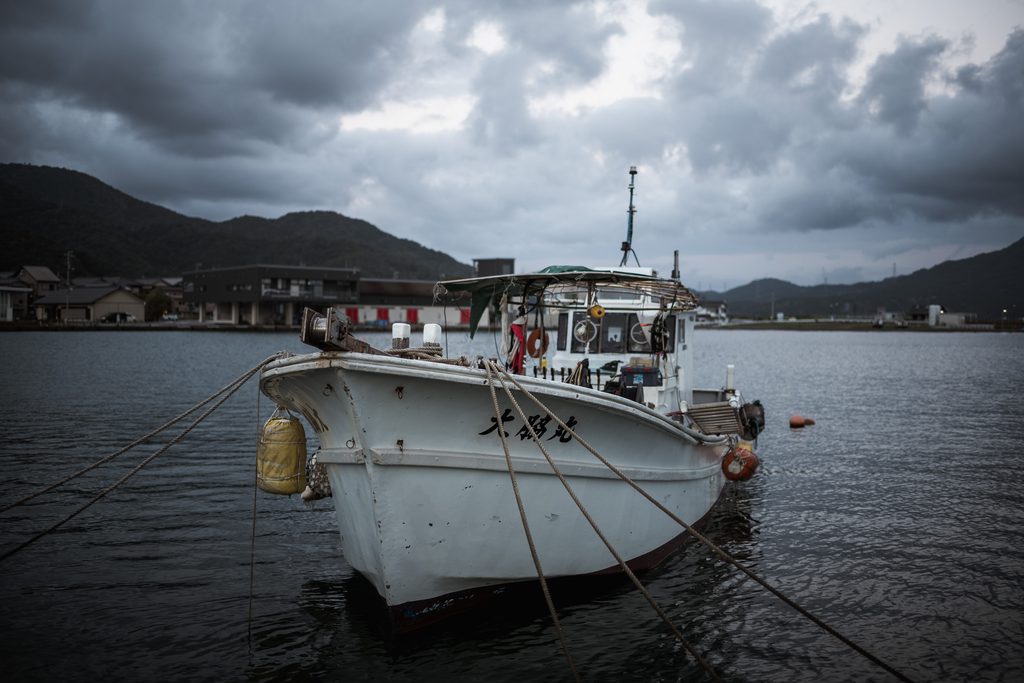
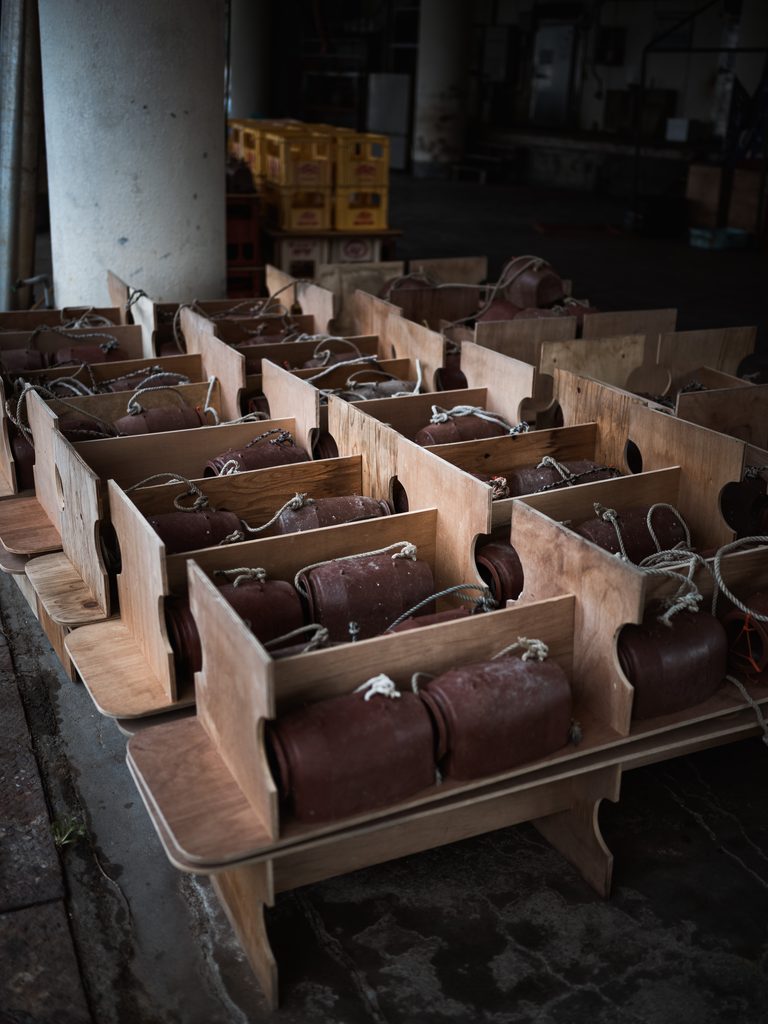
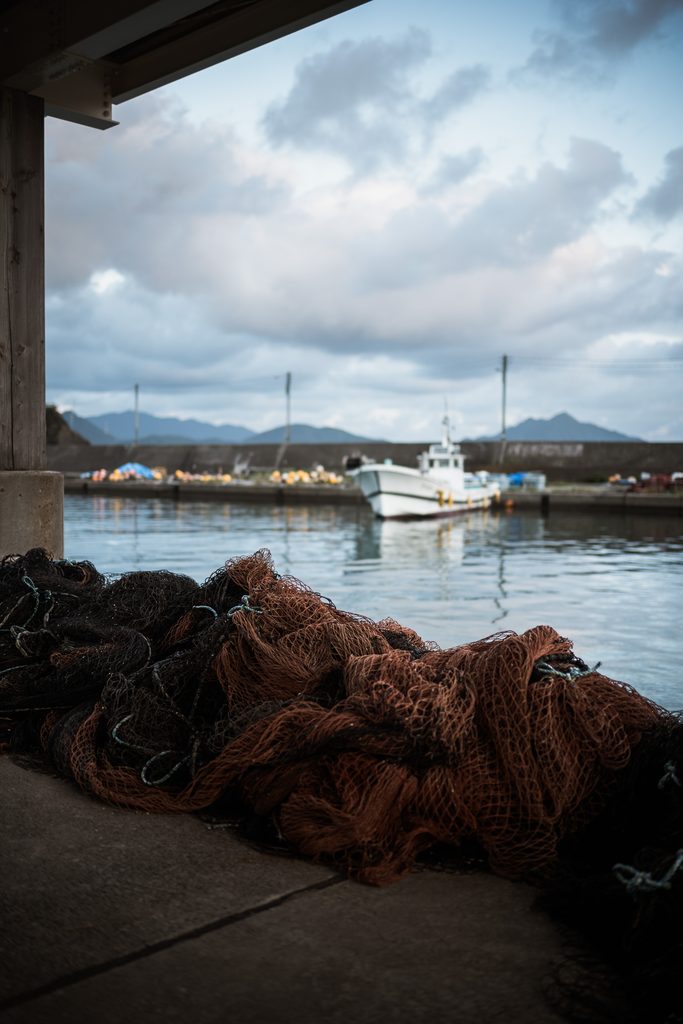
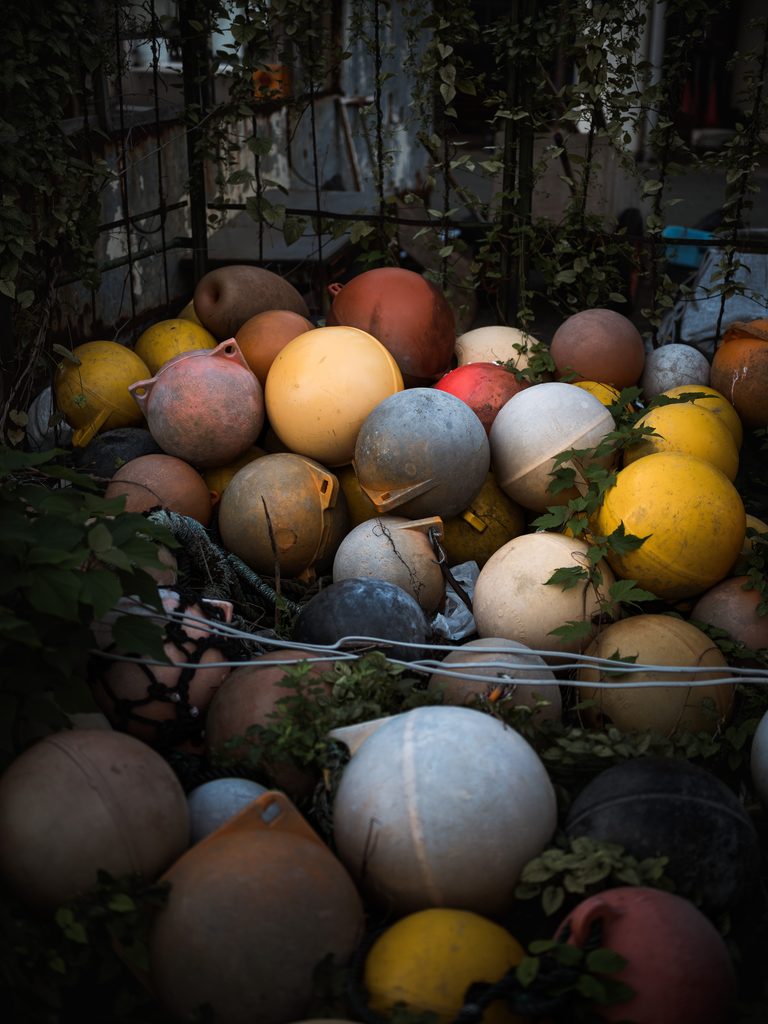
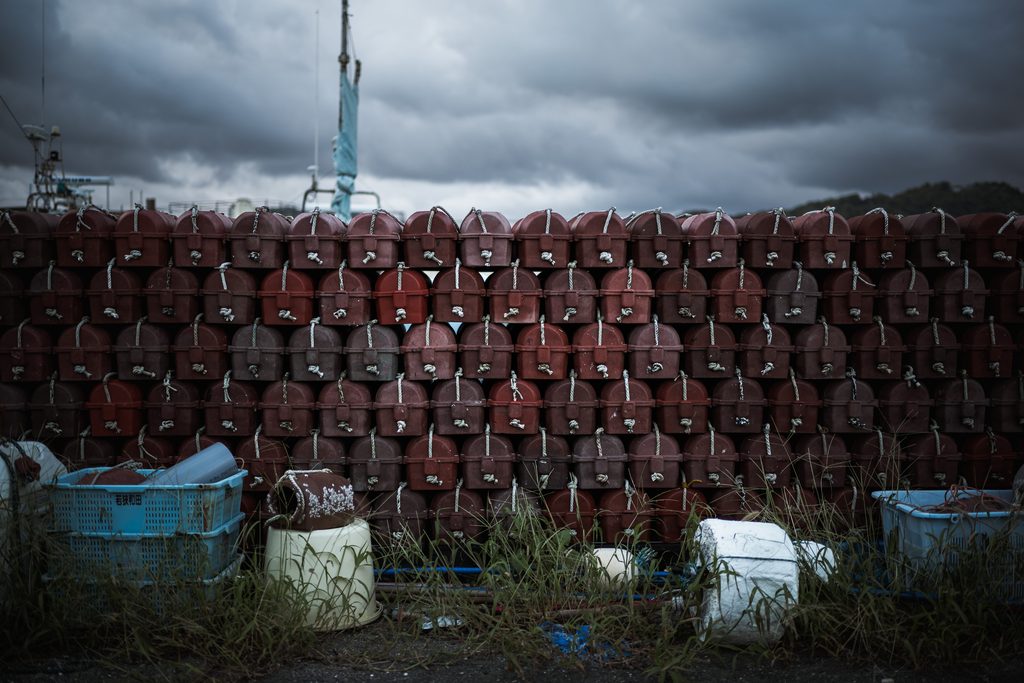
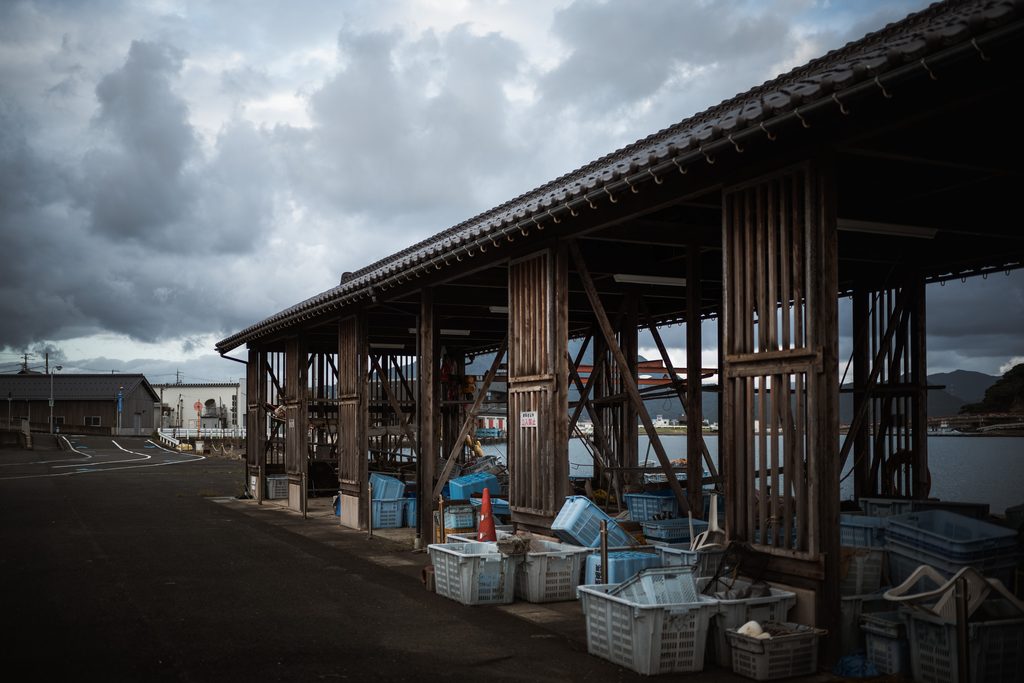
No one seemed to be working at the port, but the equipment left behind held clear traces of the work carried out there.
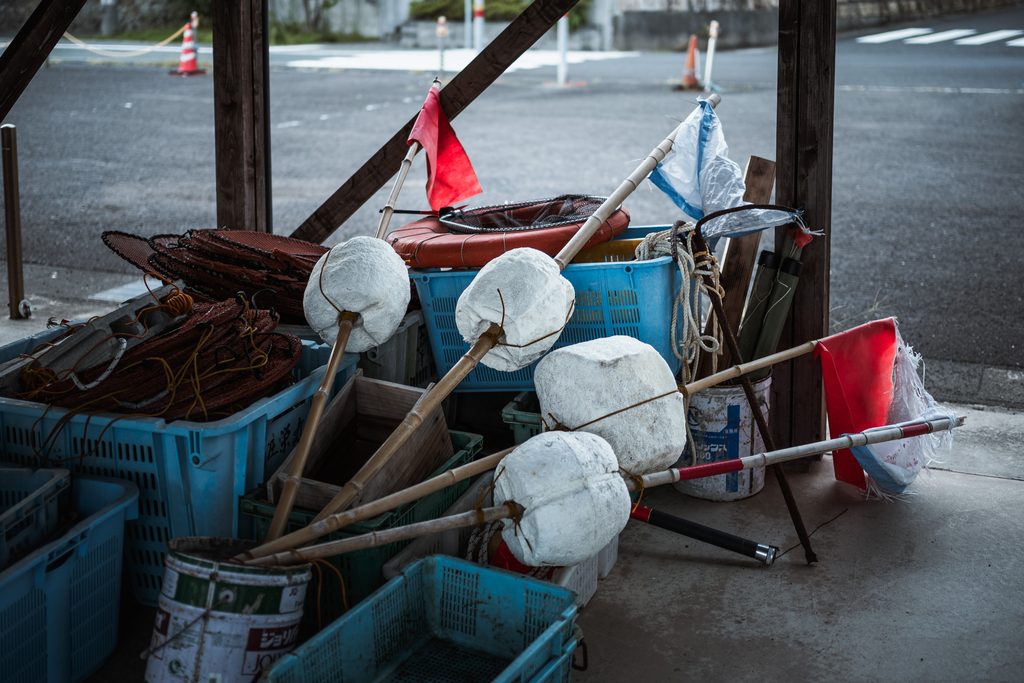
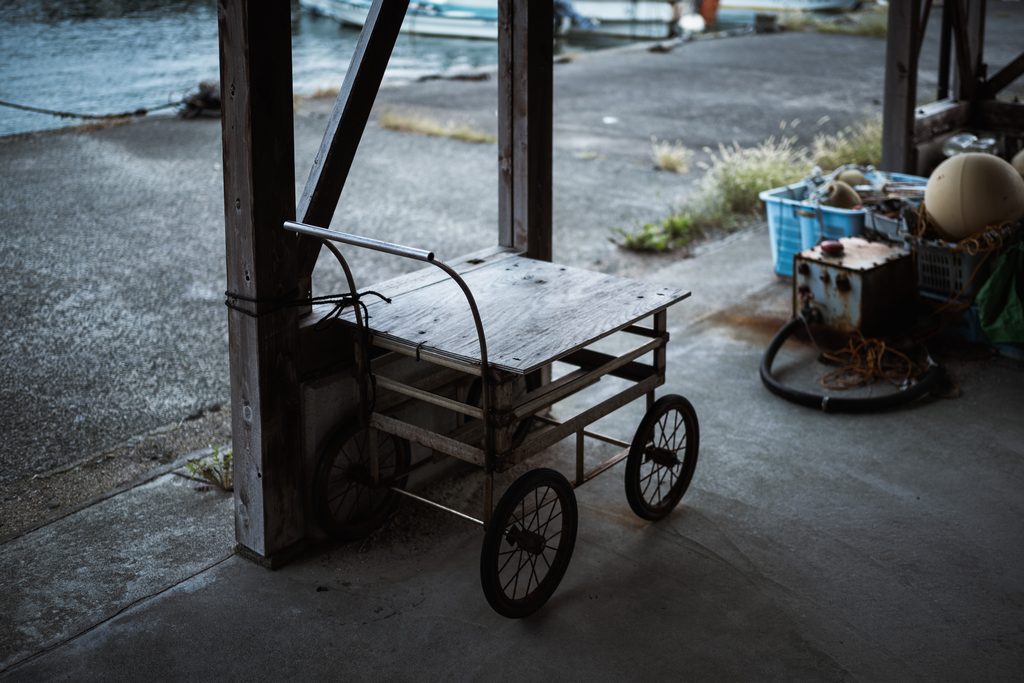
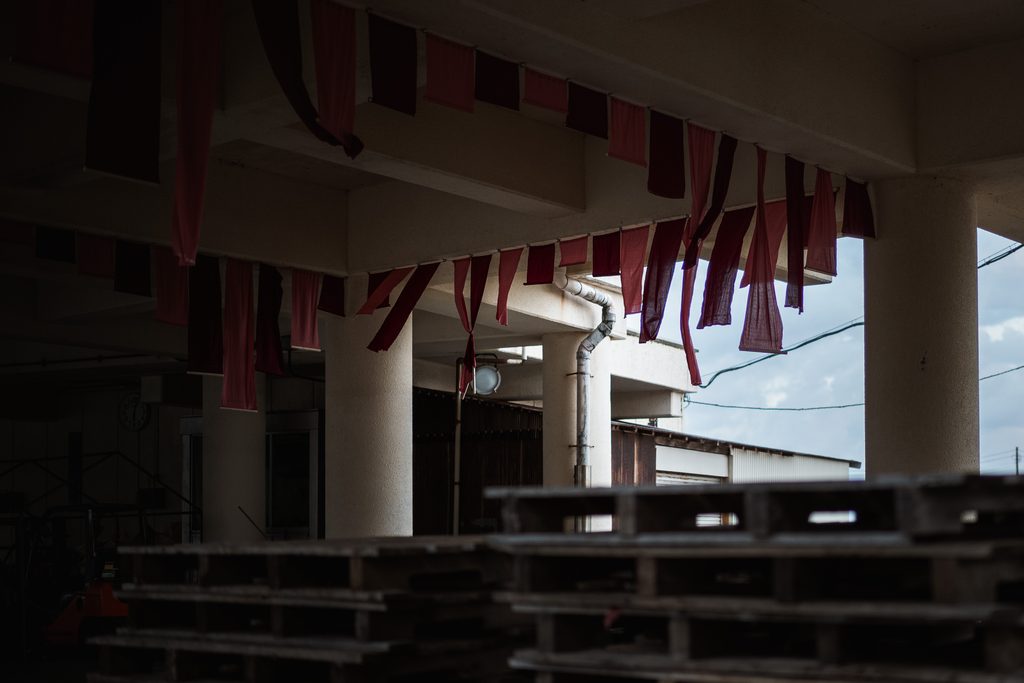
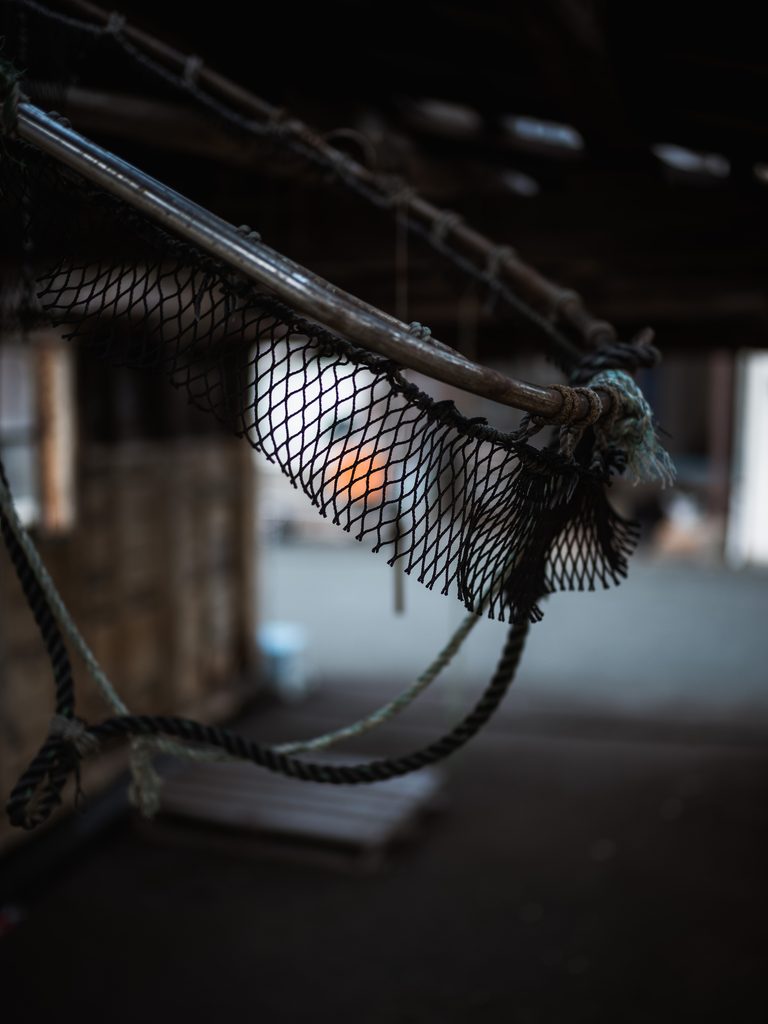
Floats and nets shaped by years of use remained in the corners of the harbor.
Some had been left in loose piles. Others were arranged carefully, one after another.
They were nothing more than practical tools. Even so, I found something artistic in their colors, shapes, and the ways they overlapped.
As the sky grew brighter, more people began to pass through the harbor.
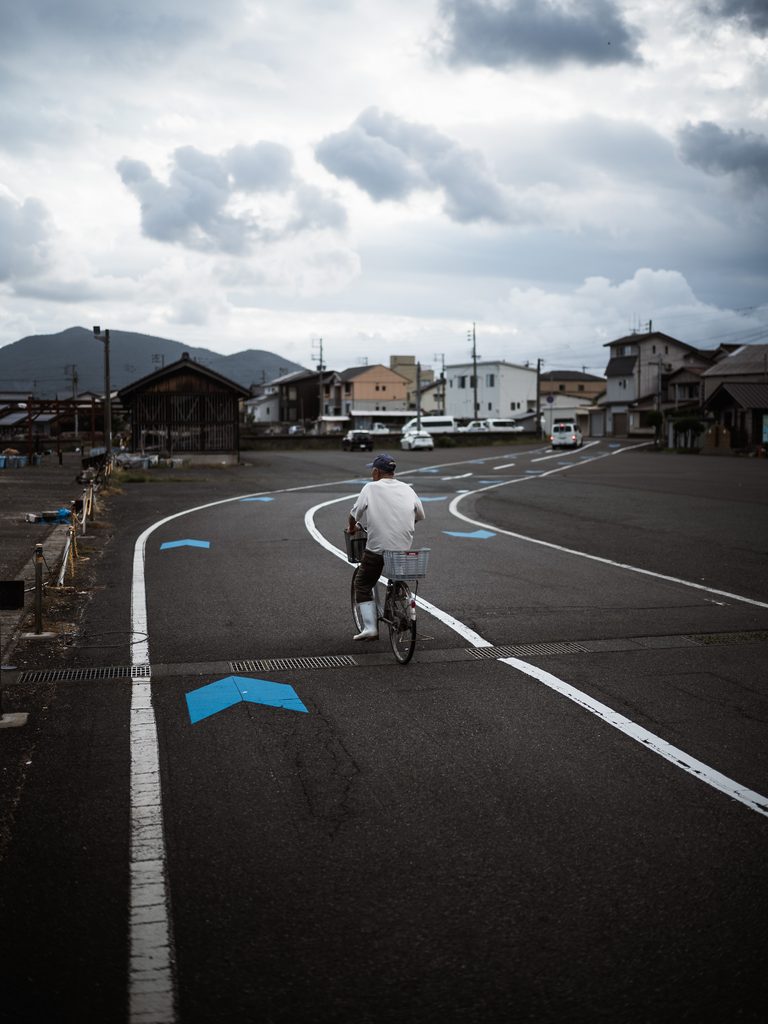
A man on a bicycle appeared from the neighborhood behind the port and rode past me.
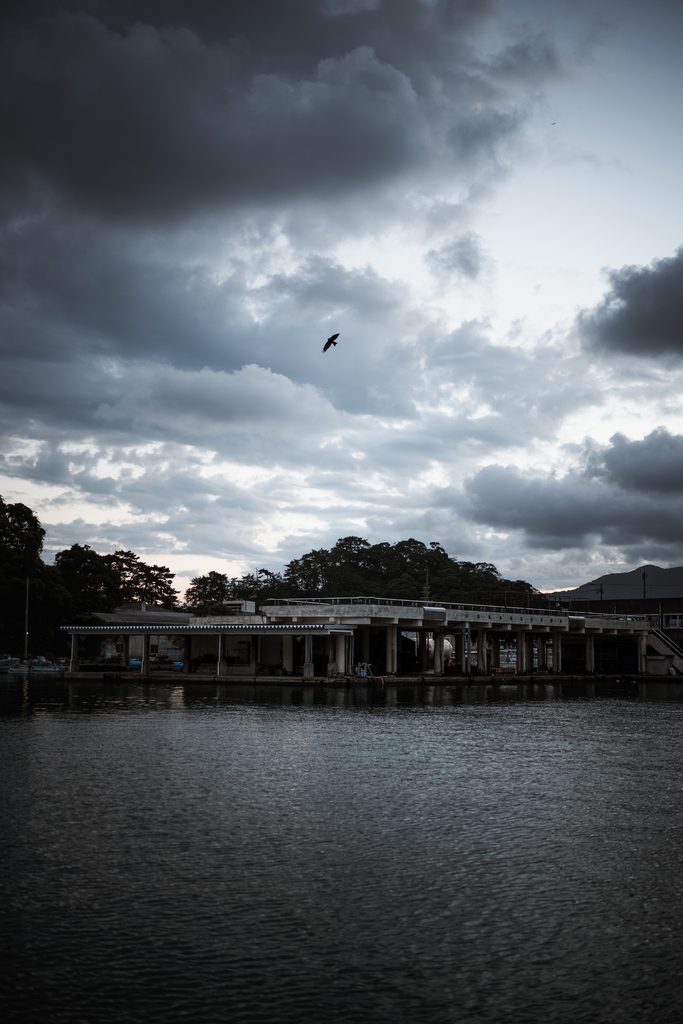
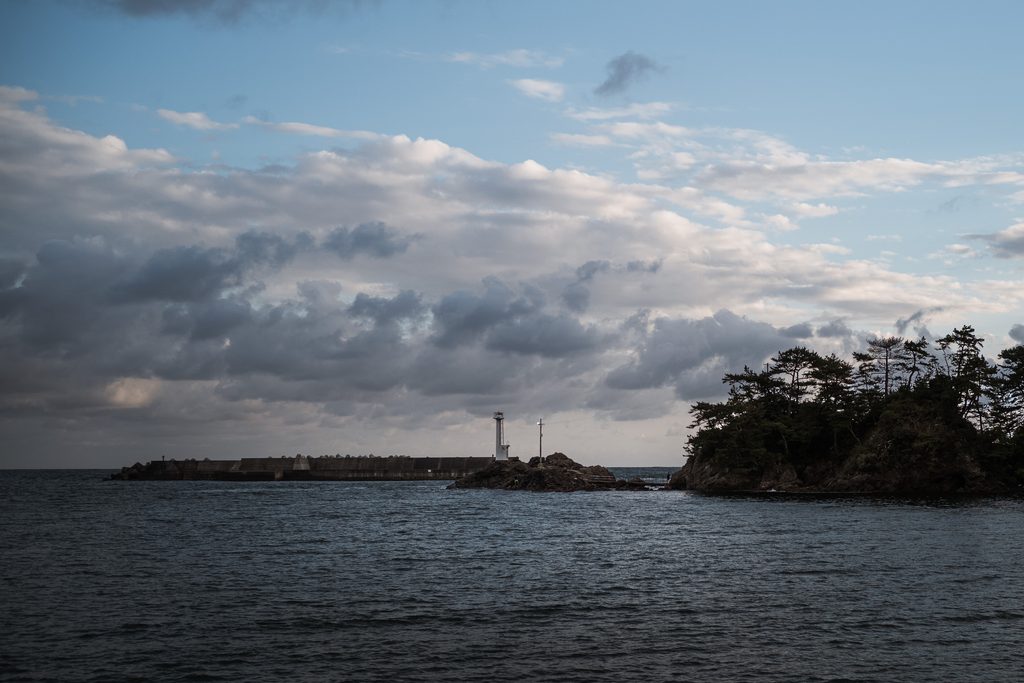
Beyond the wooden shelters filled with fishing equipment, I could see the sea and a small lighthouse.
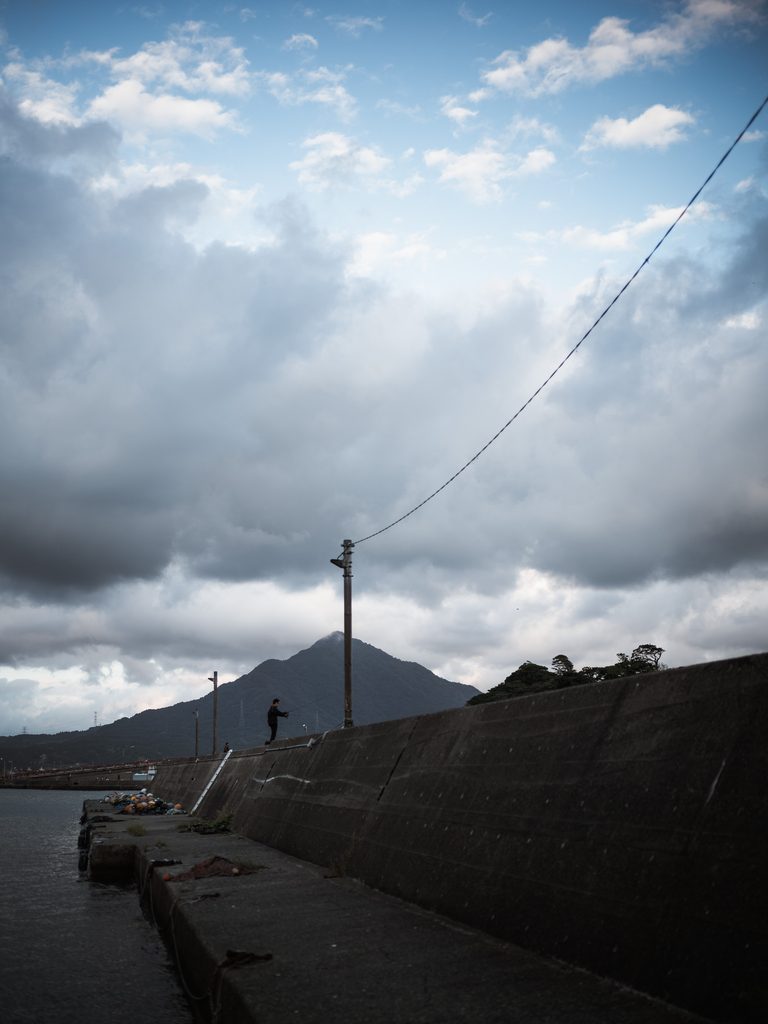
Two fishermen carrying rods crossed the bridge toward Inashima.
They had little luggage and walked with the easy steps of people who knew exactly where they were going.
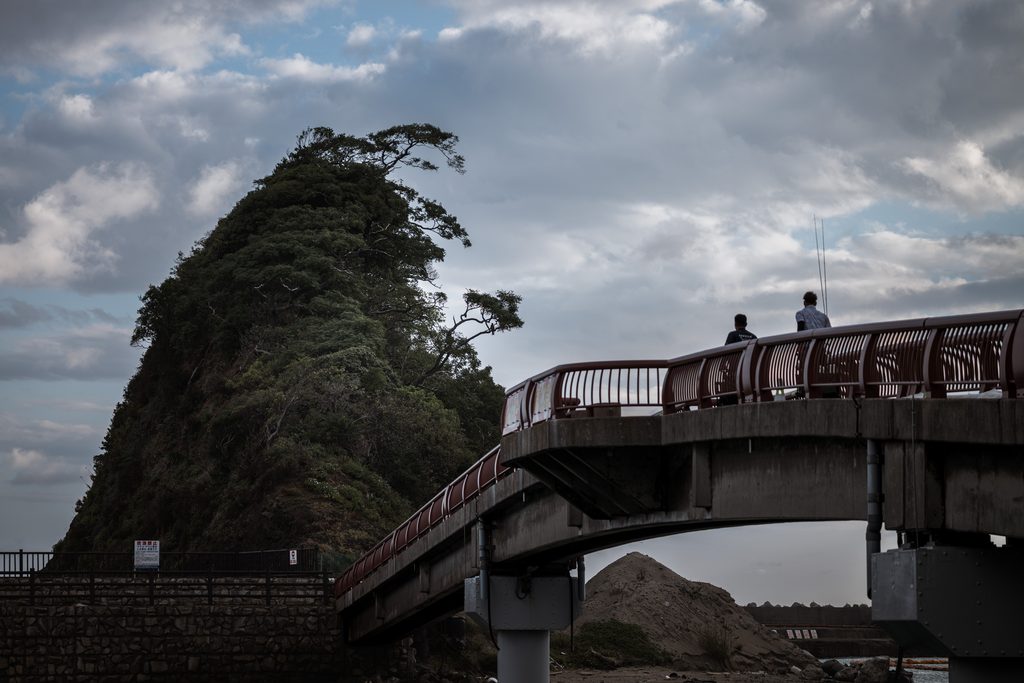
Daily life began just behind the port.
A man watered the ground outside his house. A woman carried laundry. Someone left for an early morning walk. Narrow alleys wound between the houses.
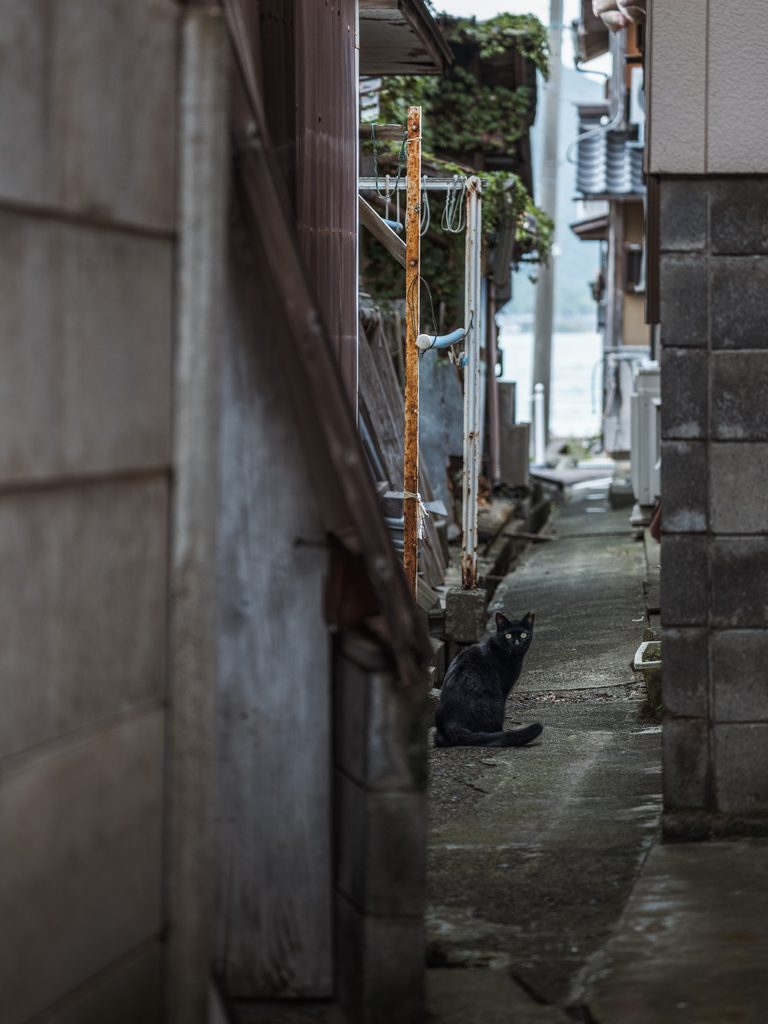
Then a black cat appeared in front of this traveler, still unfamiliar with the town.
It walked ahead, occasionally stopping to look back and wait for me.
The cat seemed to guide me through the quiet morning routines of a town untouched by tourism.
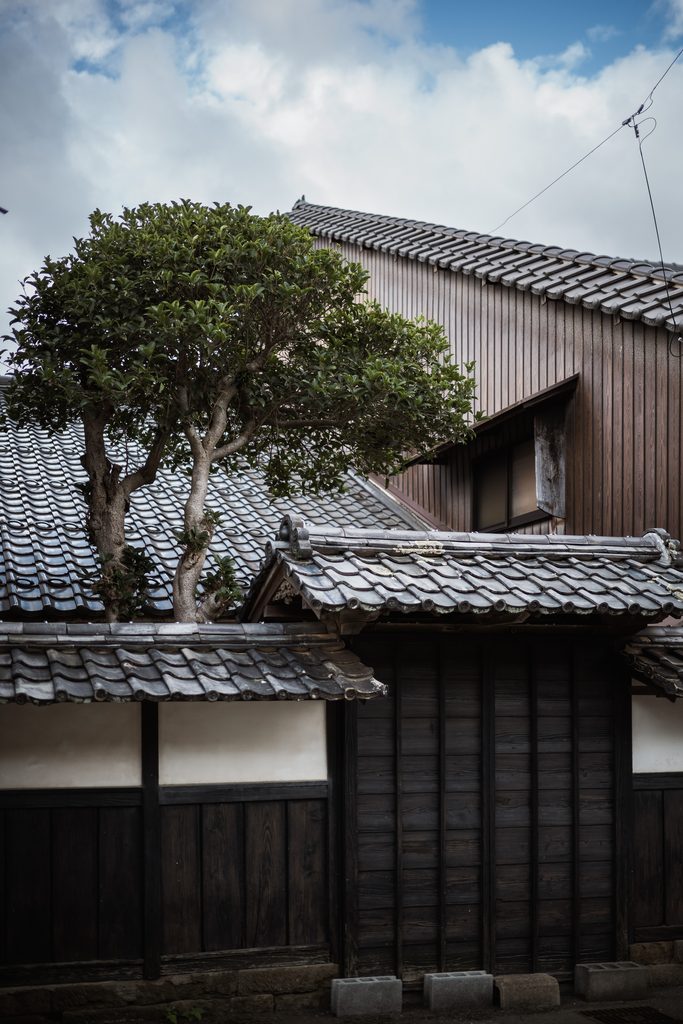
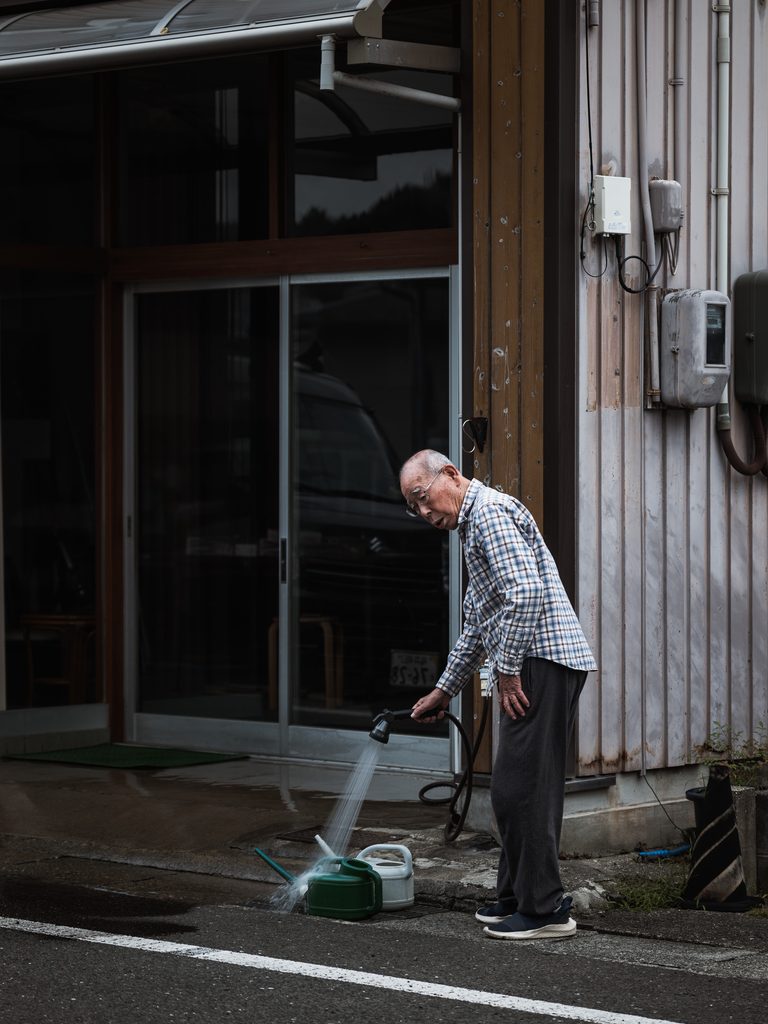
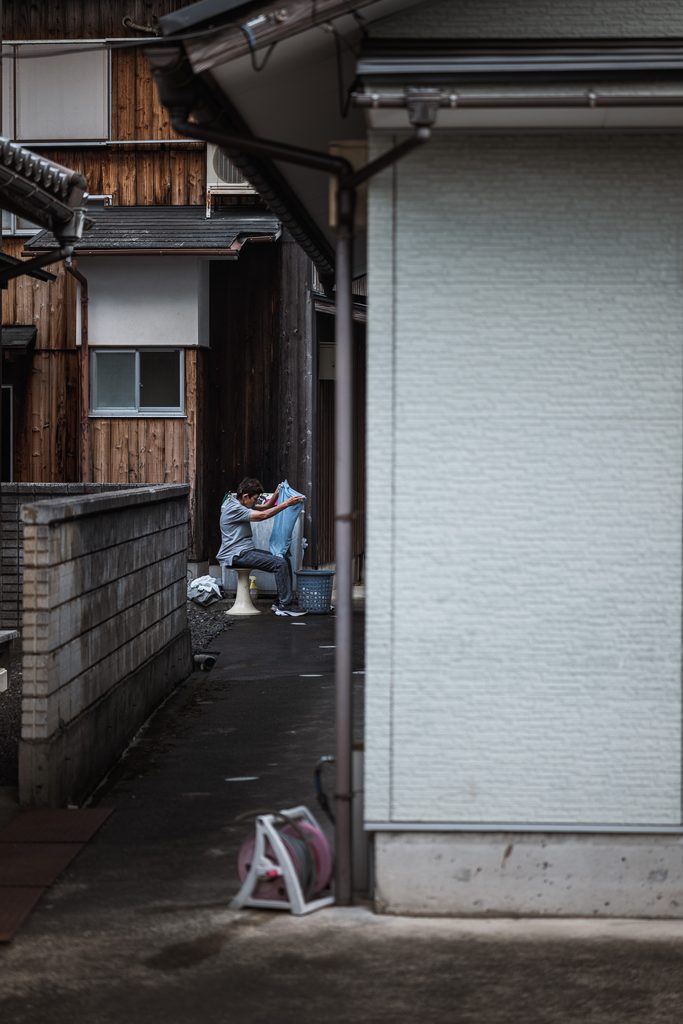
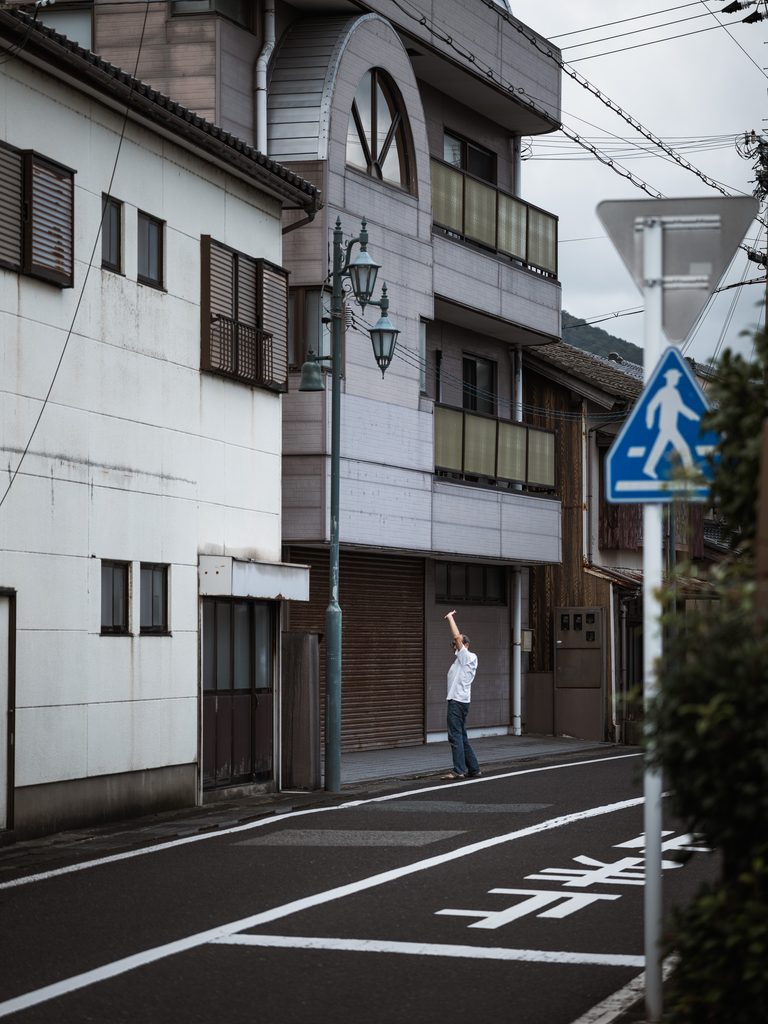
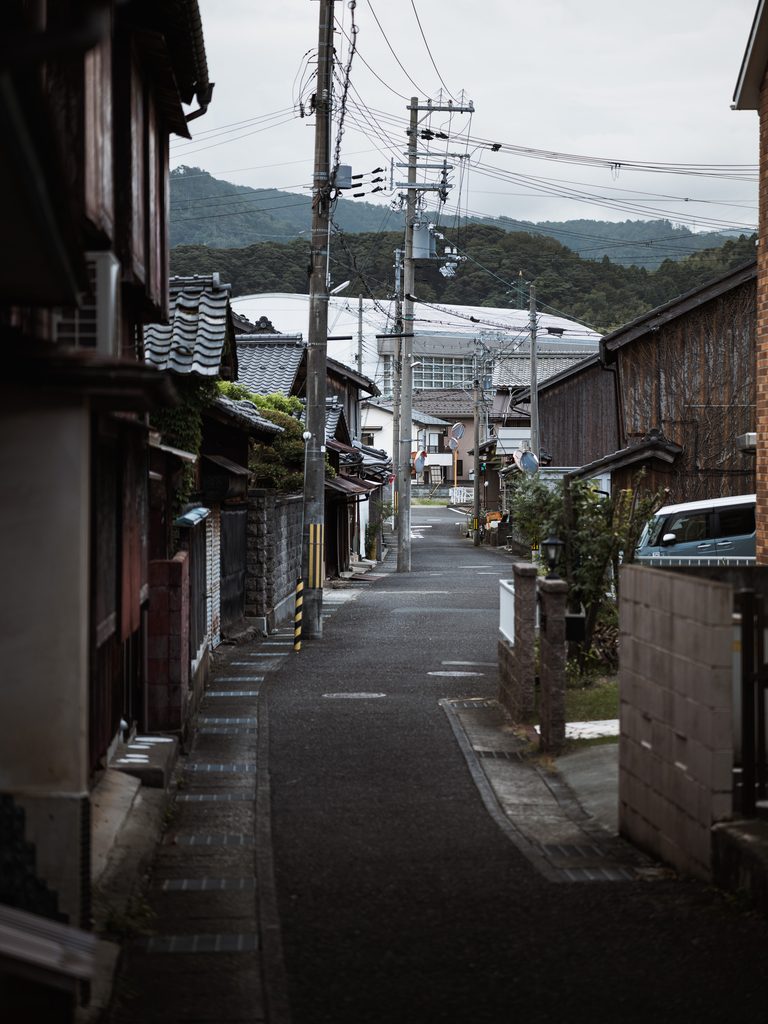
After walking around the neighborhood, I reached the beach.
It was a little after eight in the morning.
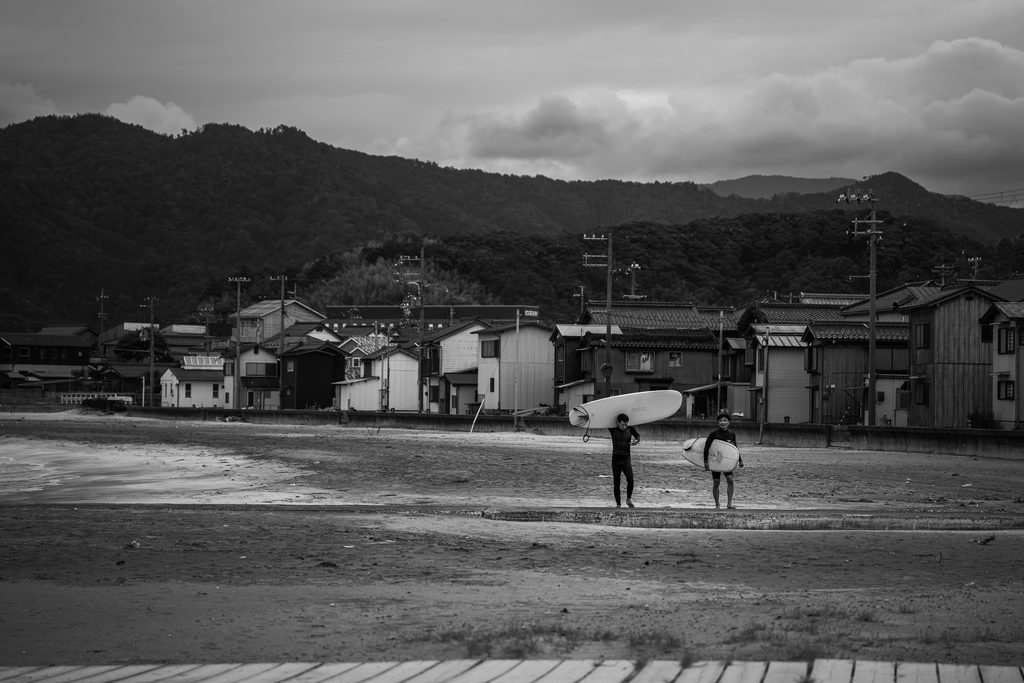
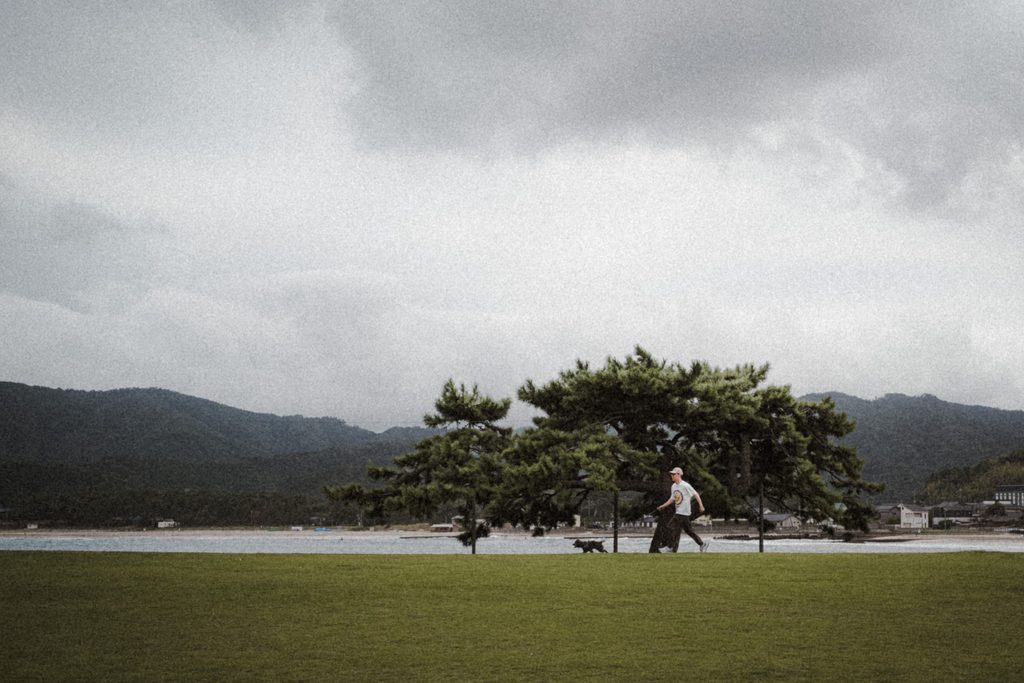
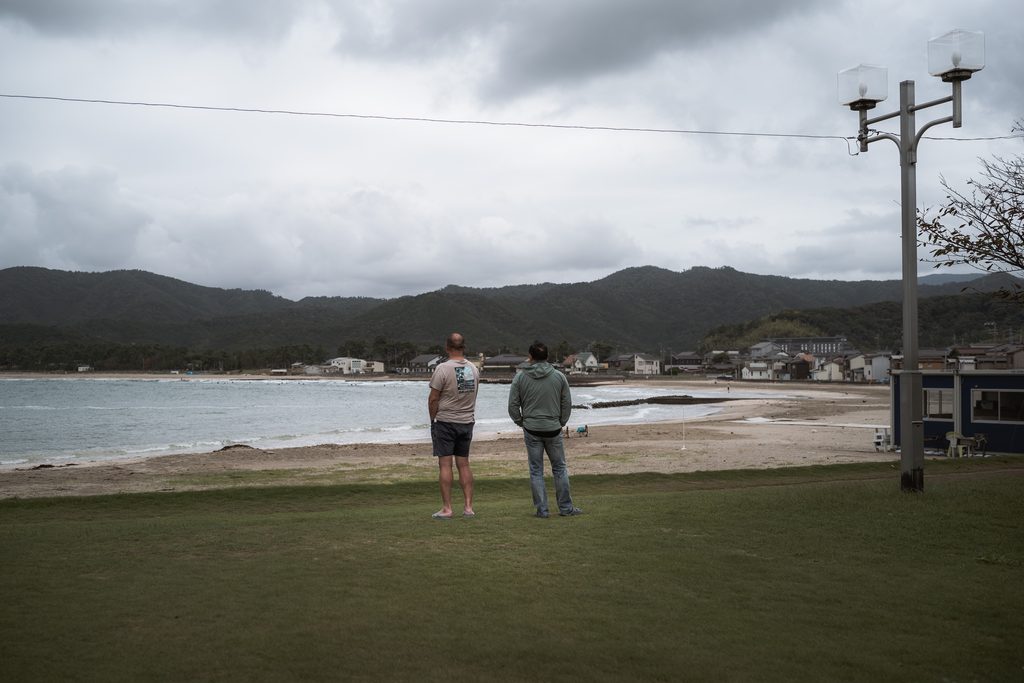
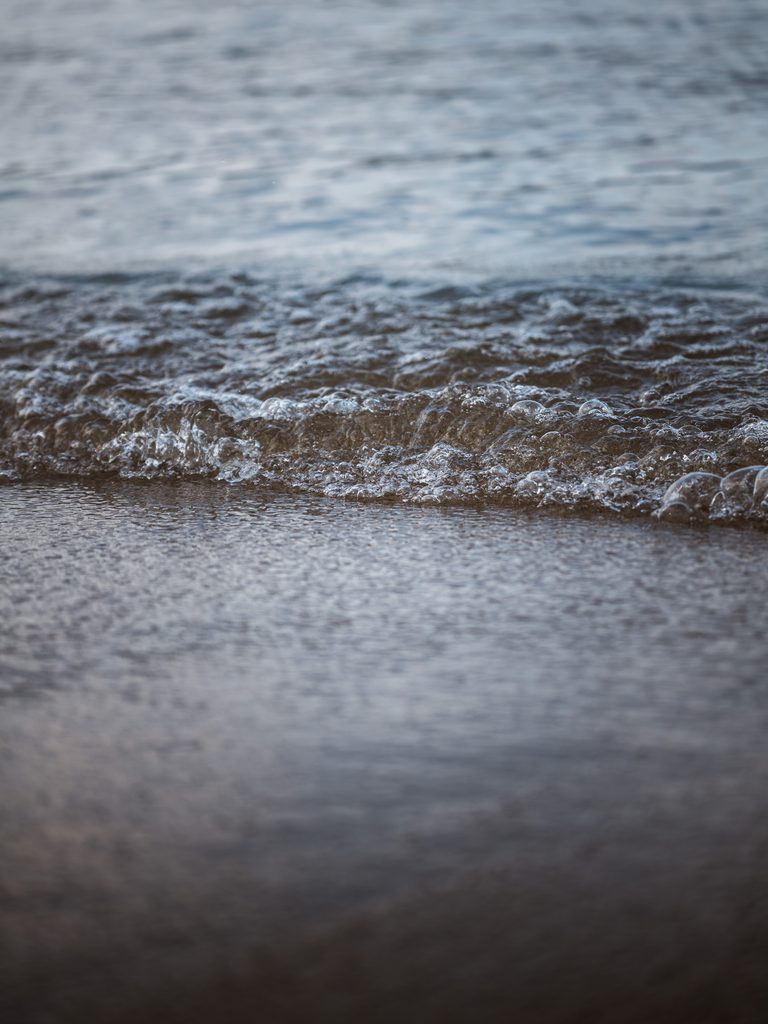
Surfers returned from the water. Someone walked a dog. Two people stood together looking out to sea. Small waves reached the sand.
Summer was almost over.
Alongside its final days, people spent their own quiet moments by the water, as if they were not yet ready to let the season go.
The road eventually led me back to the fishing port. I got into the car and drove toward the city of Obama.
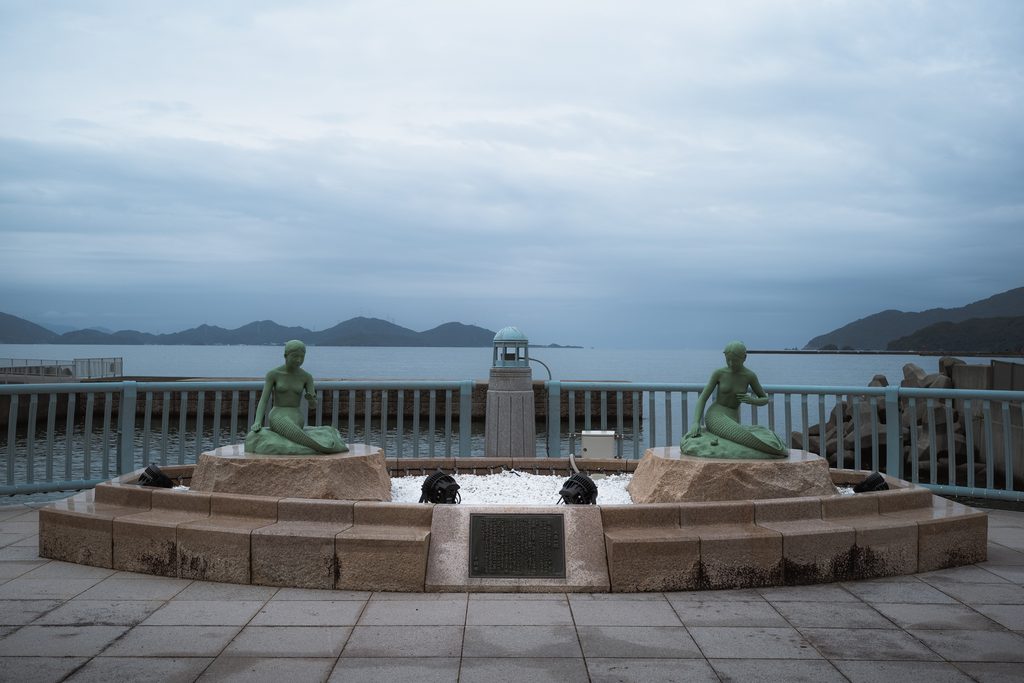
I parked beside “Mermaid Terrace” on the waterfront.
Two mermaid statues sit side by side facing the sea. They were inspired by the legend of “Yaobikuni”, an old mermaid tale passed down in Obama. Beyond them, the calm waters of Obama Bay stretched into the distance.
From there, I walked a little farther west toward “Sancho-machi”, the city’s former teahouse district.
“Sancho-machi” is part of “Obama Nishi-gumi”, a nationally protected historic district.
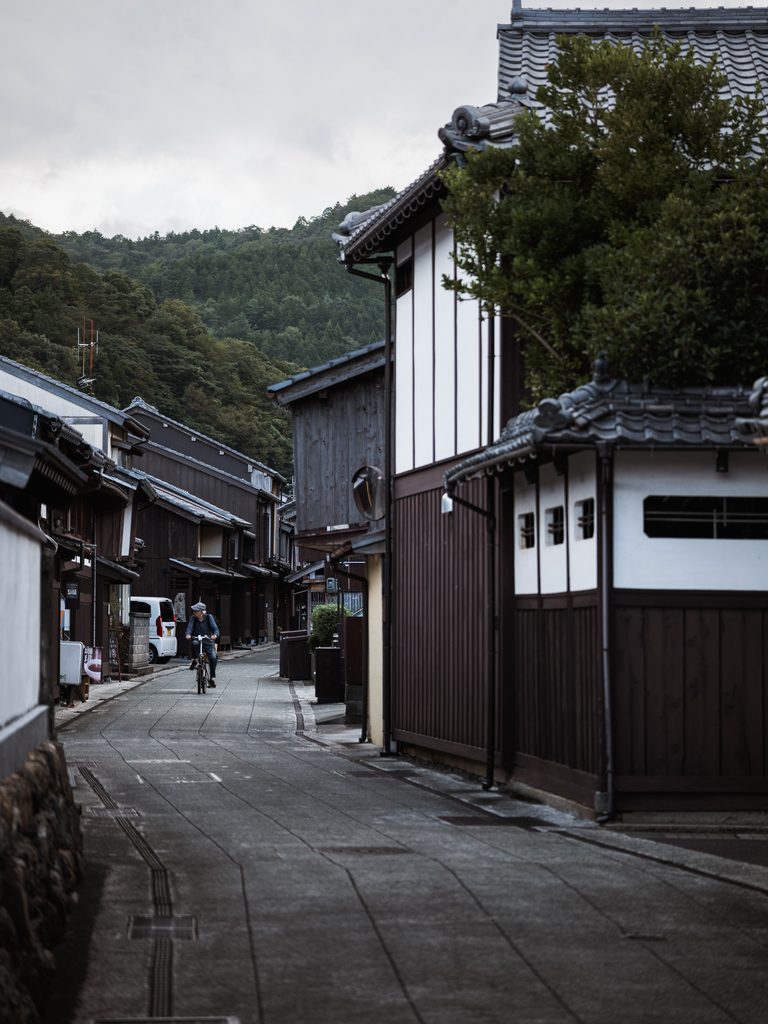
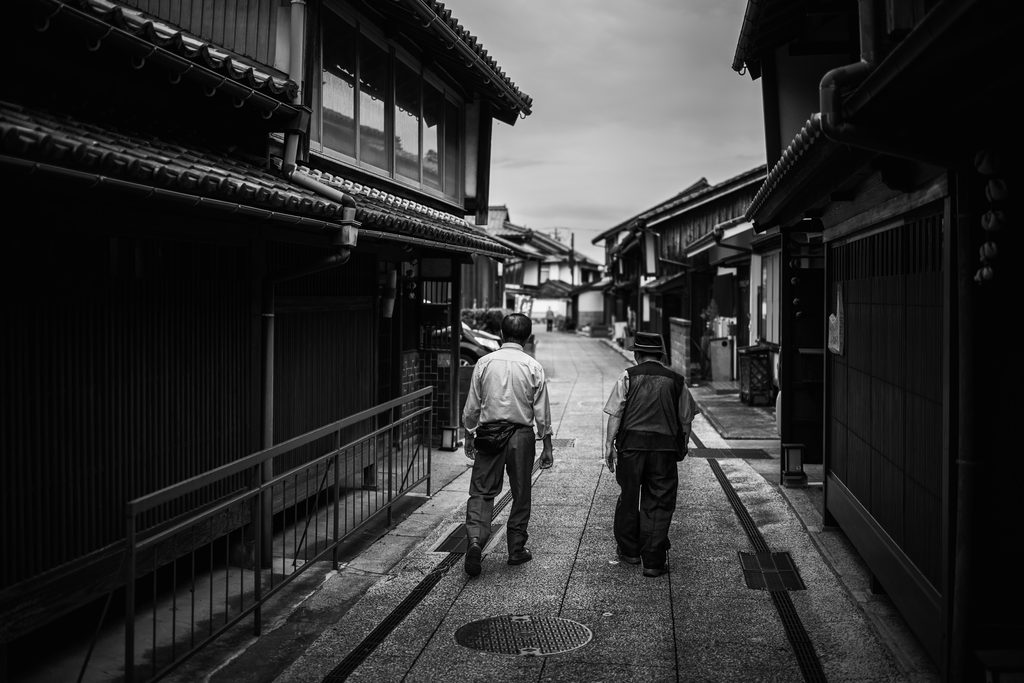
Obama once developed as a port connecting the Sea of Japan with Kyoto. Traditional wooden townhouses shaped by Kyoto’s cultural influence still remain here. They have narrow fronts and extend deep into the properties behind them.
Among these streets, “Sancho-machi” most clearly preserves the atmosphere of the former teahouse quarter.
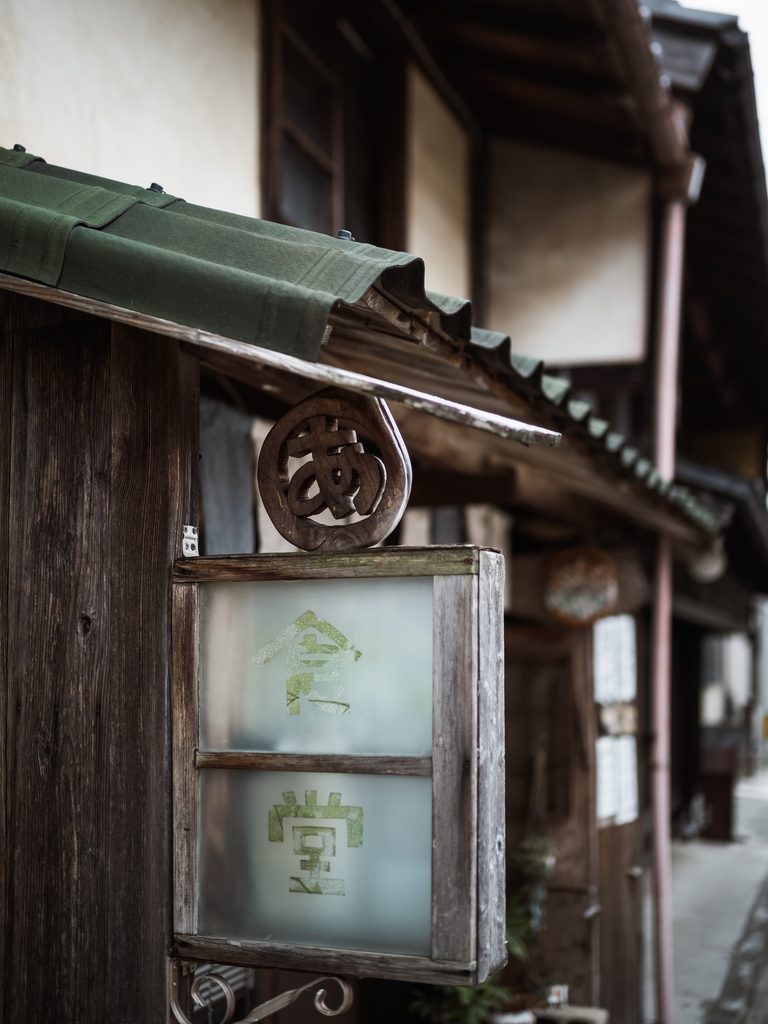
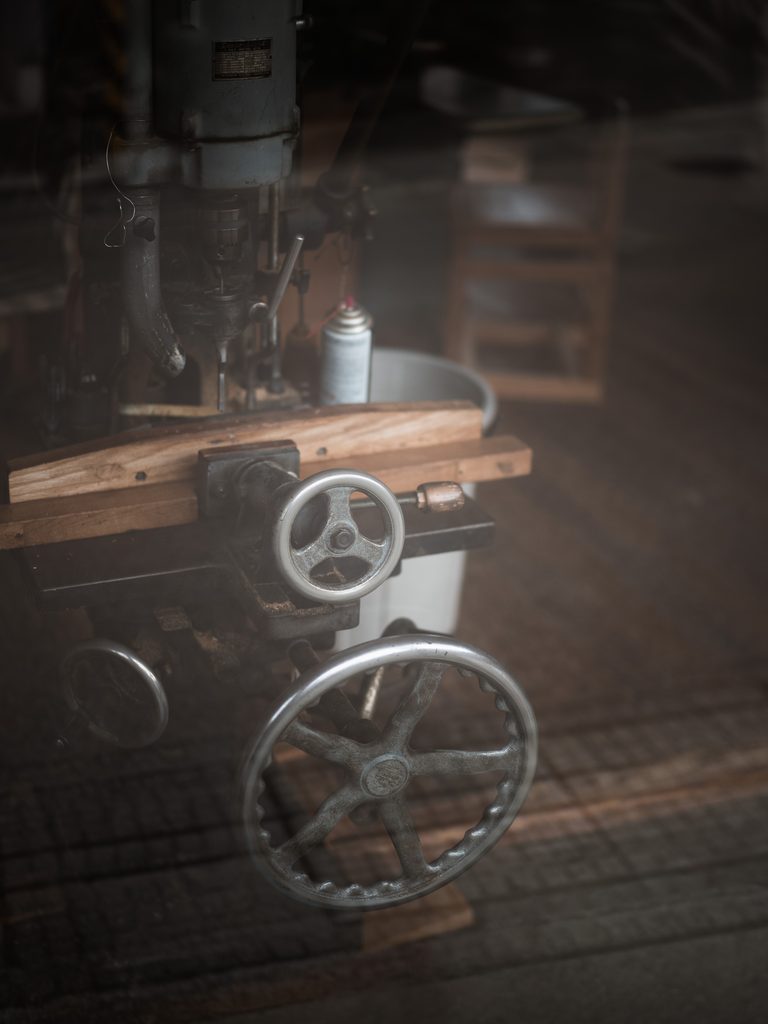
Long-established workshops stand beside newer restaurants built into old houses.
The buildings have taken on different roles over time, while the tiled roofs and wooden latticework continue to give the neighborhood a familiar, nostalgic air.
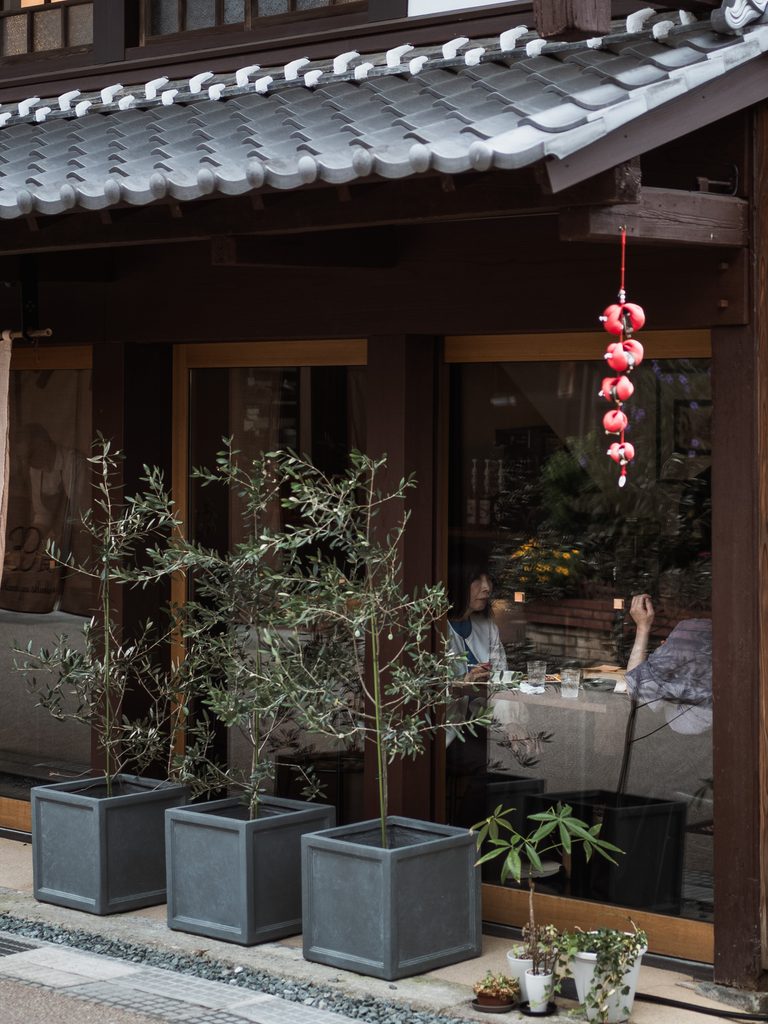
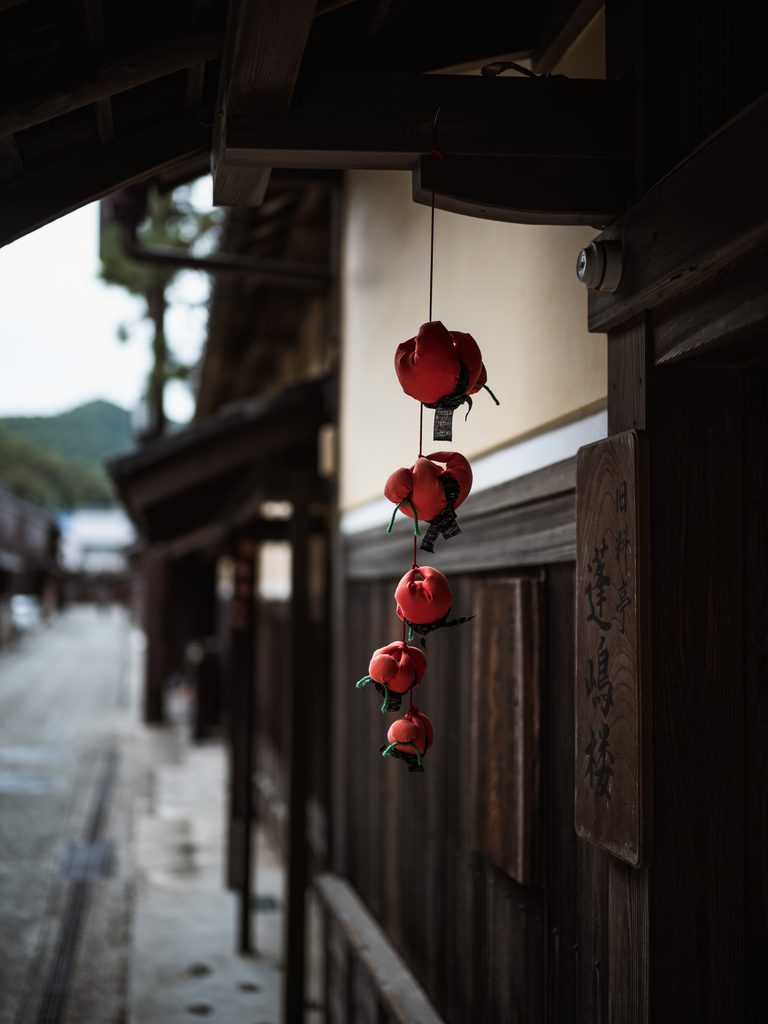
Small vermilion ornaments hung beneath the eaves of the traditional houses.
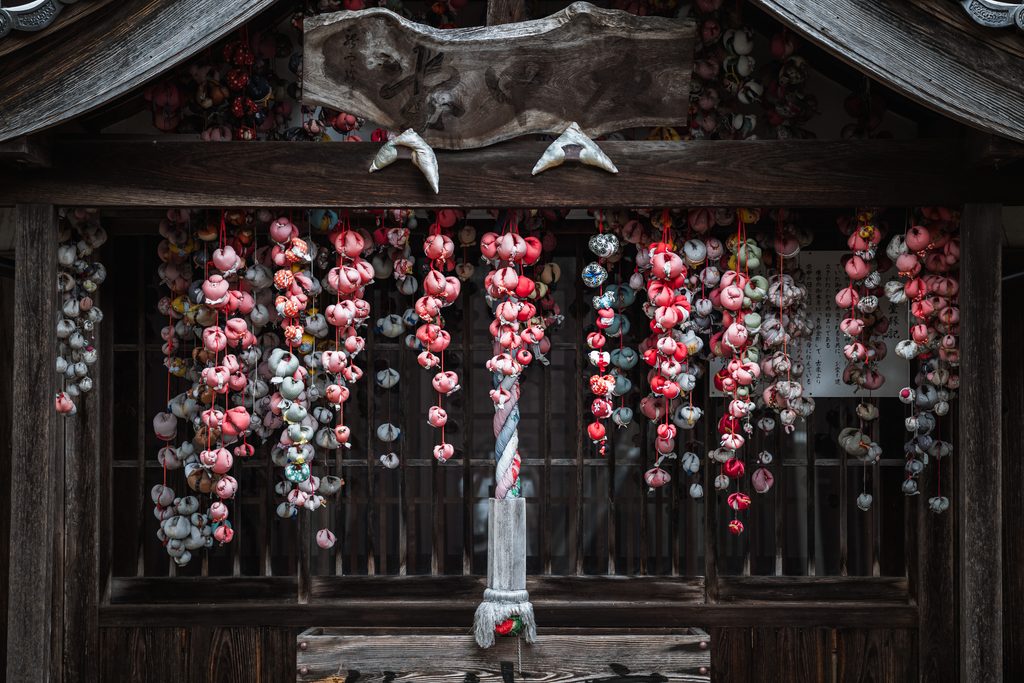
They are known as “migawari-zaru”—small cloth monkeys believed to carry misfortune away in a person’s place.
Some hung quietly on their own. Elsewhere, so many had been offered that they covered the front of a small shrine.
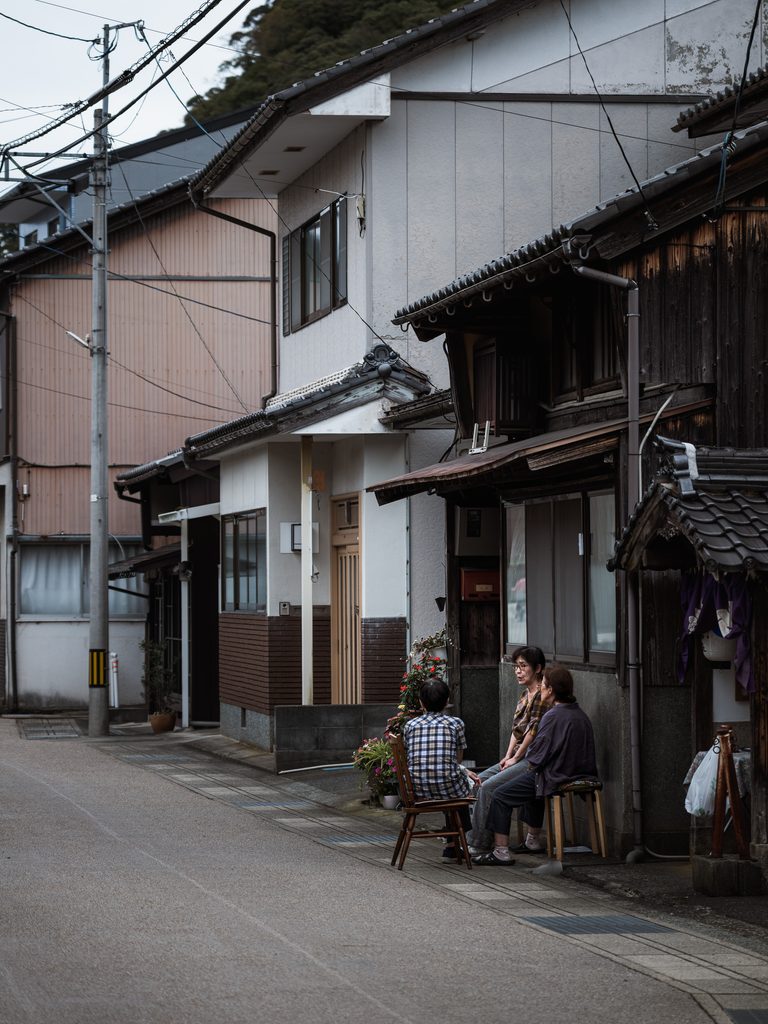
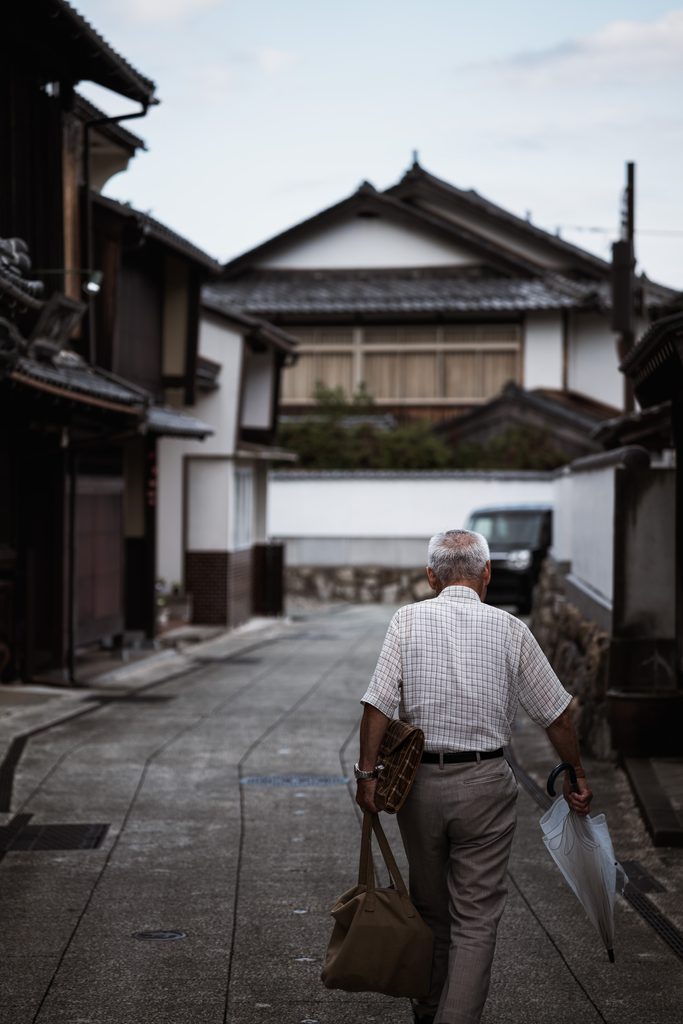
Farther along the street, I met a group of women who had brought chairs outside and were talking in front of a house.
A man nearby called out to me.
“Where are you from?”
When I stopped, he began telling me about the history of the neighborhood.
By the time I returned to the parking area beside the sea, the sun was beginning to fall.
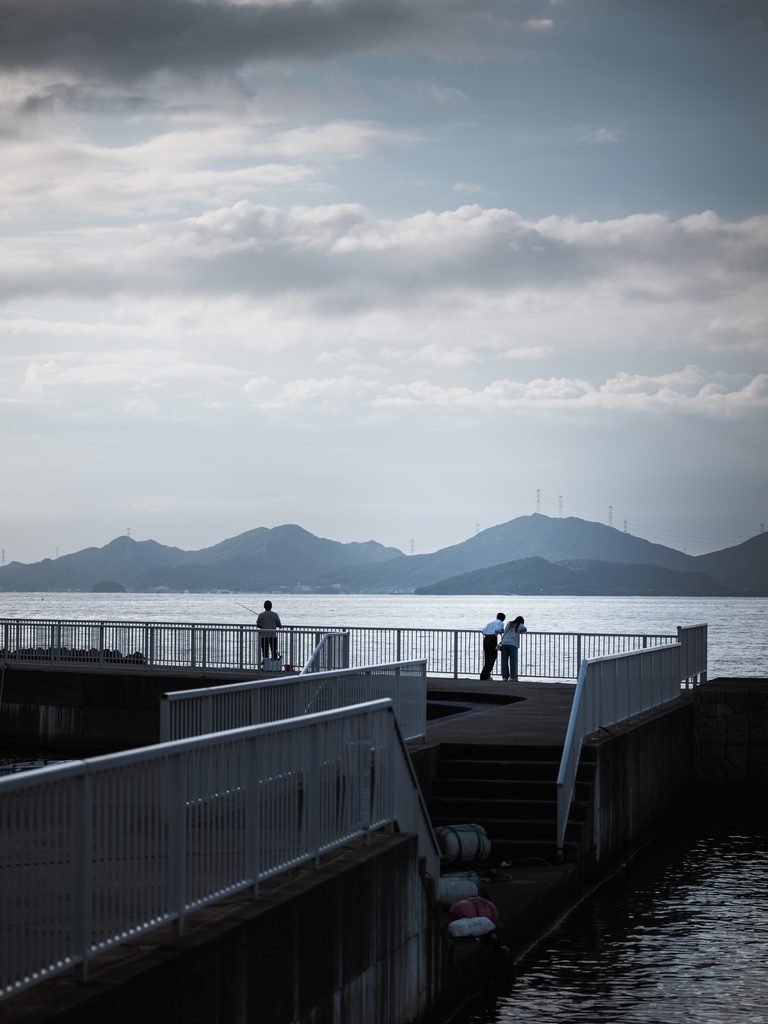
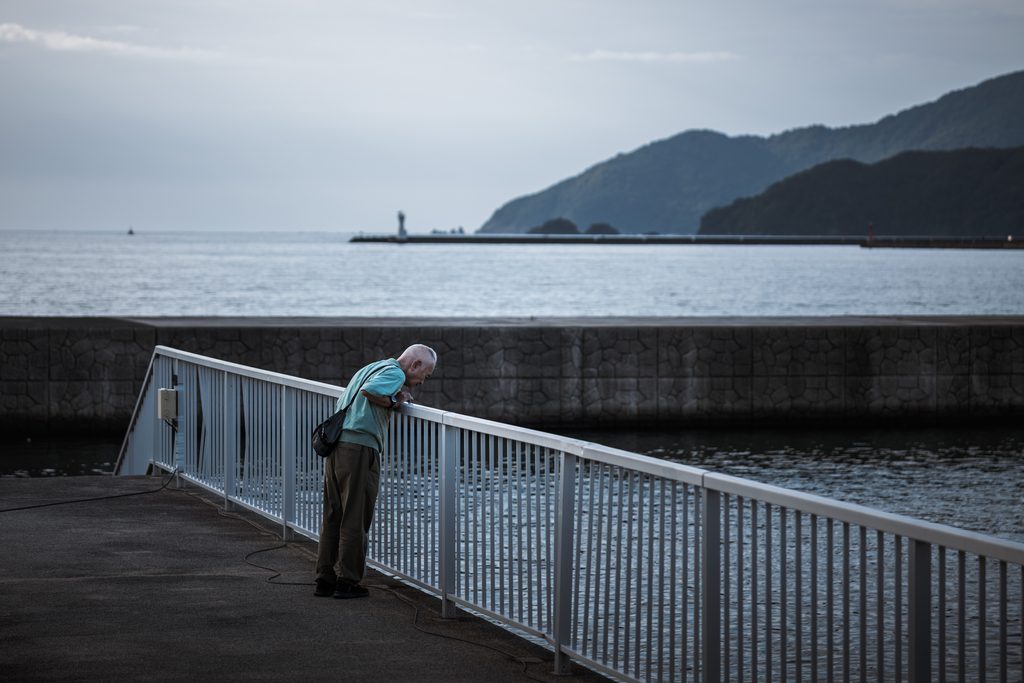
Heavy clouds had covered the sky all day, with occasional light rain. I was starting to think about ending the day’s photography when sunlight suddenly broke through a gap in the clouds.
Beneath the brightened clouds, a faint orange slowly began to spread across the sky.
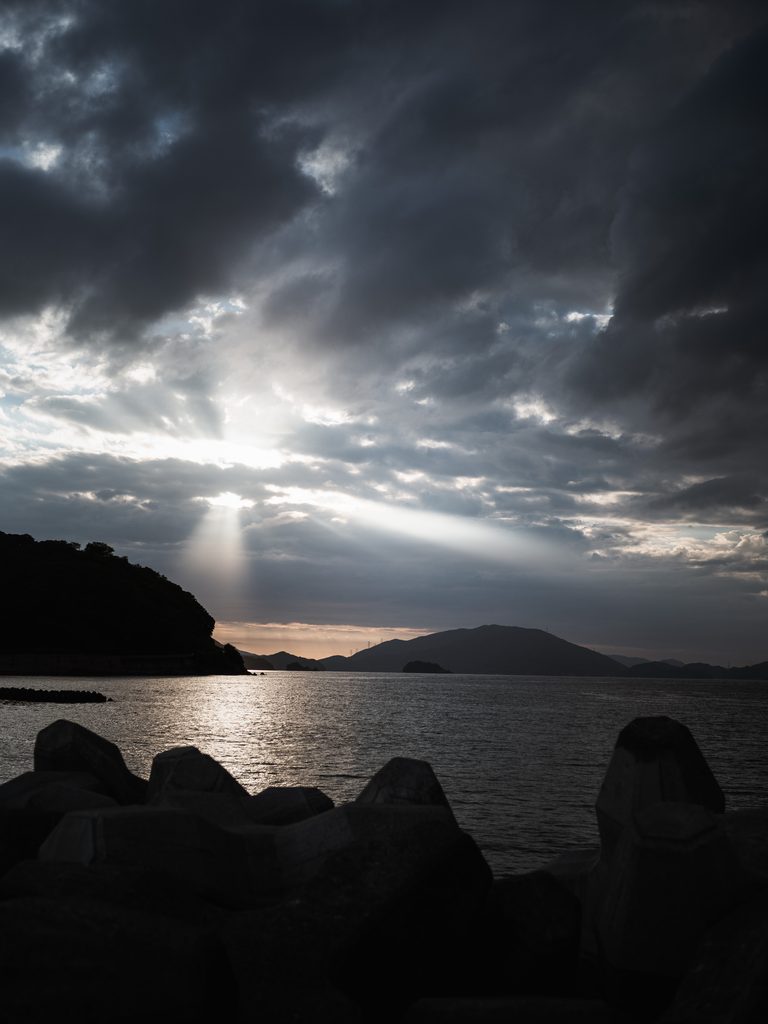
The sky changed color with surprising speed.
I hurried back to the car, took out my camera, and began walking toward the water.
I had no destination in mind.
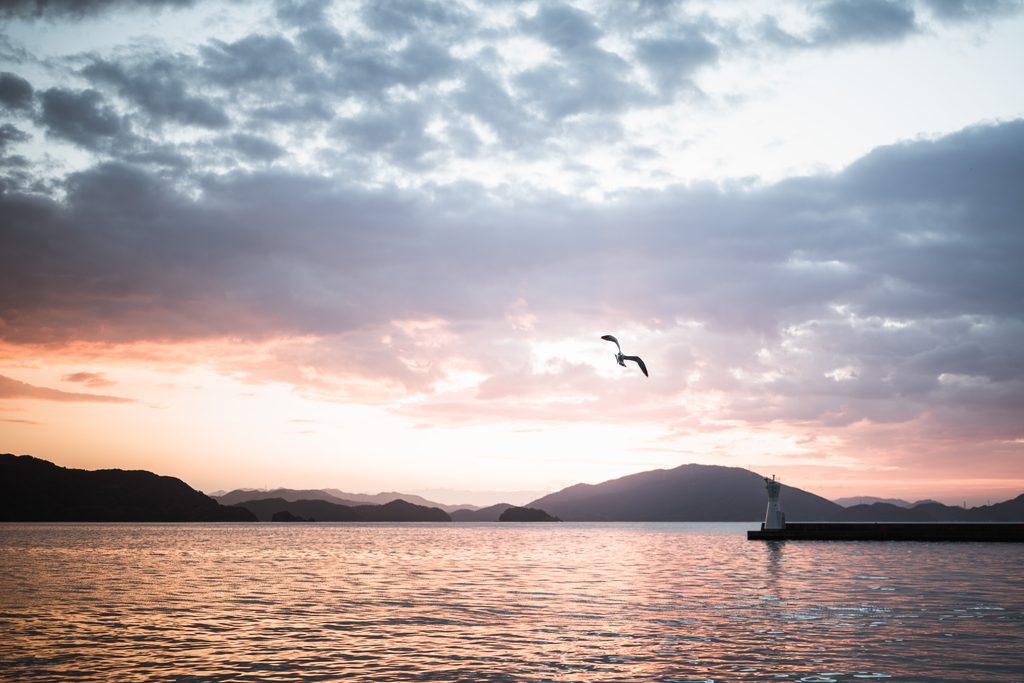
Then I noticed a small lighthouse in the distance.
An abandoned boat. The sky reflected on the water. Ropes brushing the surface of the sea.
I stopped to take photographs as I made my way toward the lighthouse.
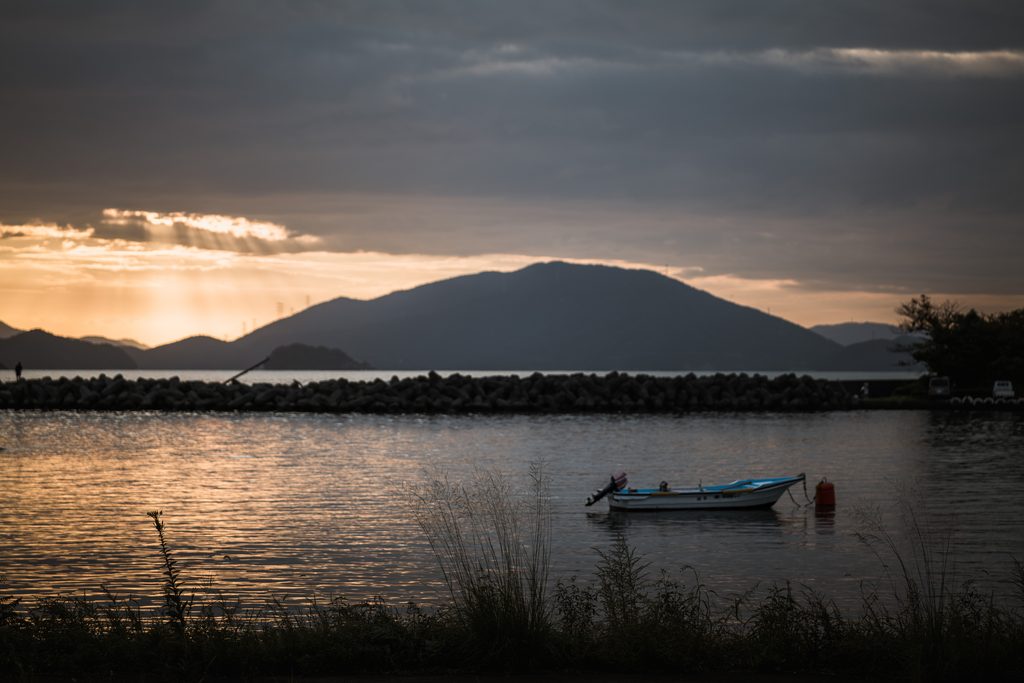
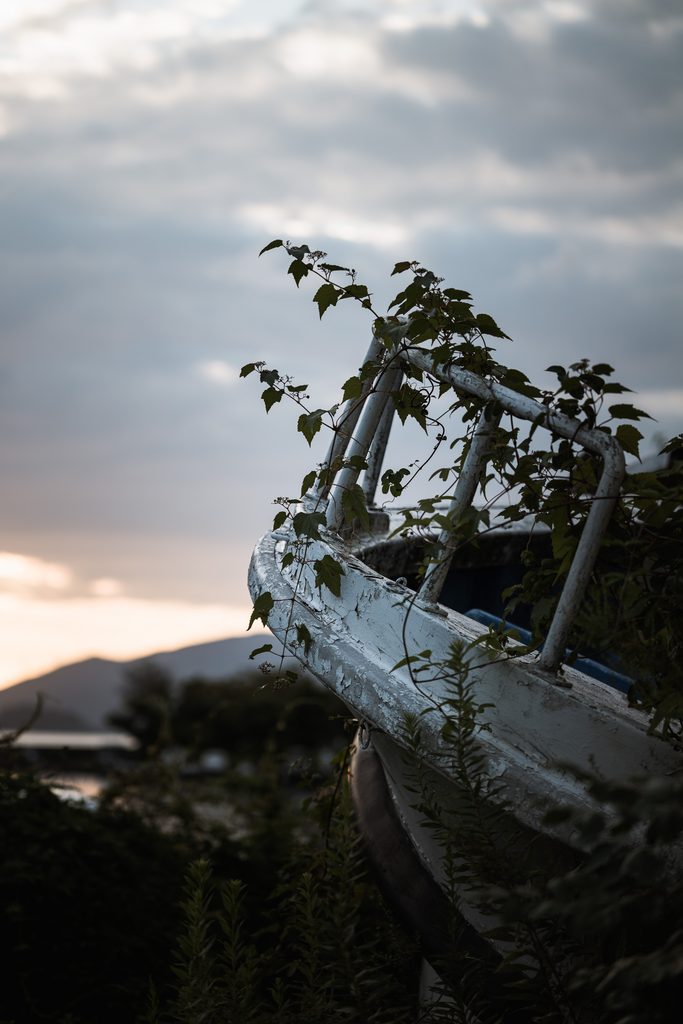
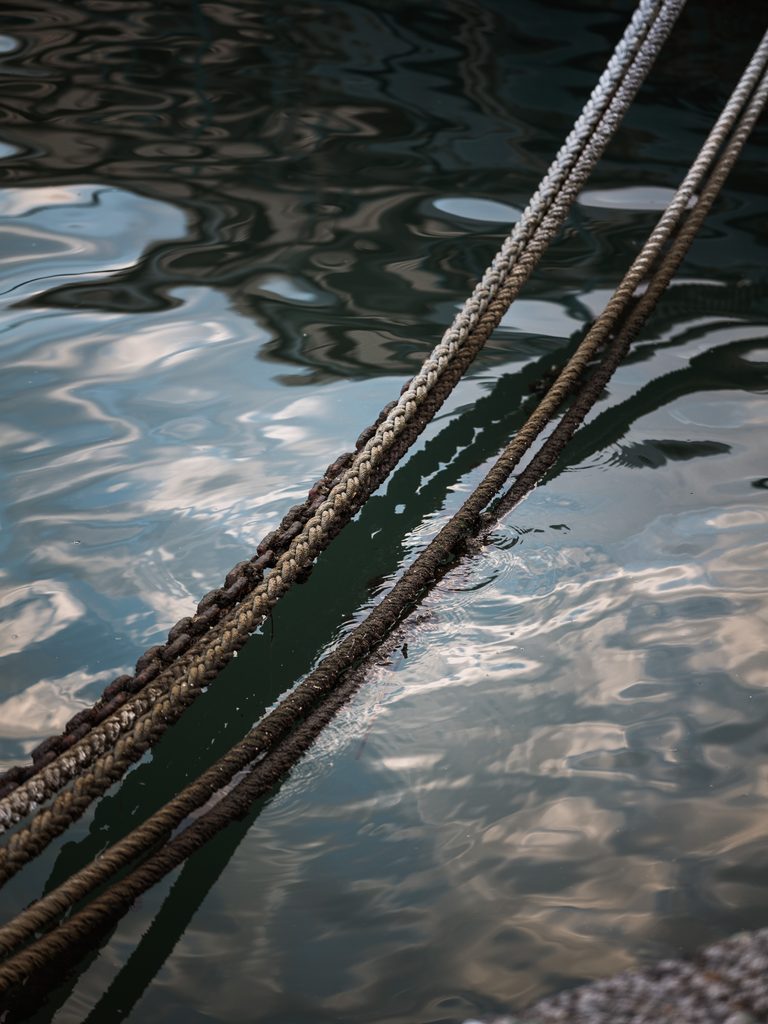
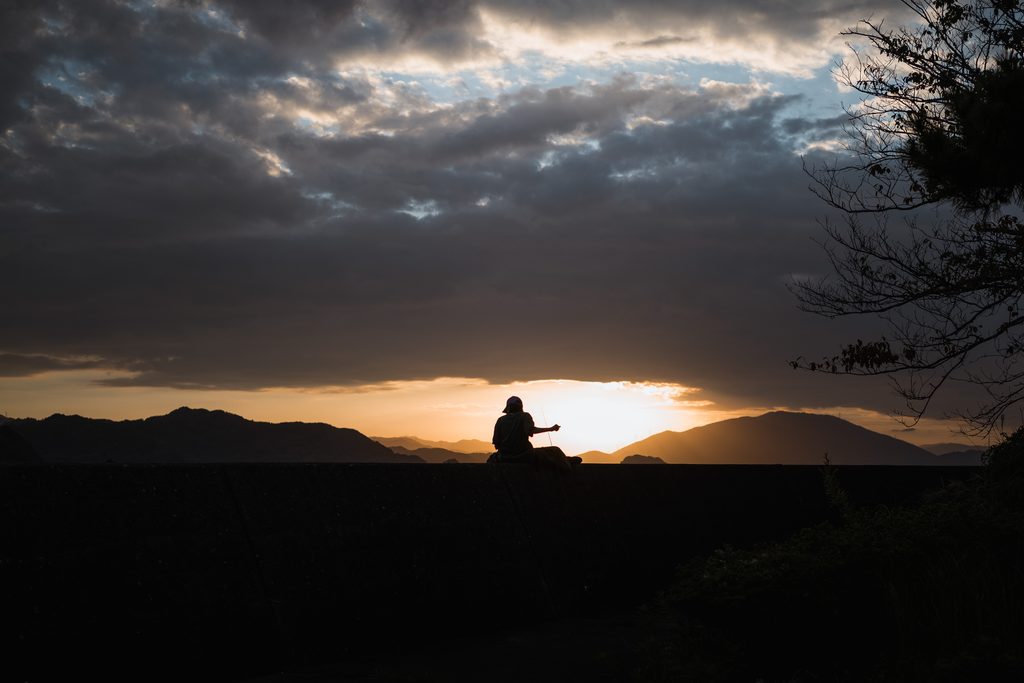
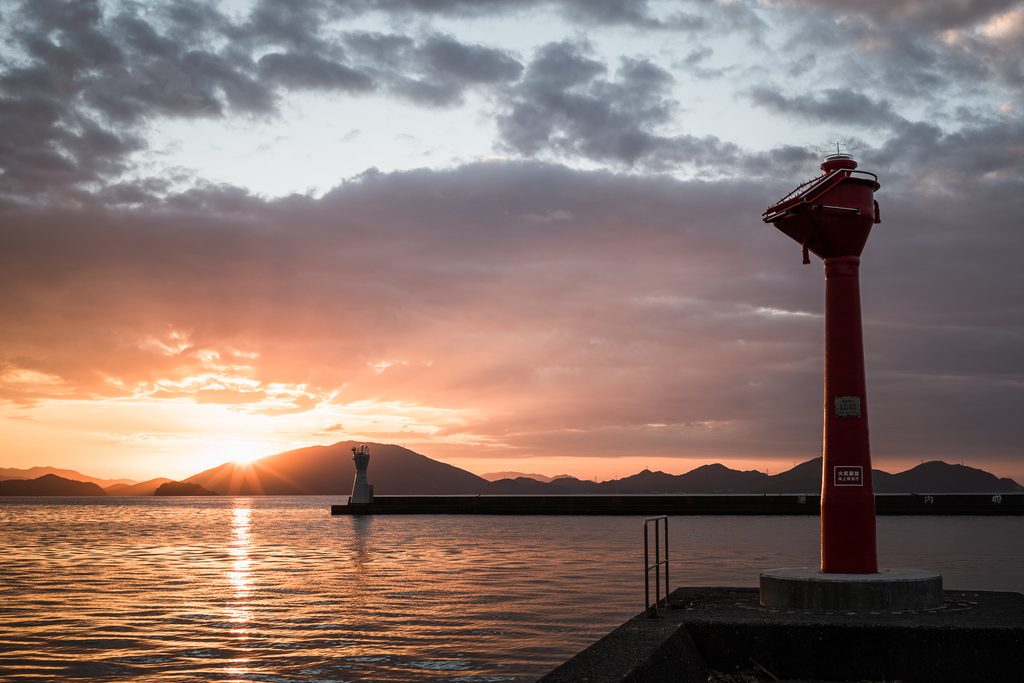
When I reached it, the sun had finally emerged from beneath the heavy clouds.
It was only moments away from disappearing beyond the horizon.
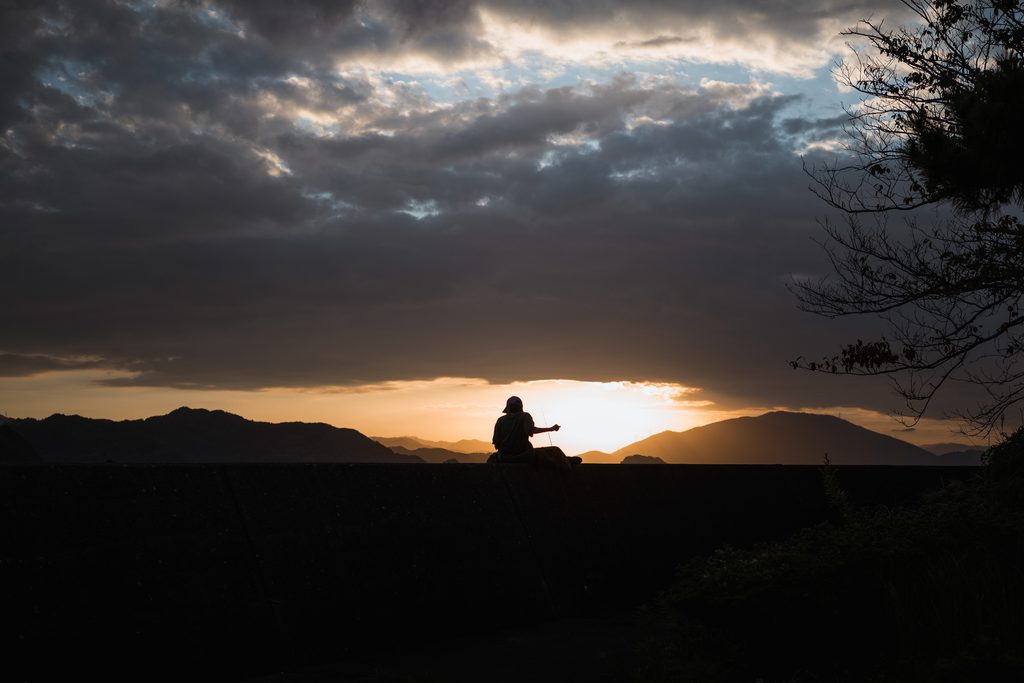
The sky burned behind a lone fisherman. The sea and the lighthouse turned red.
It was a sunset so vivid that it left me without words. Even now, as I write this, I can still remember it.
Looking back, it lasted only a few minutes.
I thought of nothing and continued pressing the shutter.
Then a single bird crossed the viewfinder and brought me back to myself.
Immediately afterward, the sky flared brighter.
The sun disappeared beyond the sea.