
EN / JP
The Sound of Water | Gujo Hachiman
I parked in a lot beside Gujo Hachiman’s former town hall, now the “Kinenkan Tourist Information Centre.”
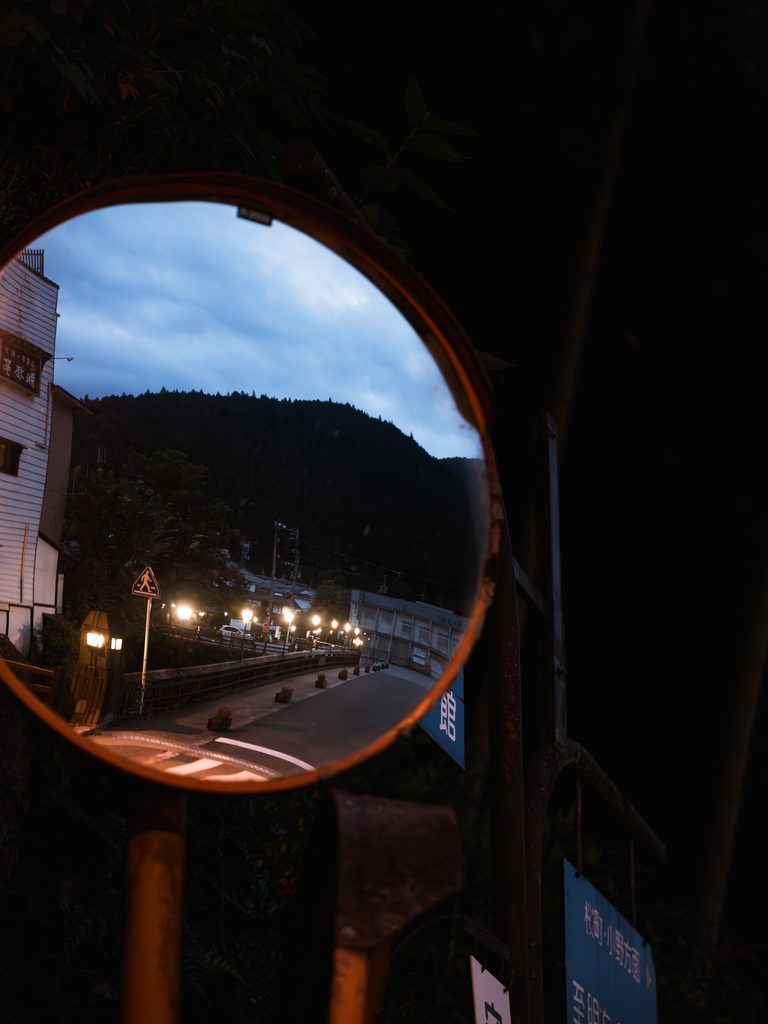
Below the bridge lay the wide Yoshida River. A row of lamps stood along both sides of the bridge, casting a faint light over the darkness. I could just make out the white foam forming on the water below. The sound of the river echoed quietly and deeply through the mountain town.
It was five in the morning. September was nearly over, and sunrise was coming much later. Only a month earlier, the sky had been much brighter at this hour.
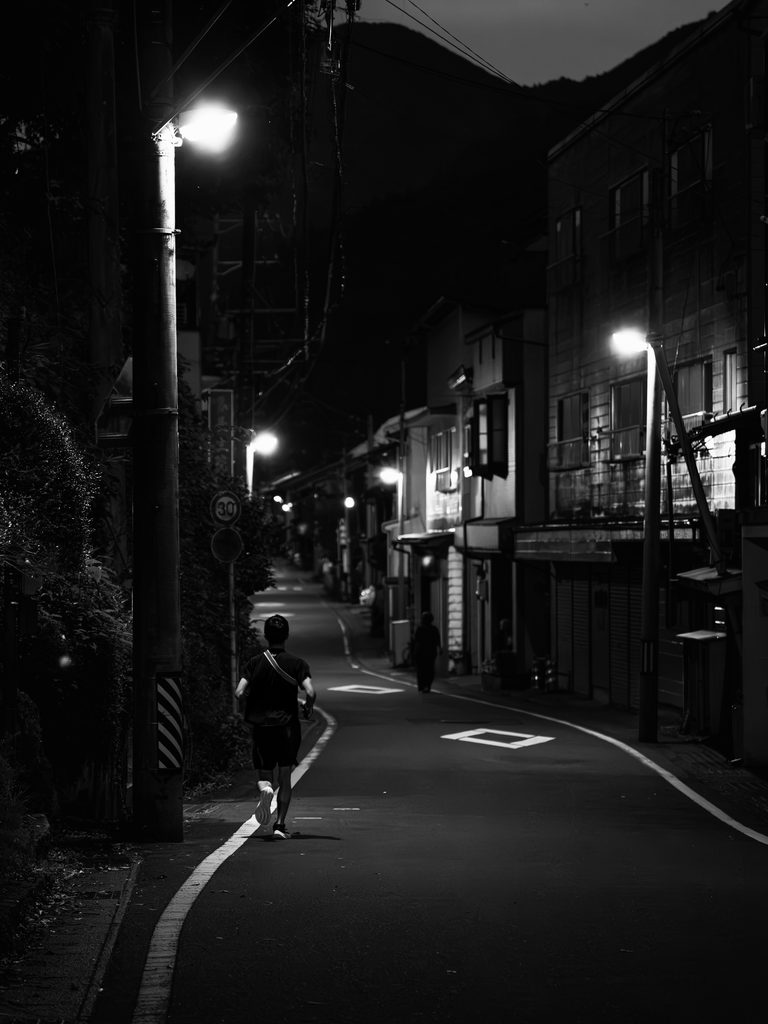
After a while, the sky between the mountains began to turn blue. A runner passed through the darkness, tracing the outline of a road that was slowly coming into view.
I followed the dim path and walked down to “Igawa Ko Michi,” a narrow footpath behind the former town hall.
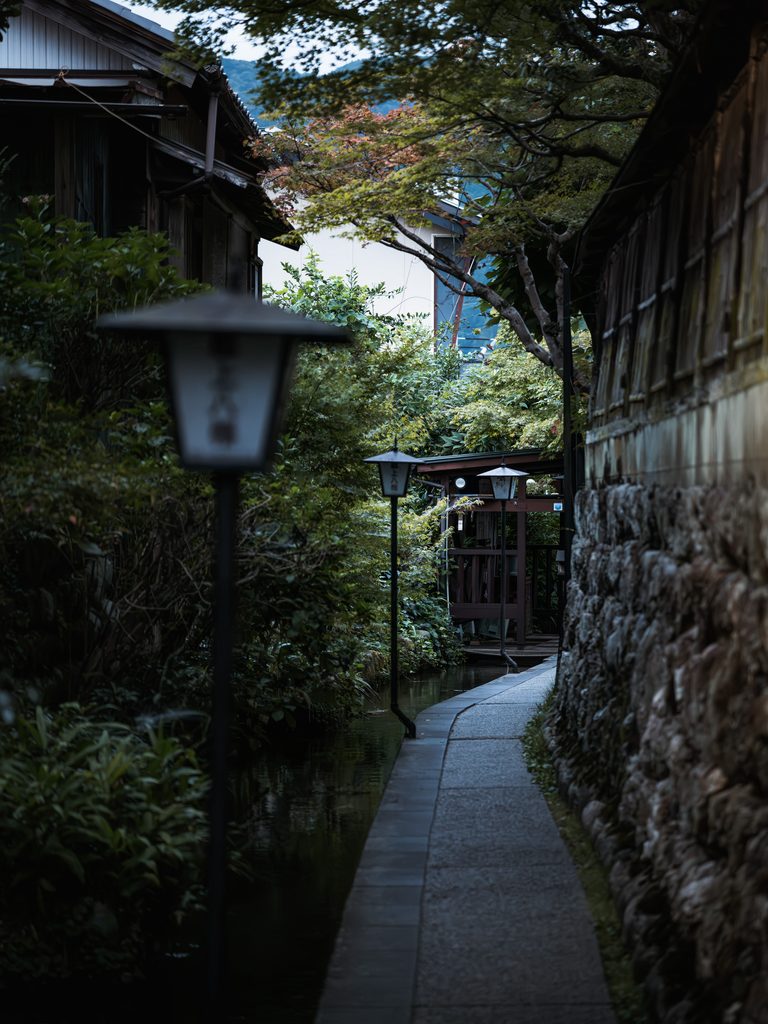
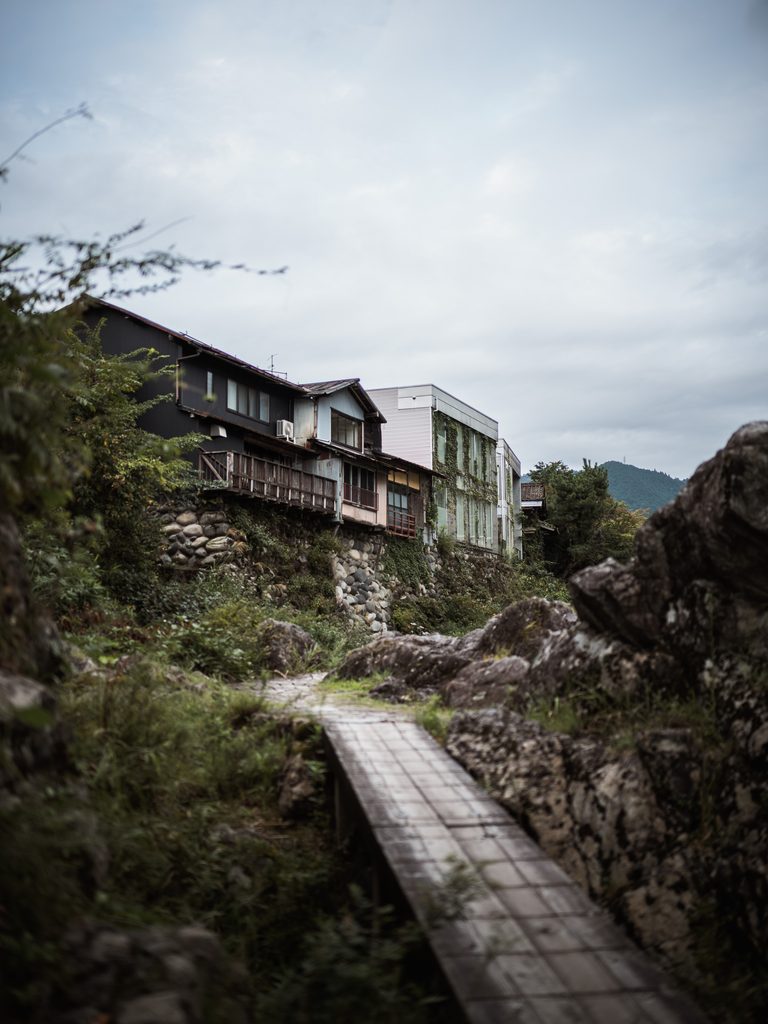
The path was barely wide enough for two people to pass. It ran between the backs of houses, beside a clear waterway. The morning sun had not yet reached it, and the only sound was running water. It felt less like entering the town and more like stepping down into the water flowing between its houses.
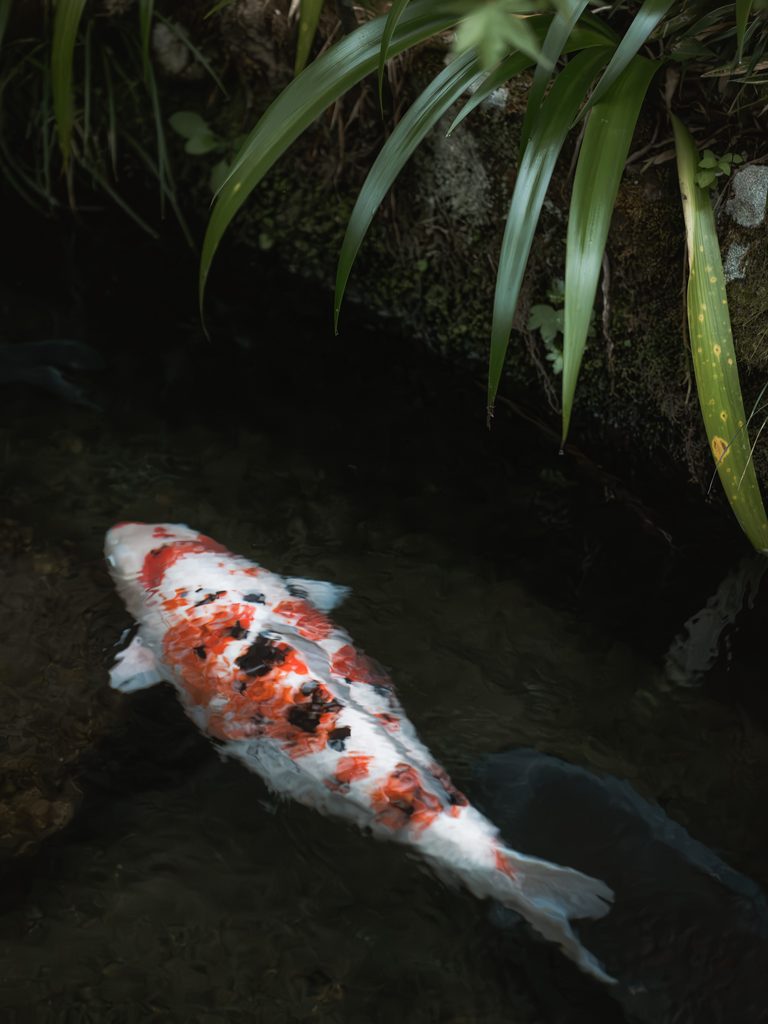
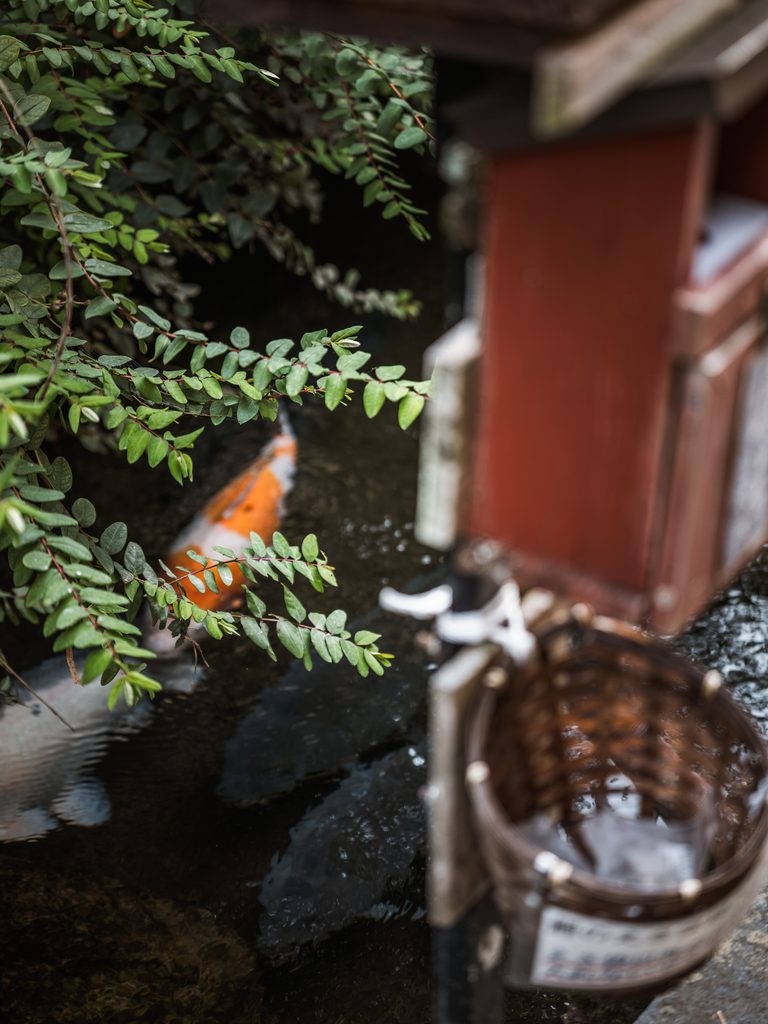
In the water, colourful carp rested close together, their large, round bodies almost touching.
They moved their tails slowly in the cold current, as if they were still asleep. I had not expected to find so much water and so many fish flowing just behind people’s homes.
Gujo Hachiman truly deserved to be called a “town of water.
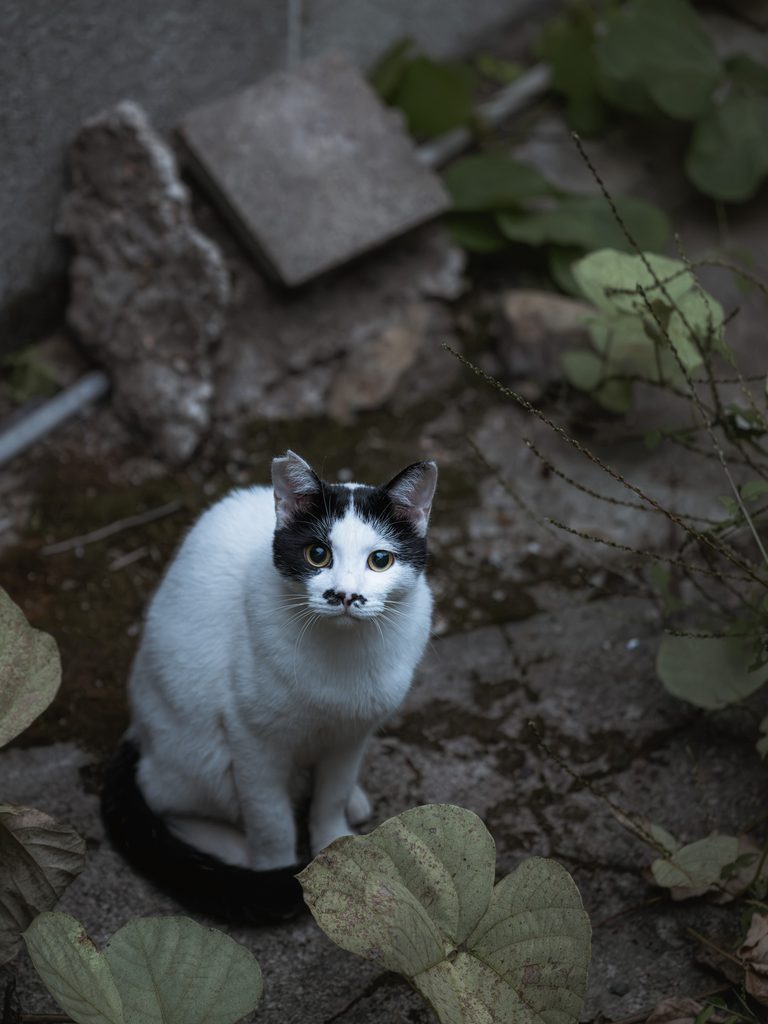
As anyone who has visited a fishing port will know, you almost always come across a cat.
Perhaps fish and cats are simply meant to find each other. Even here, in this town of water, I came across a young cat with innocent eyes.
It looked at me with curiosity, surprised to see an unfamiliar person at such an early hour.
Neither of us wanted any noise or trouble this early in the morning.
Keeping my distance, I quietly said, “Don’t mind me. I’ll only be here for a moment.”
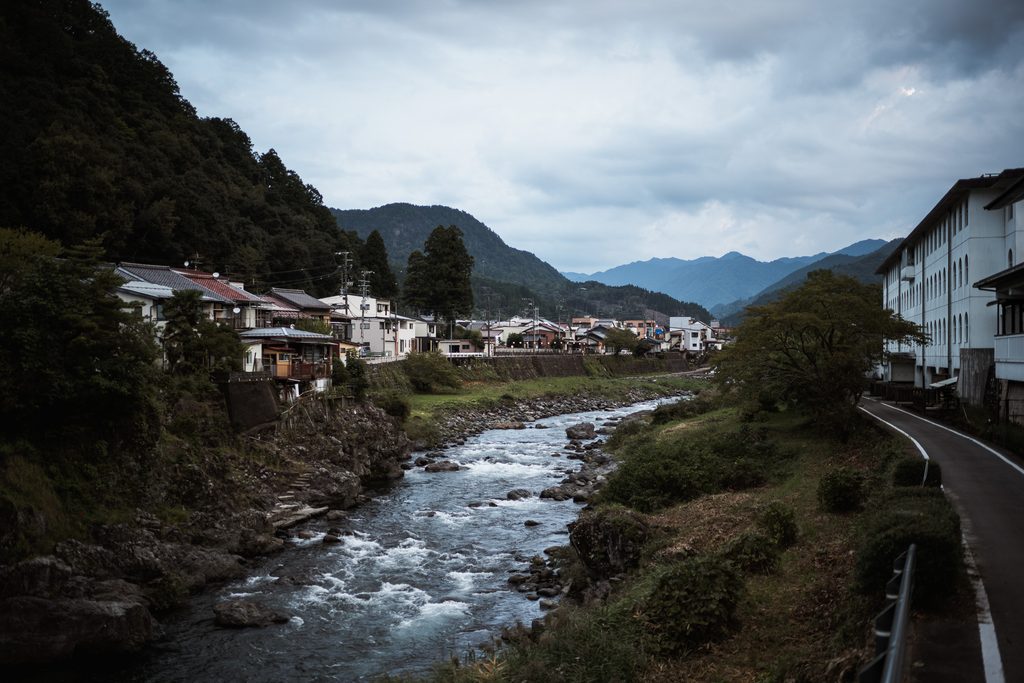
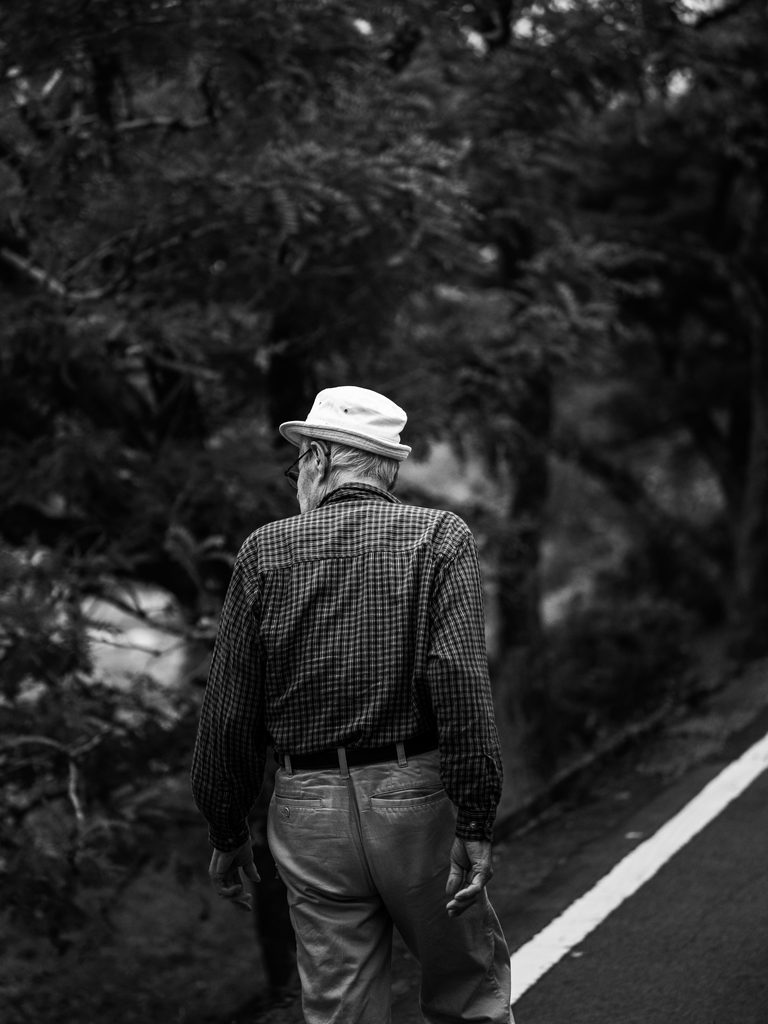
I left the path, crossed the Yoshida River, and continued through the early-morning streets.
More people were beginning to appear along the river, out for their morning walks.
Each person’s day was beginning with the sound of water.
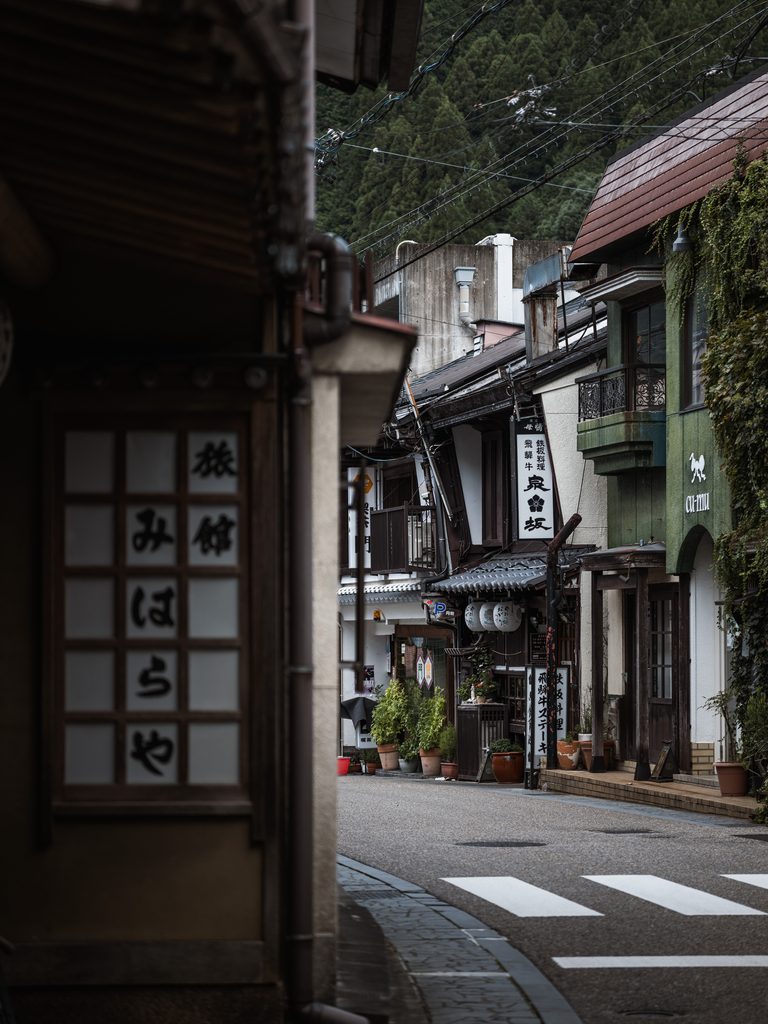
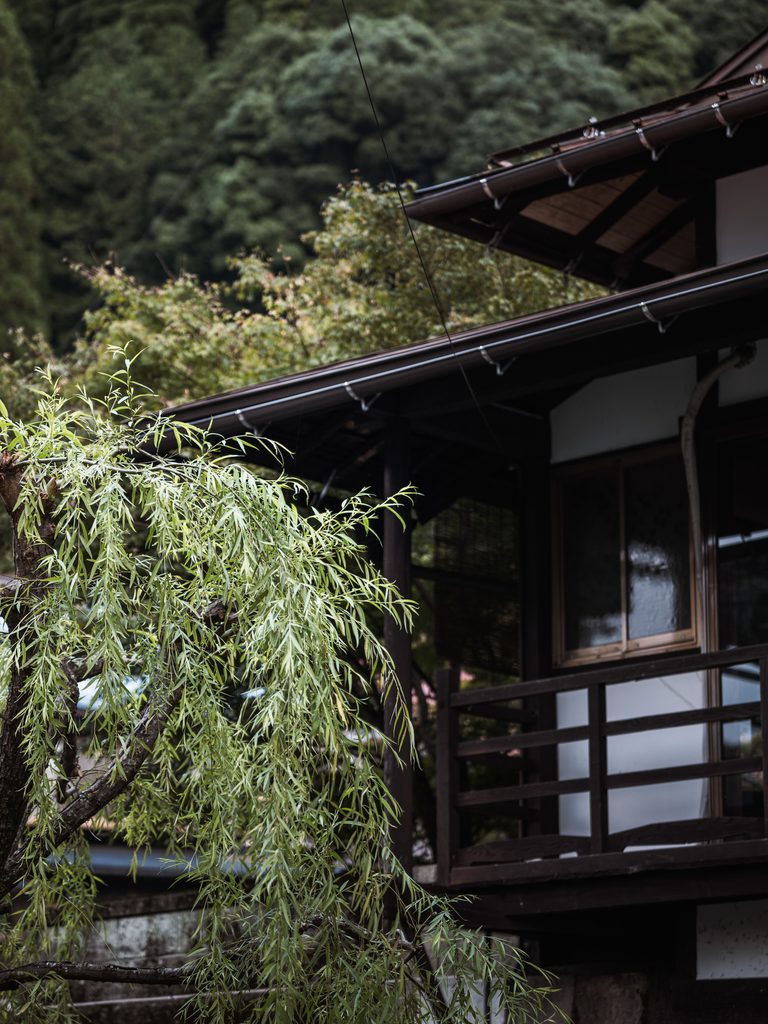
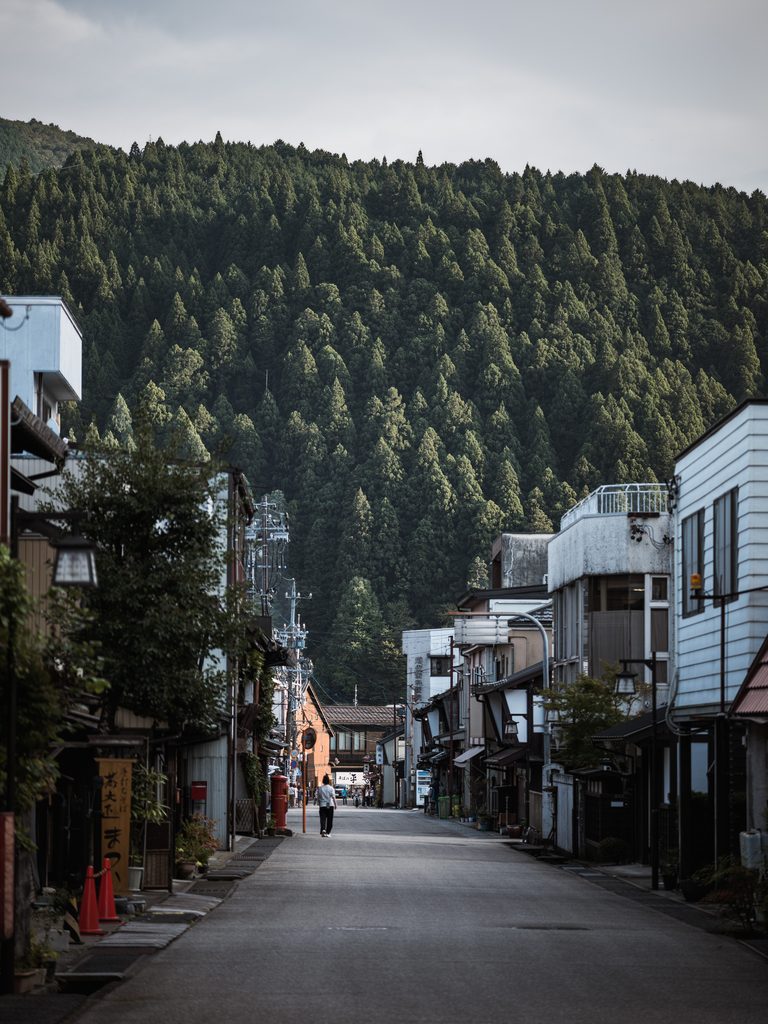
Gujo Hachiman is a small castle town where houses gather between the mountains and rivers.
The Yoshida River flows from east to west through the centre of town, where it meets the Kodara River flowing from north to south. Step away from the main street and a narrow waterway soon appears. Water runs behind the houses and beneath their eaves.
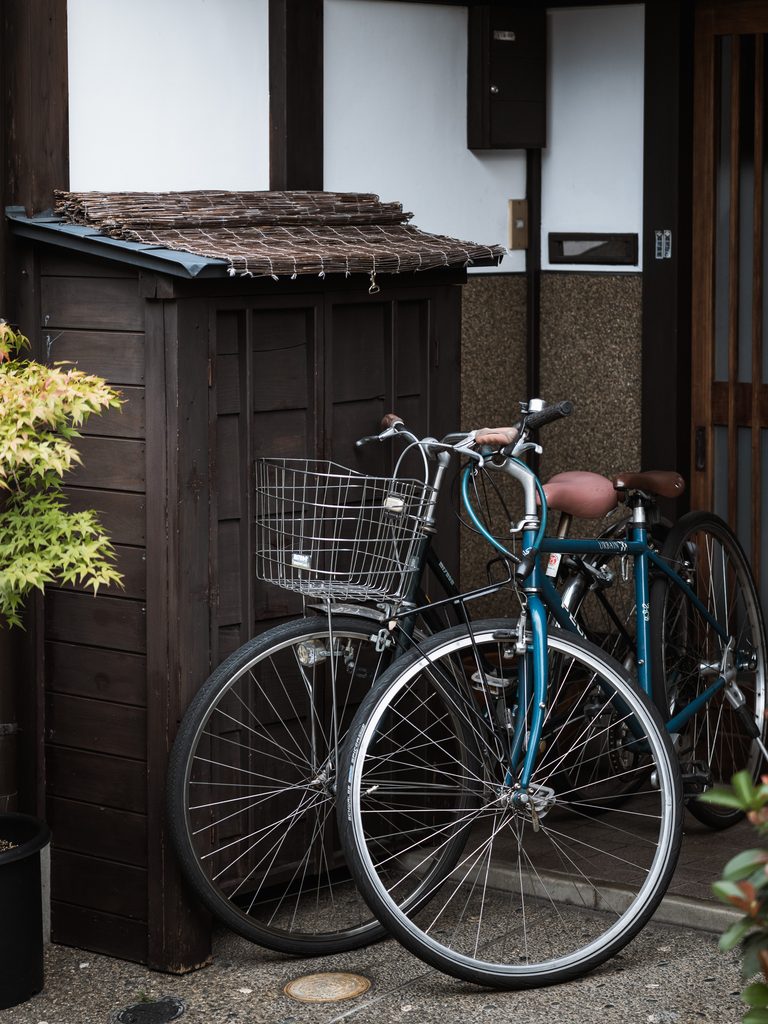
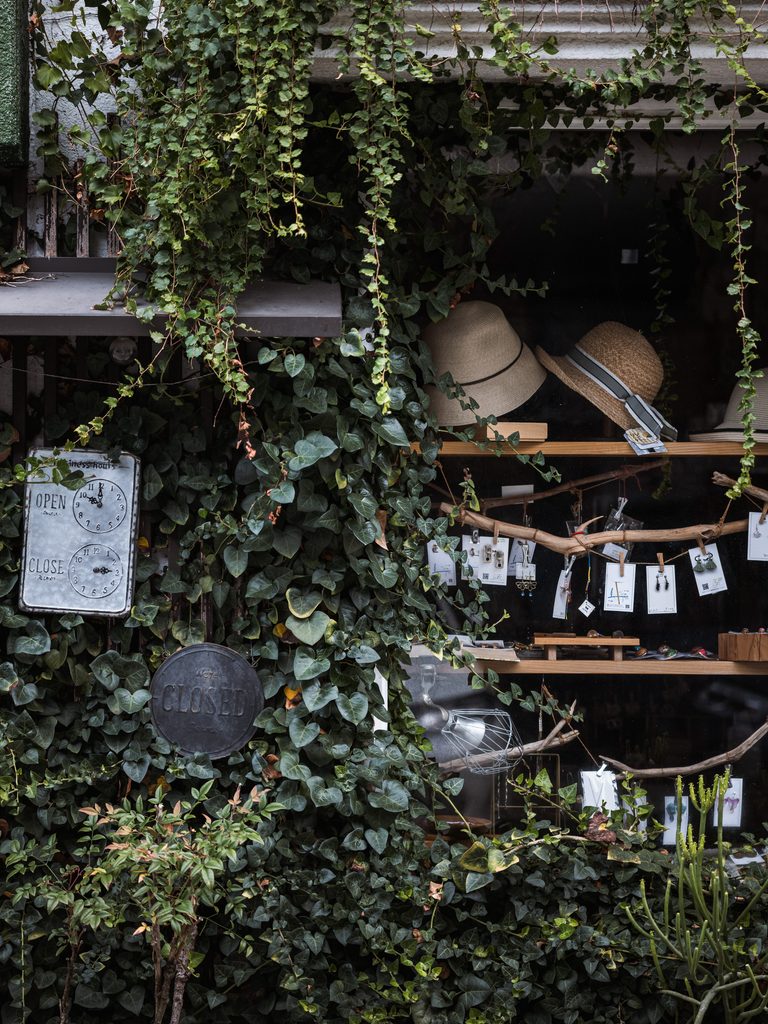
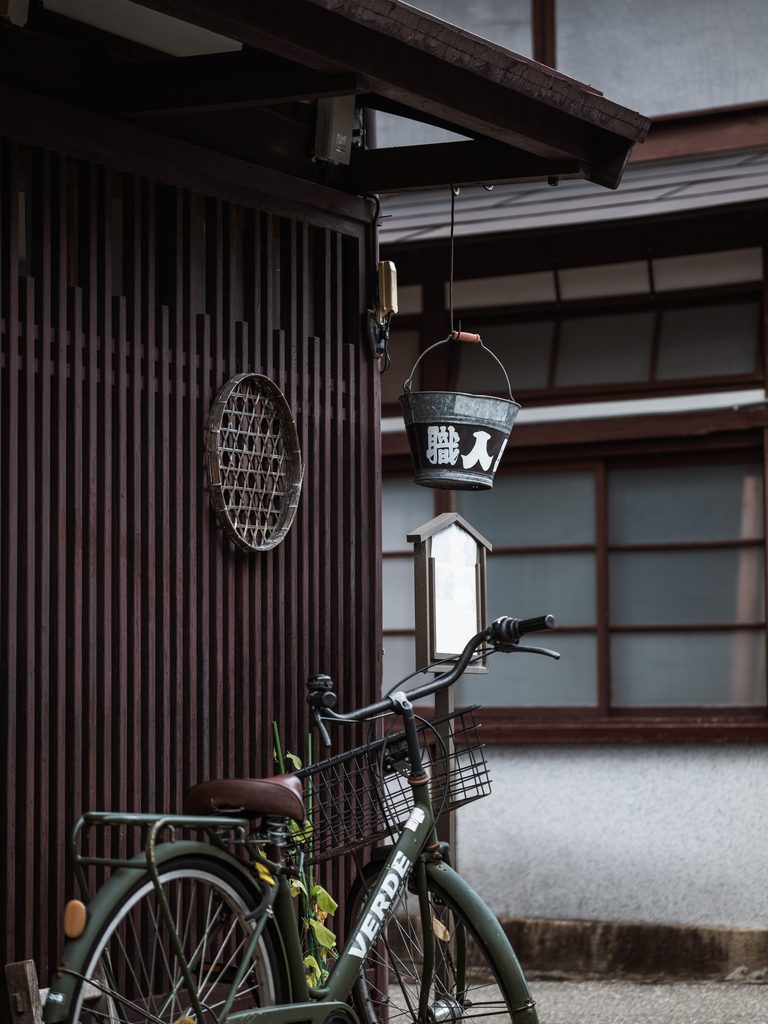
Bicycles resting beside the old houses. Plants covering the windows of shops that had not yet opened. Long willow branches hanging across weathered walls. Wherever I looked, the town seemed to form a picture.
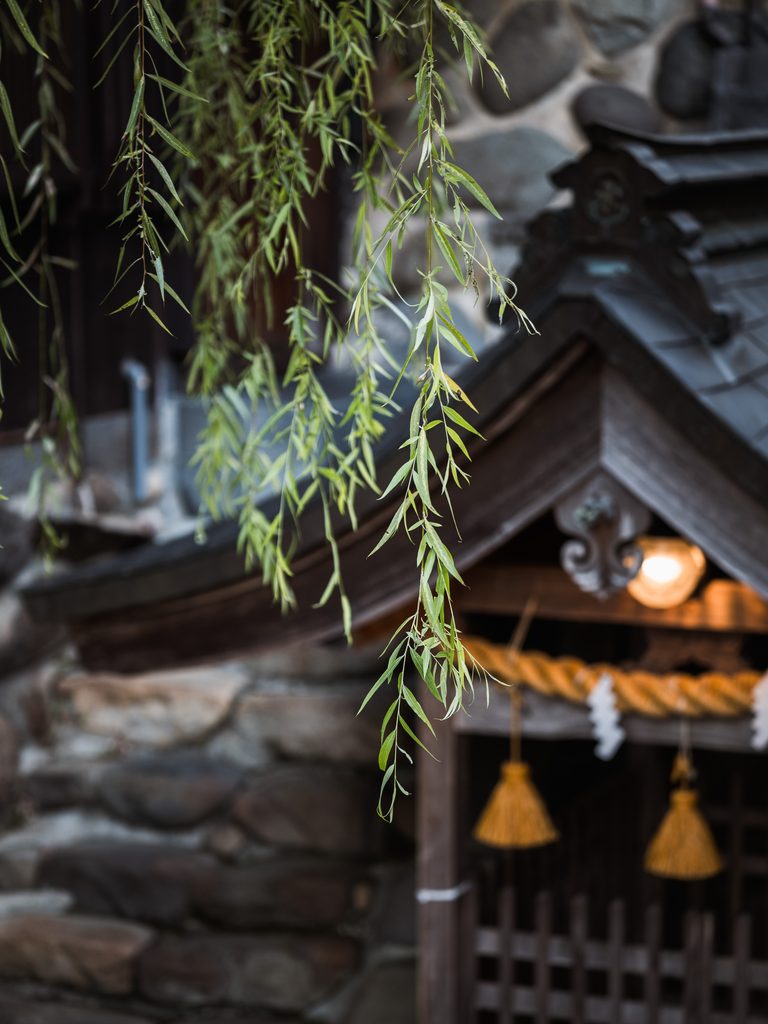
One of the symbols of this “town of water” is “Sogi Sui,” a historic spring in “Hon Machi.”
It is said to have been the first spring named to Japan’s list of 100 Remarkable Waters.
Beyond the willow leaves, I could see a small shrine and a sacred rope. It was far quieter than I had imagined from its fame. Like the other waterways in town, it blended naturally into the surrounding landscape.
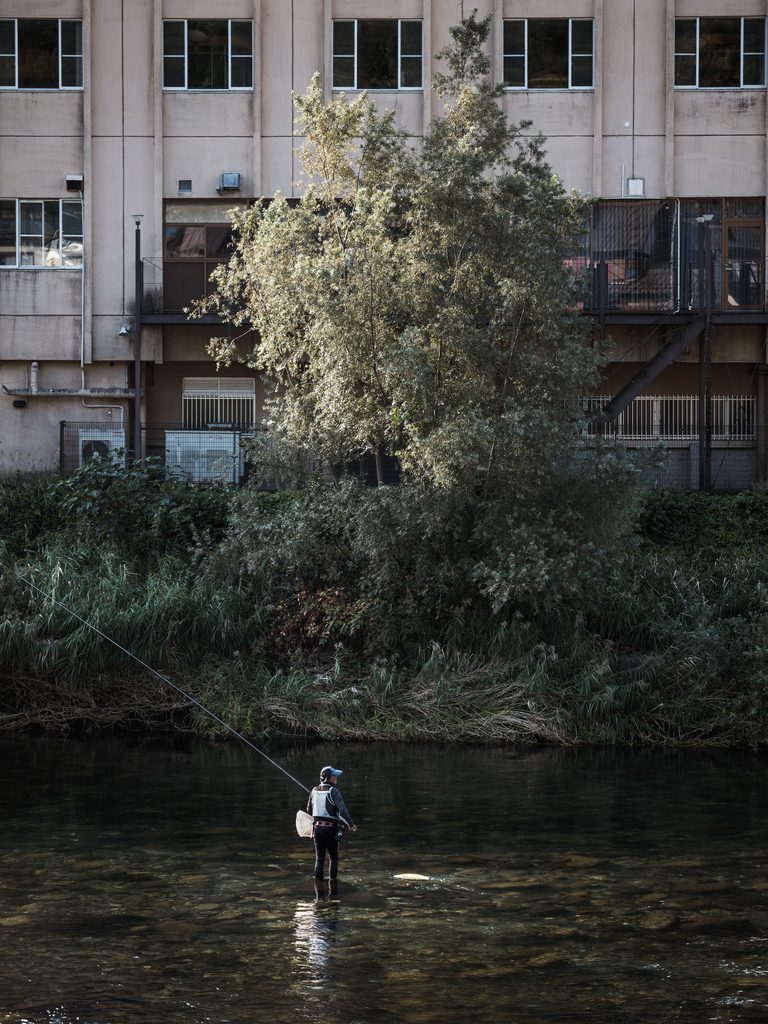
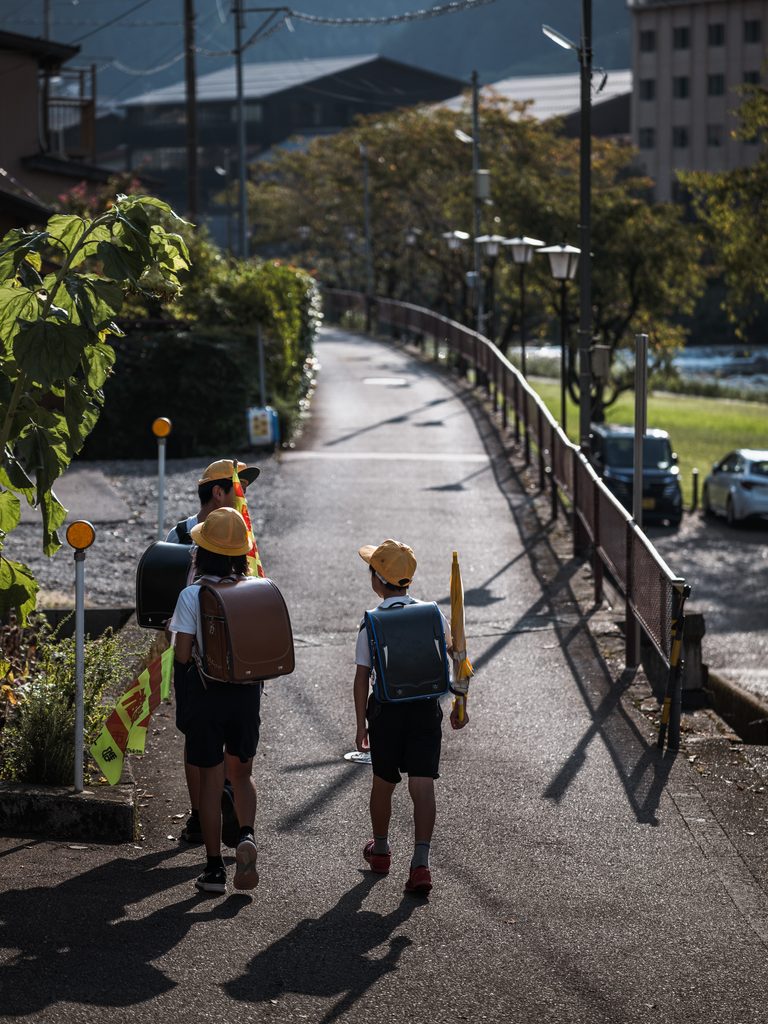
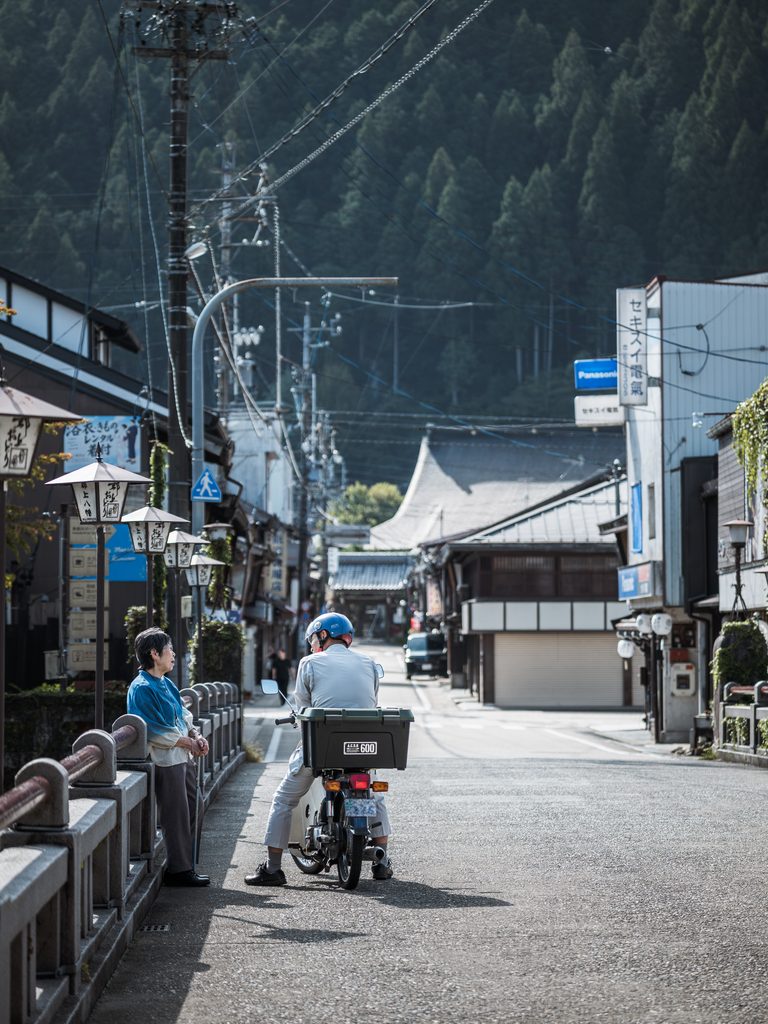
As the sun rose higher, the daily life of the town became easier to see.
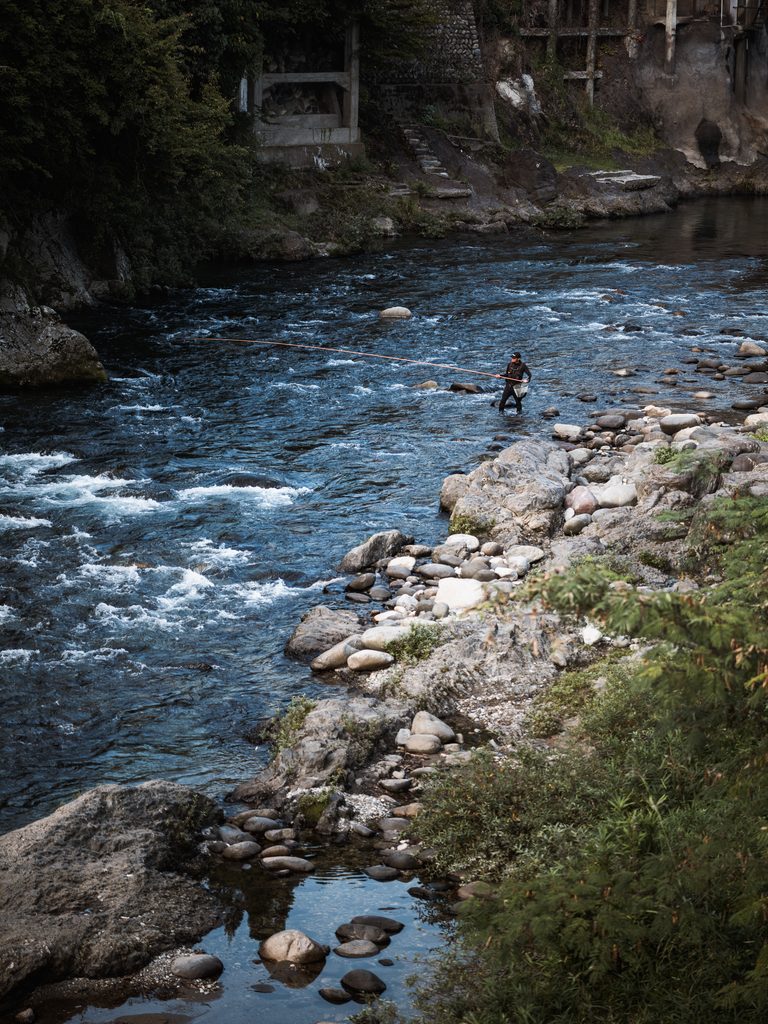
A fisherman stood in the Yoshida River, surrounded by the current. Children in yellow hats walked to school, their long shadows following behind them.
Warm morning light spread across the river and the streets, revealing one person after another.
Earlier, I had heard only the sound of water. Now the sounds of daily life had begun to join it.
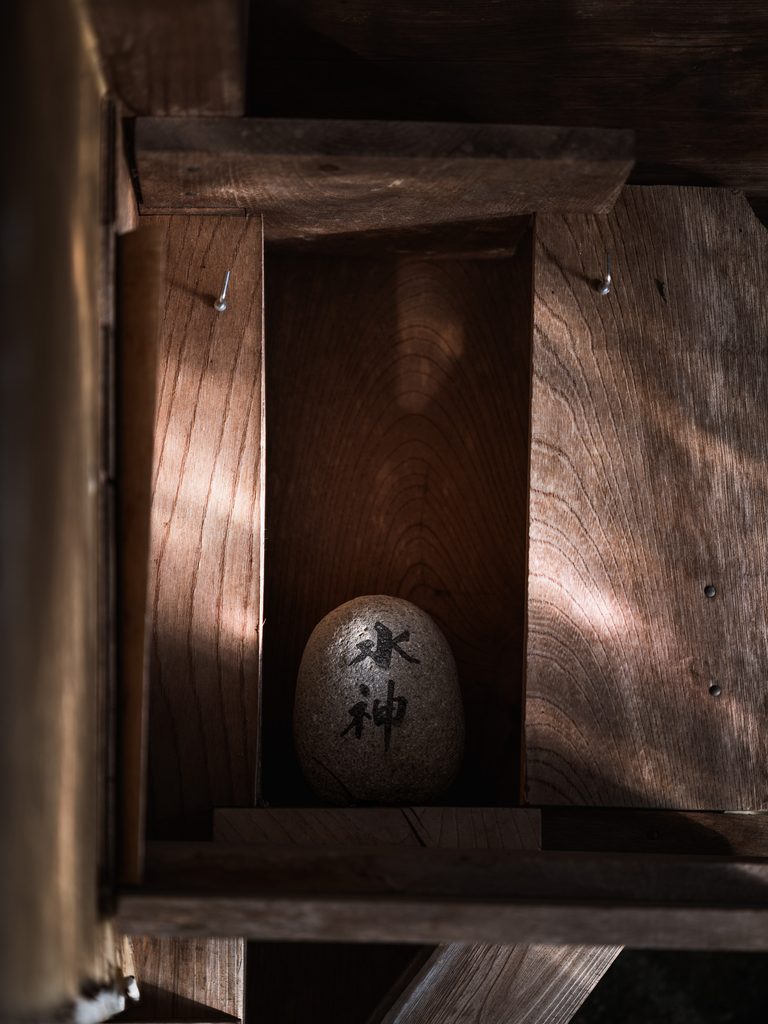
Leaving the centre of town, I stopped at a spring in “Ozaki” and drank from its cold water.
The water rises from the surrounding mountains. For generations, local people have cared for it through shared wells and “mizu fune,” communal water basins used for drinking and washing. A small water deity stood beside the spring.
The water was soft and cold. It seemed to pass through my whole body.
Here, water flows down from the mountains and can be drunk before it ever reaches a tap. Each cold mouthful reminded me what a luxury that truly was.
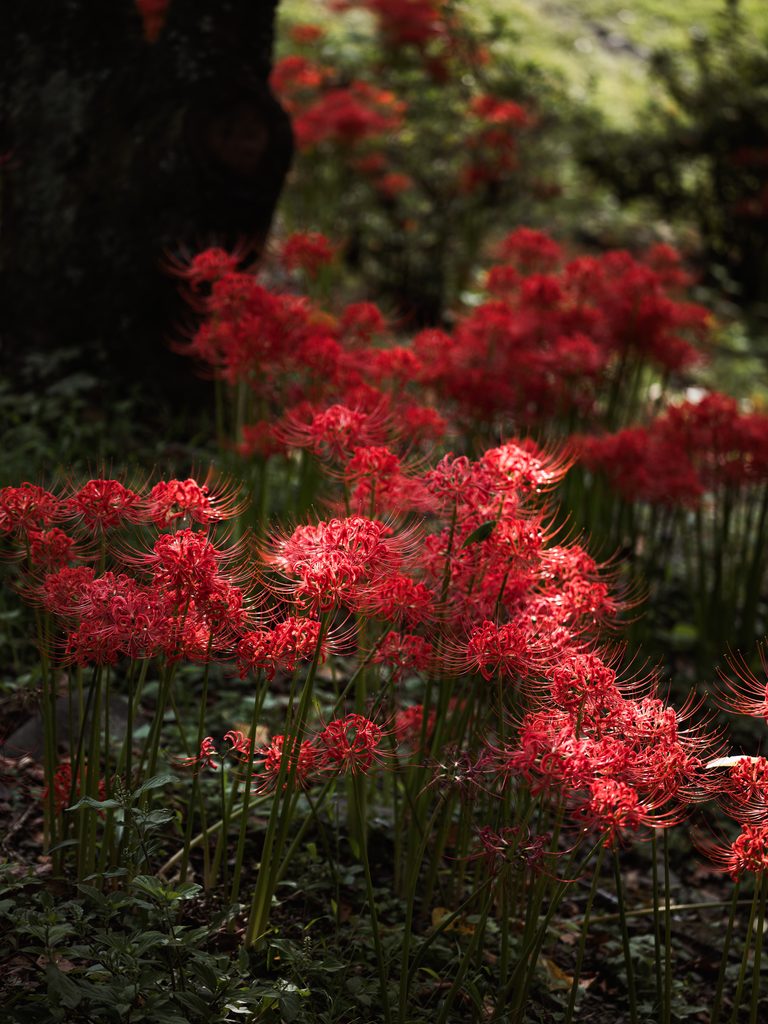
Red spider lilies appeared throughout the town.
I rarely set out to photograph flowers, even during cherry blossom season. But I liked the quiet brightness of these flowers, half hidden among the surrounding plants.
The days were still warm, but their red colour seemed to know that autumn was already on its way.
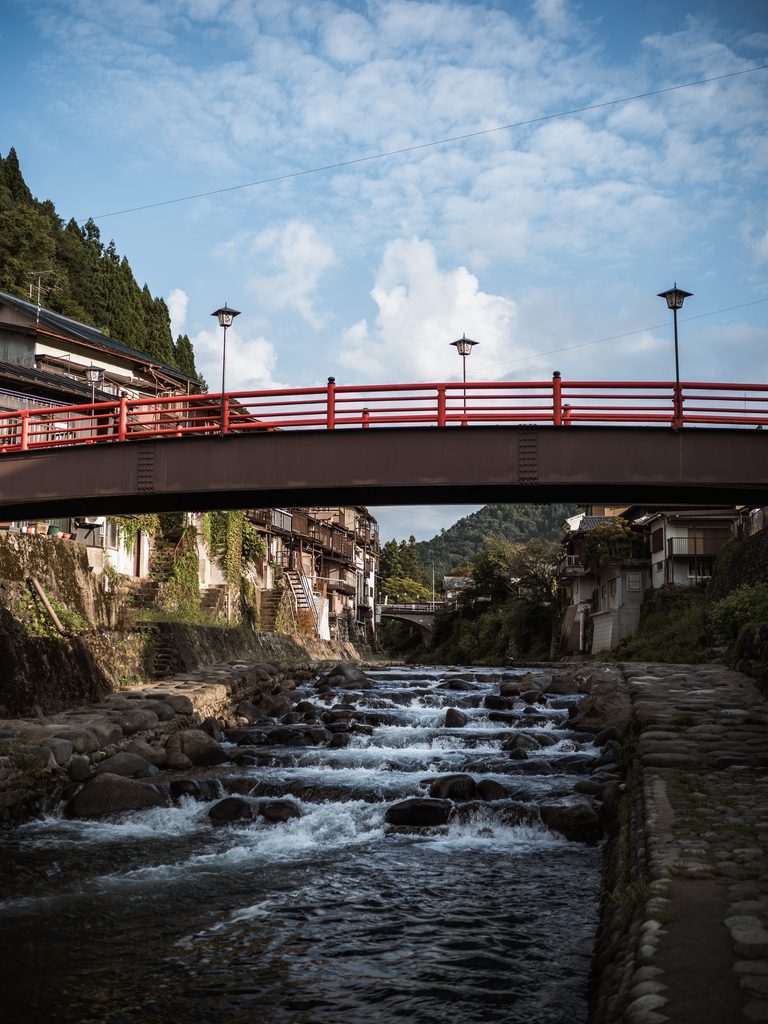
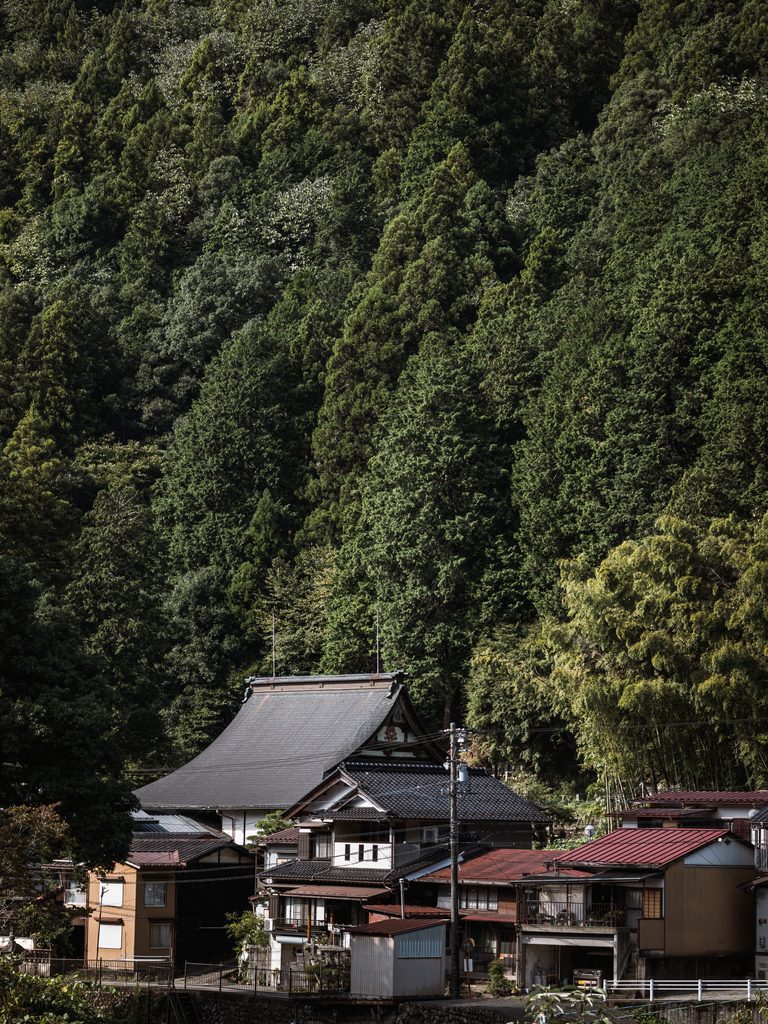
Gujo Hachiman has many temples within its small town centre.
I followed the Kodara River through “Hon Machi” and continued towards “Shokunin Machi.” Fire-prevention buckets hung beneath the eaves. Old houses lined the streets, alongside the people who still lived in them.
A man I met in “Shokunin Machi” recommended that I visit “Dai Jo Ji Temple.”
It was not on the route I had planned. But when walking through an unfamiliar town, a few casual words from someone can decide where you go next.
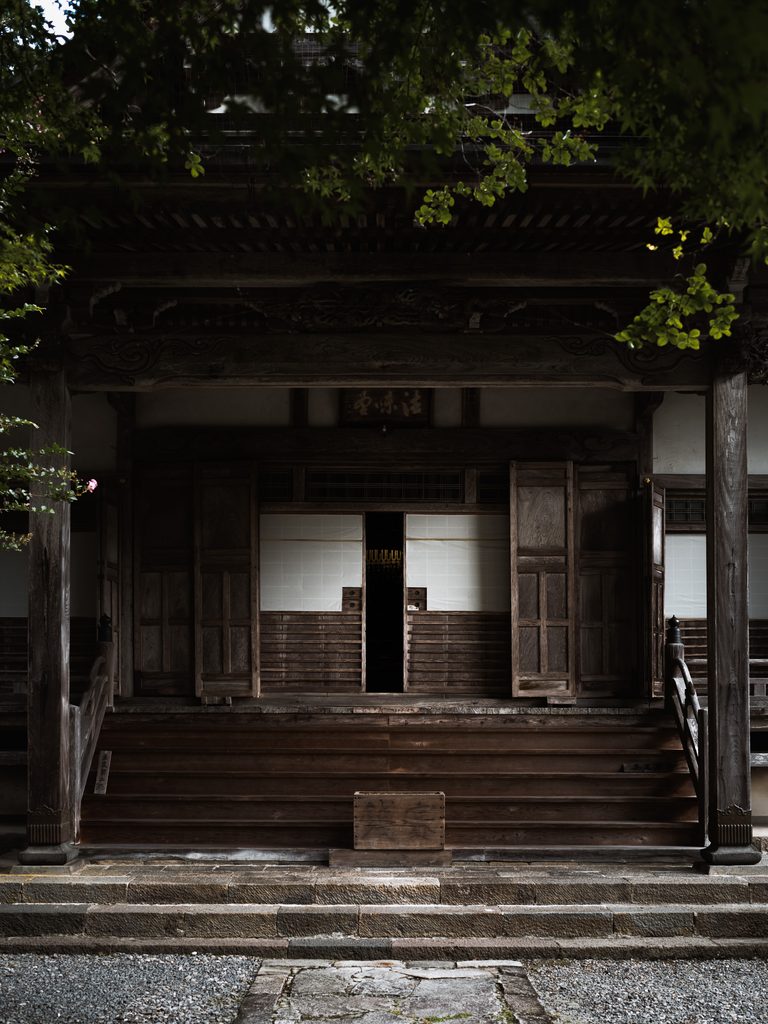
I crossed the Kodara River and headed towards “Dai Jo Ji Temple.”
As soon as I entered the temple grounds, the voices and traffic that had been so close began to fade away.
The temple was established here in 1603, on the former site of an old castle. Beyond its gate, which survived several fires, the main hall stood quietly beneath the trees.
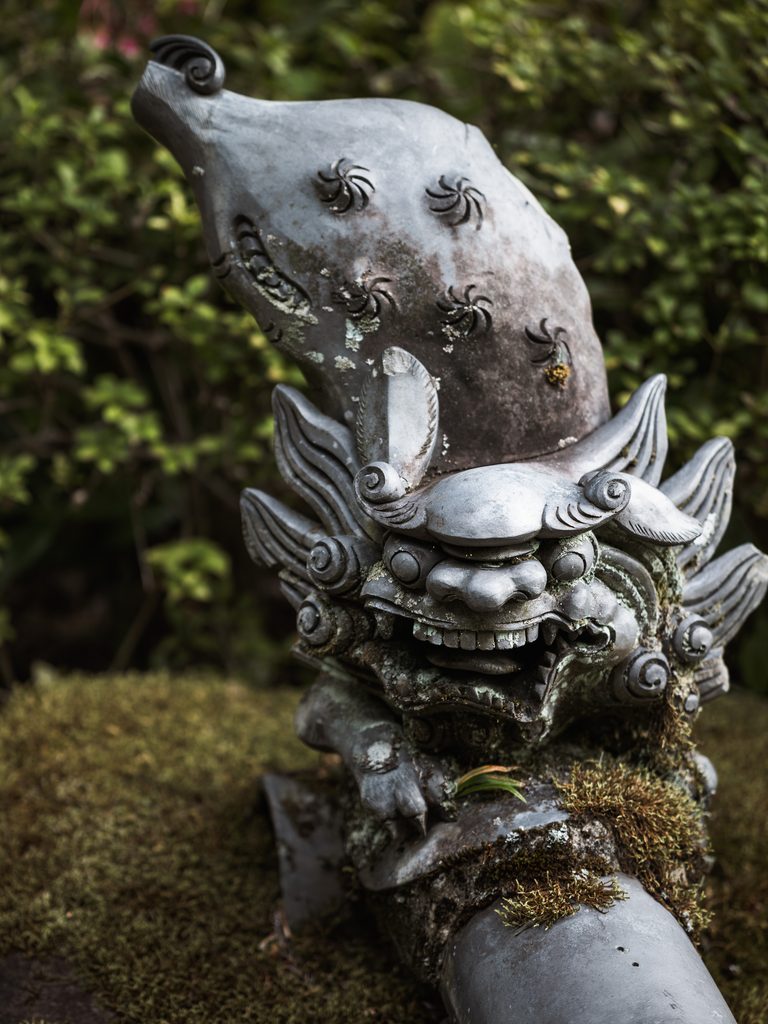
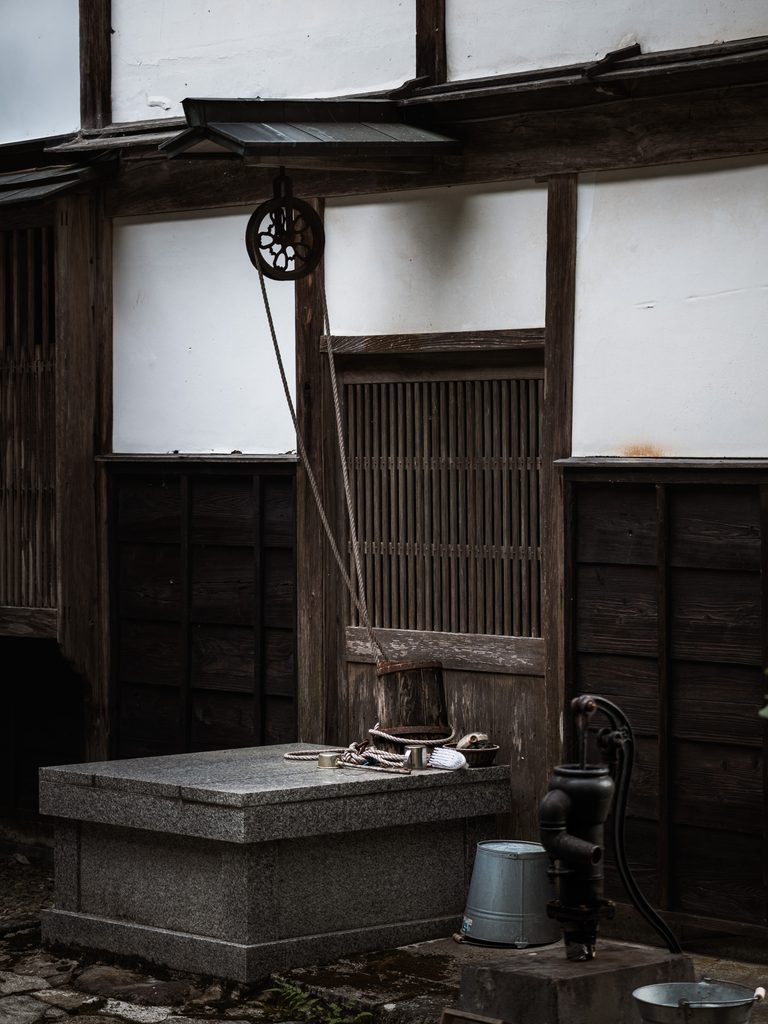
A roof tile covered in moss. White walls and dark wood. Beside the well, old tools remained in place.
If I had been walking only to visit the town’s well-known sights, I might never have come here.
Instead, a few words from someone I met in town had led me to an unplanned place. This is one of the pleasures of asking for directions and listening to people while travelling.
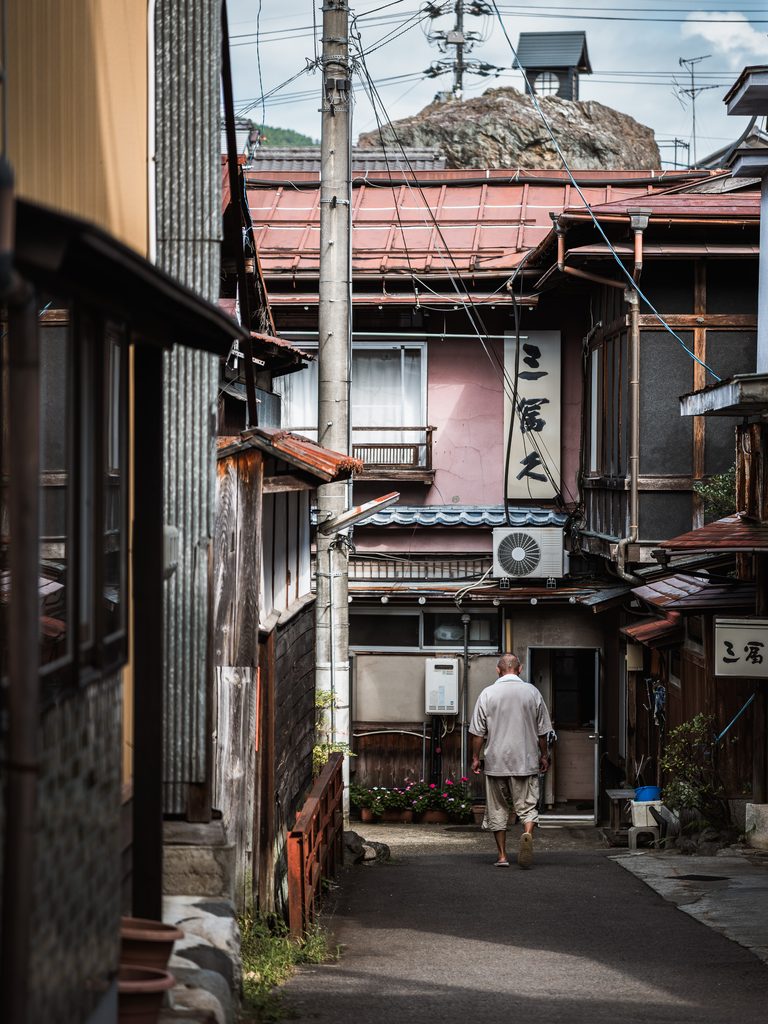
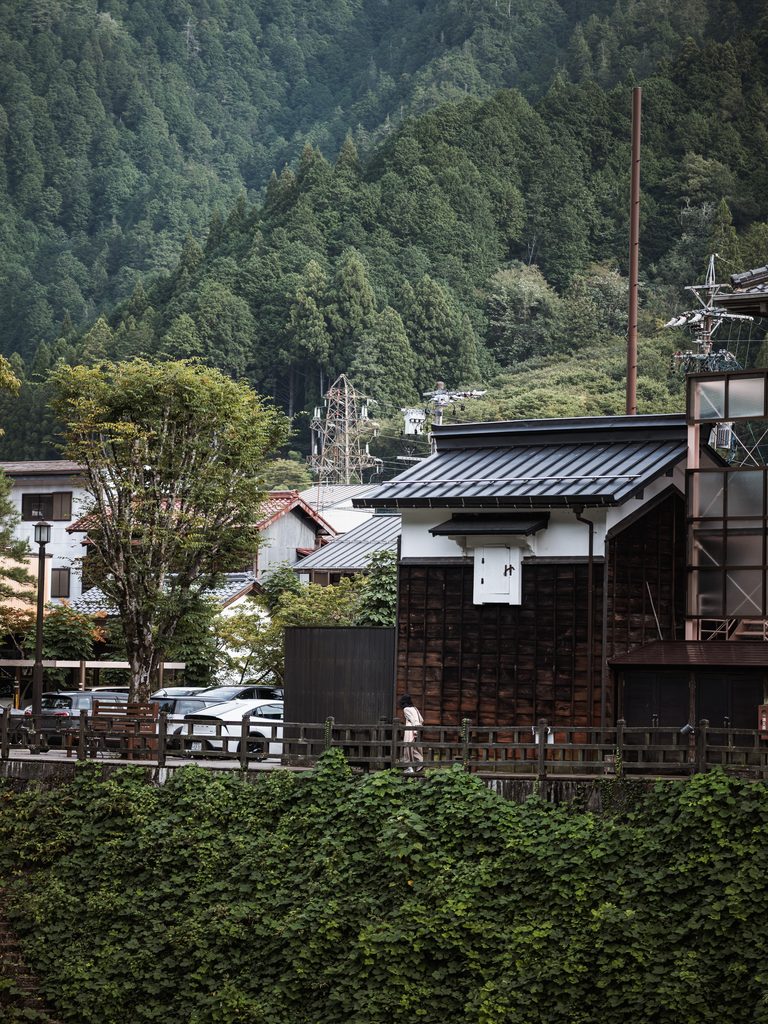
I rested during the hours when the sunlight was strongest.
Before the sun began to set, I went back into town.
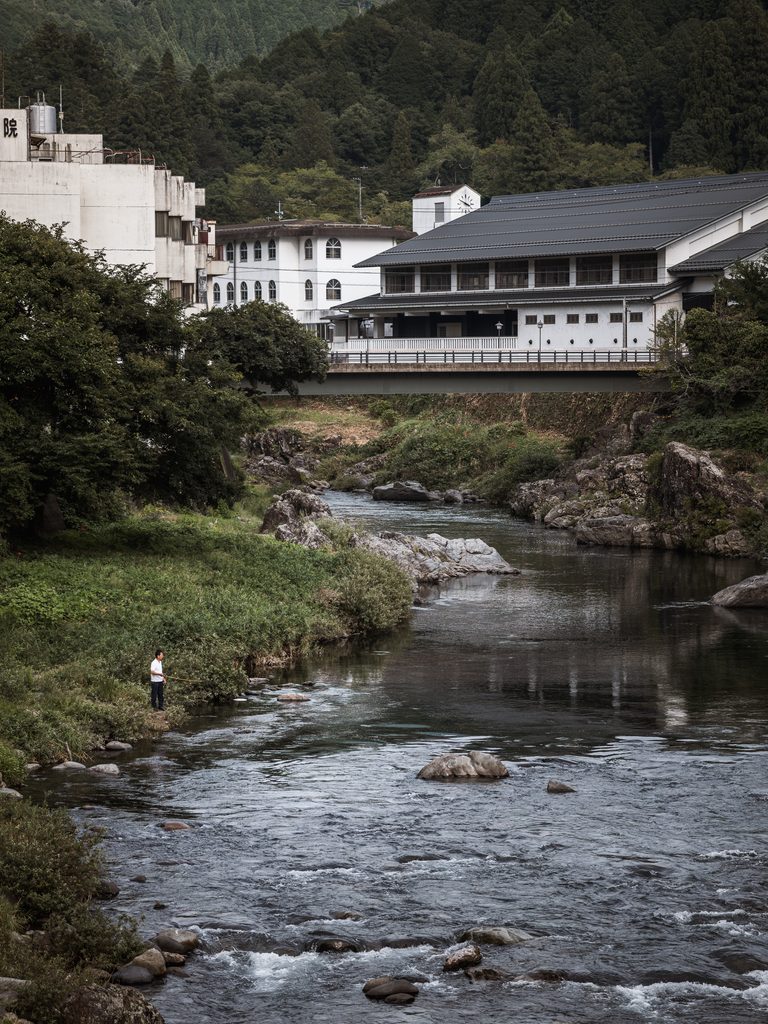
There were still people fishing in the river, but the change in light had altered the feeling of the town.
Walls that had disappeared into shadow that morning were now bright. Sunlight reached deep into the streets. Roads that had been almost empty were filling with people.
It was the same town on the same day, yet things I had not noticed before kept appearing.
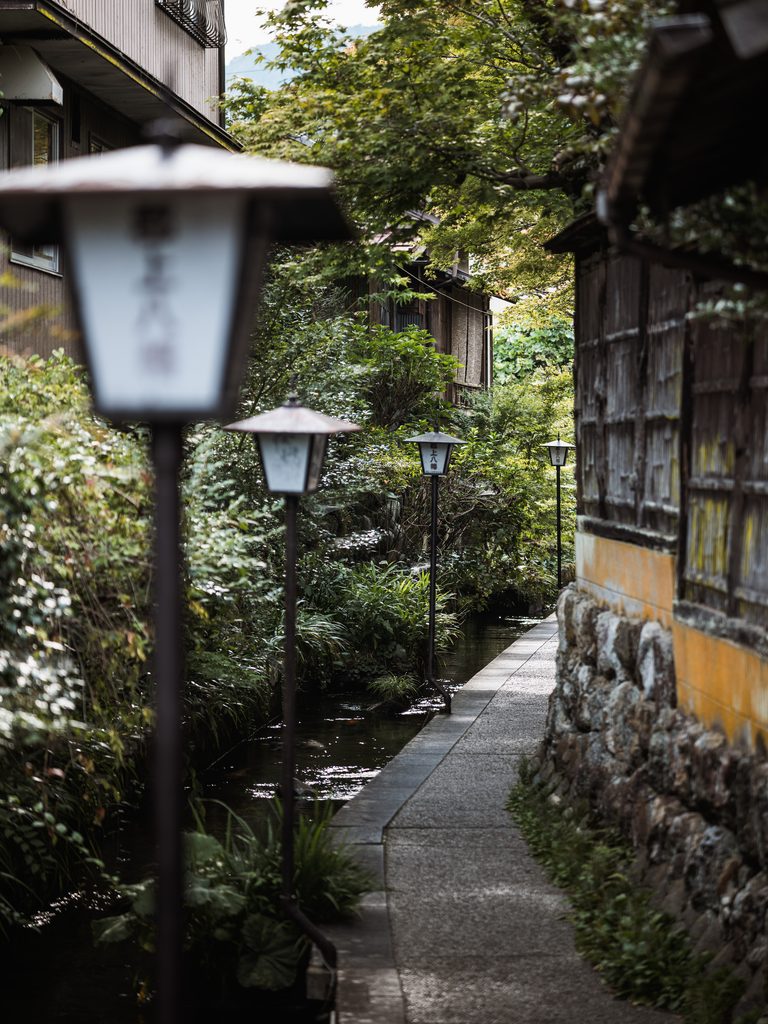
I wondered how “Igawa Ko Michi,” wrapped in blue morning air when I first saw it, would look now.
Soft light had reached the waterway that had been hidden in darkness that morning. The carp were still there, giving themselves to the current and moving their large bodies with the same calm grace.
The waterway, the houses, and the path continued as before. Nothing had changed, yet the light gave them a different face.
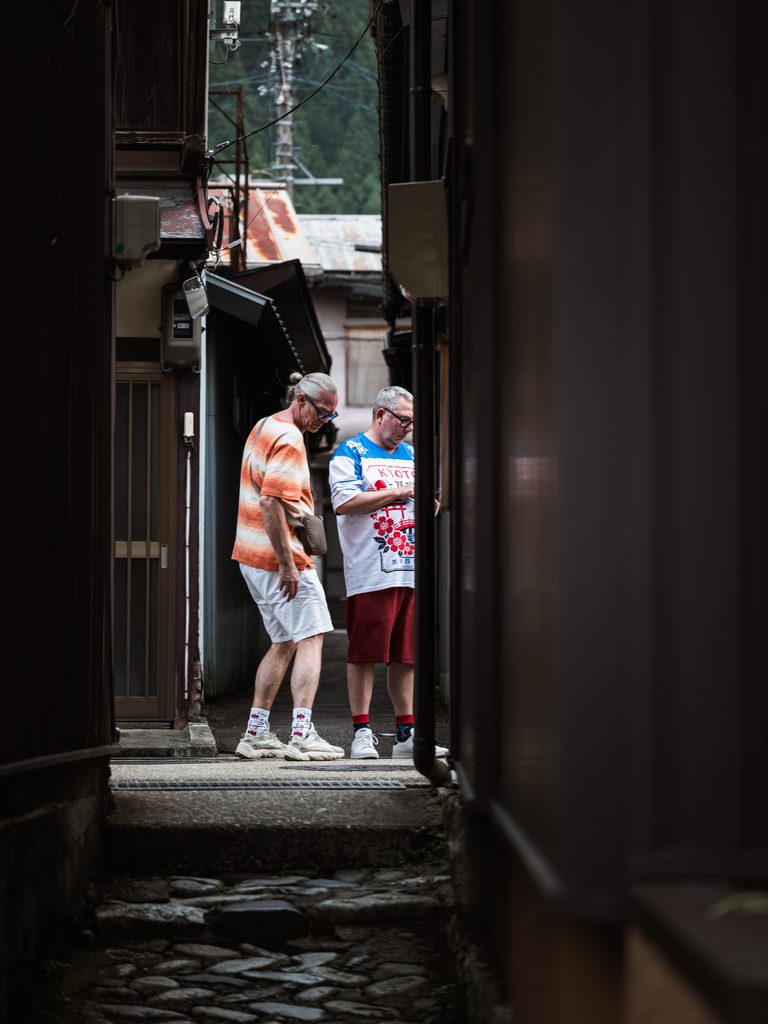
The narrow streets of Gujo Hachiman twist and cross one another, and I sometimes saw travellers stop, unsure which way to go.
We were all visitors walking through the same town. I could not simply leave them there, so I spoke to them.
I gave directions as best I could, and then we continued in different directions.
It was only a short exchange, but words shared in an unfamiliar place have a strange way of staying in the memory.
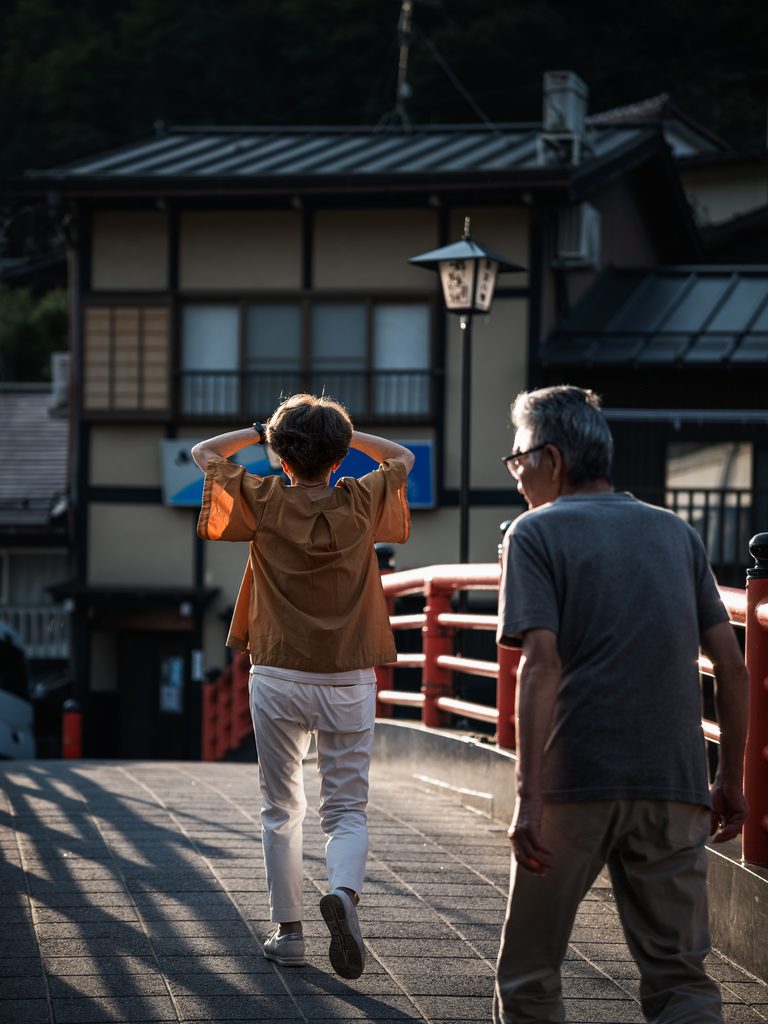
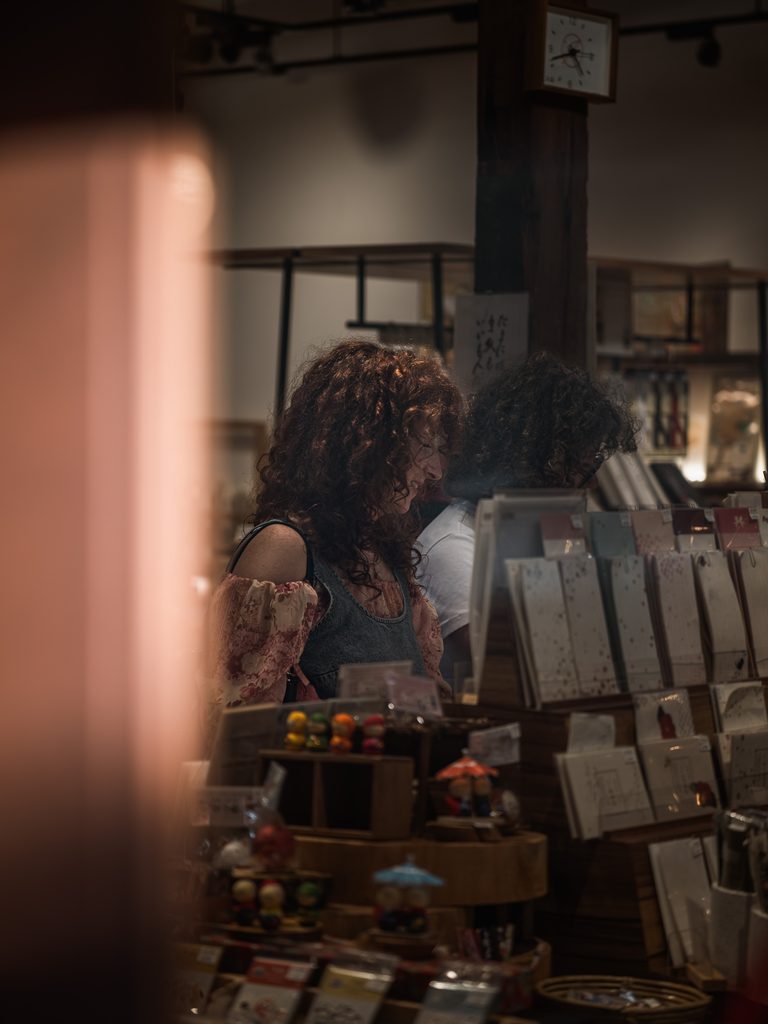
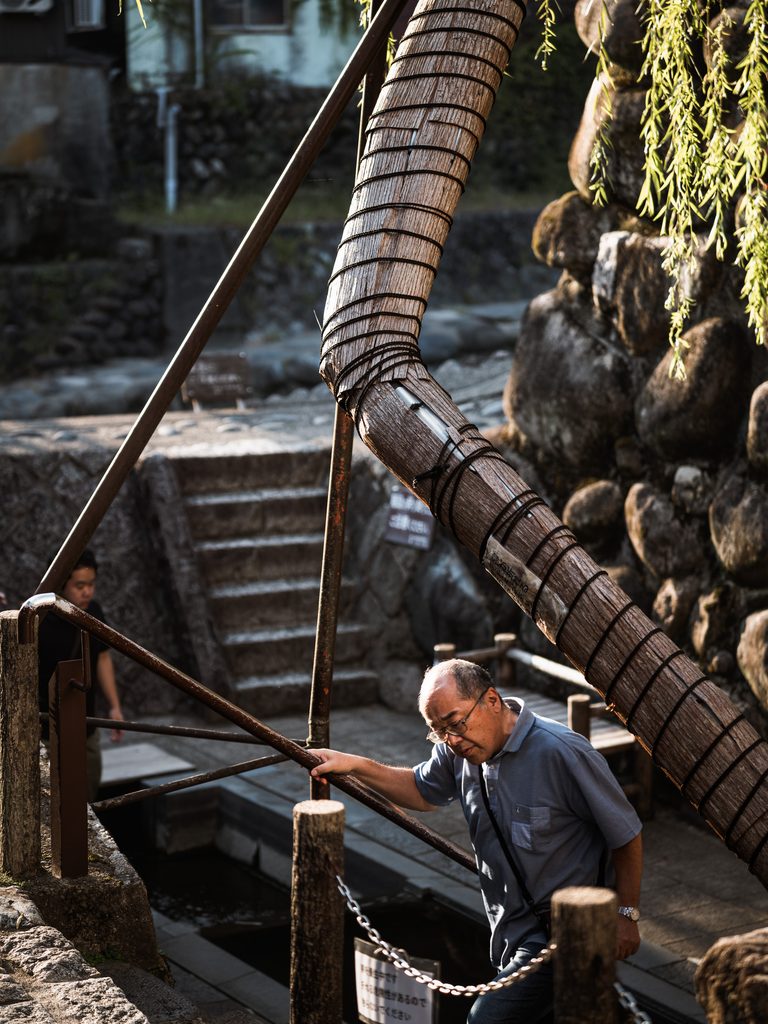
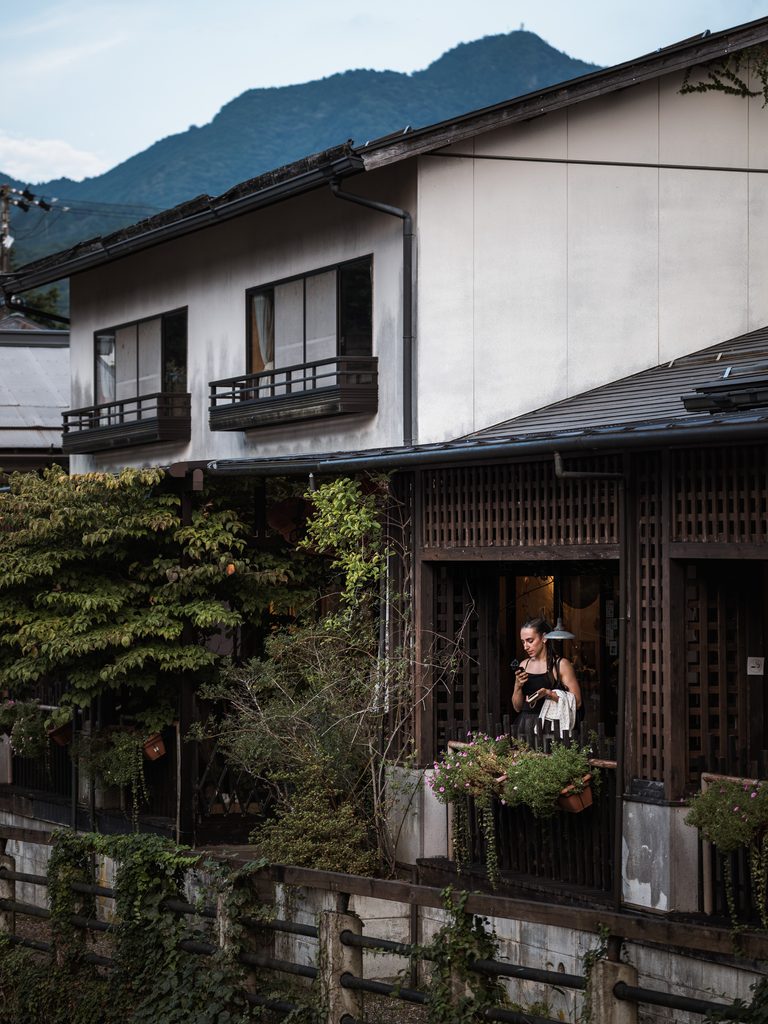
By late afternoon, the town was far busier than it had been that morning.
People crossed the bridges. Shops that had been closed were now open. Others walked through the evening light, narrowing their eyes against the sun.
They moved between strong light and deep shadow.
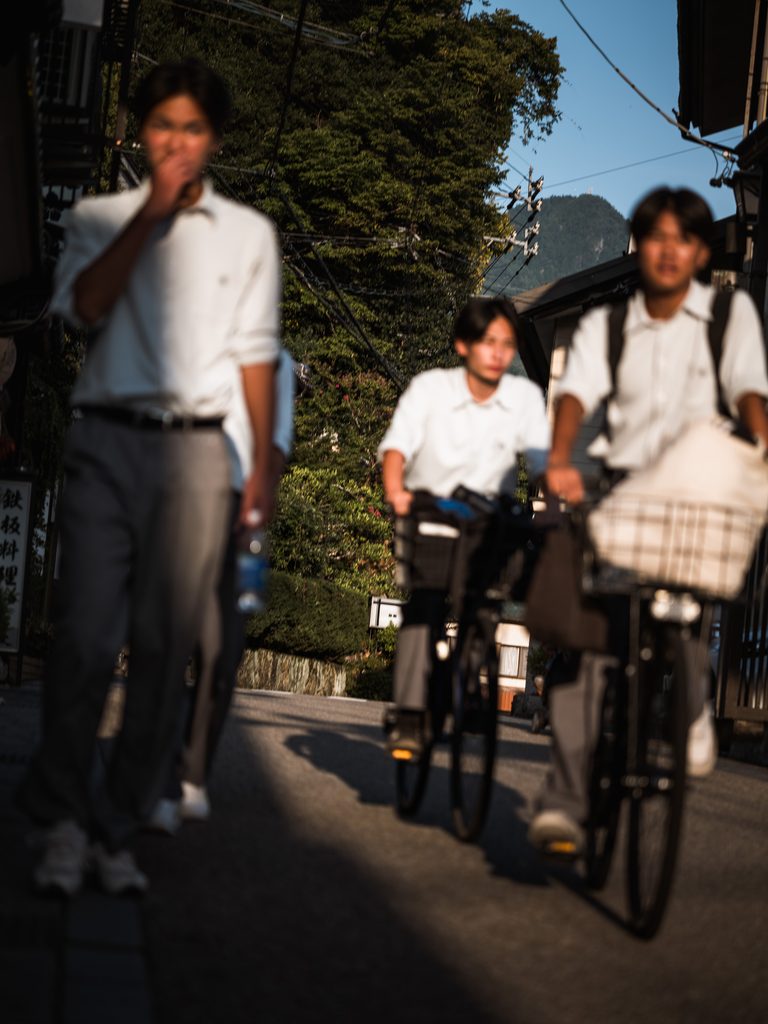
Before long, a group of students passed on their bicycles.
Their white shirts caught the low sunlight as they hurried home beside their long shadows.
I wondered whether the children in yellow hats I had seen that morning were already home as well.
A photograph catches only a brief moment, but while travelling, I often find myself imagining what came before and what will come after.
The life of the town connected the people I had seen in the morning with the streets I now saw in the evening. In my mind, the day finally came together.
I left the busy streets and walked down towards the river.
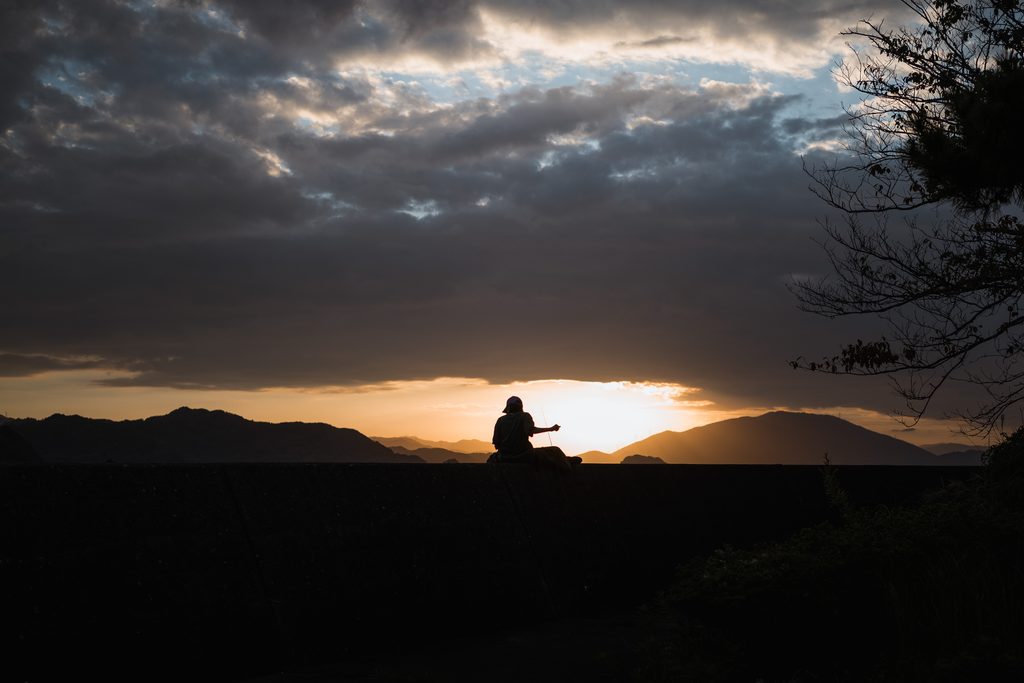
The sun was sinking behind the mountains, covering the town and river in orange light.
The flowing water and the plants along the riverbank still held their deep blues and greens. Warm sunlight met the cool colour of the water, and the Yoshida River showed me a face I had not seen that morning.
Someone was still fishing in the river.
A long rod stretched across the current. Around the small figure, the water broke into white foam.
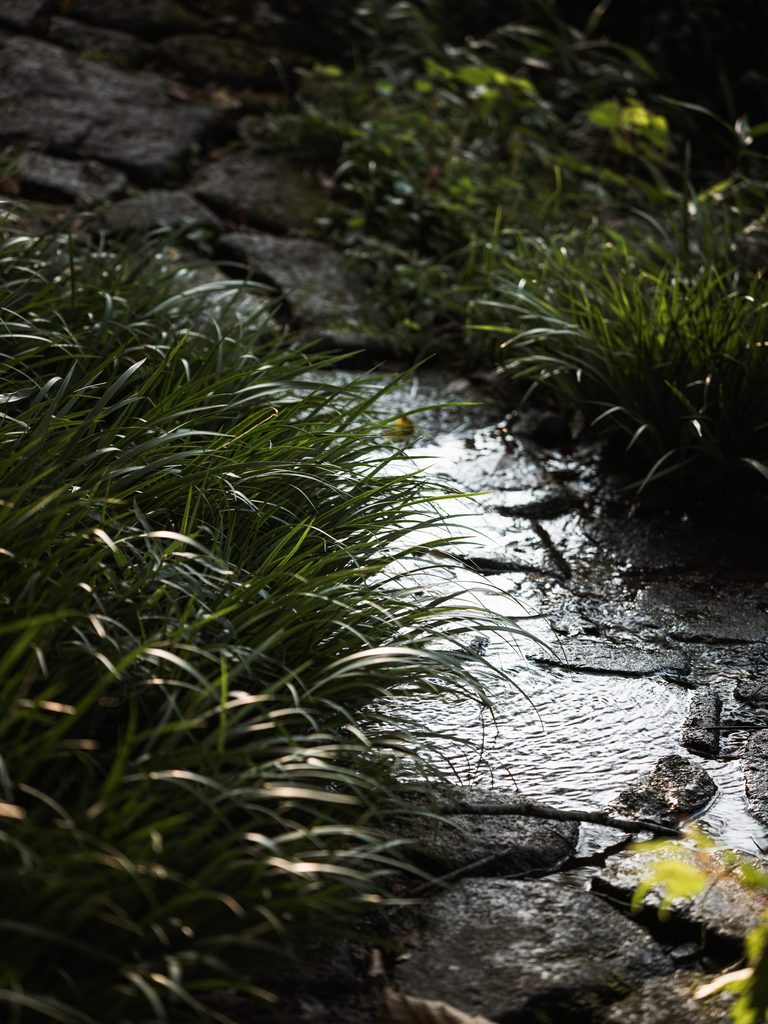
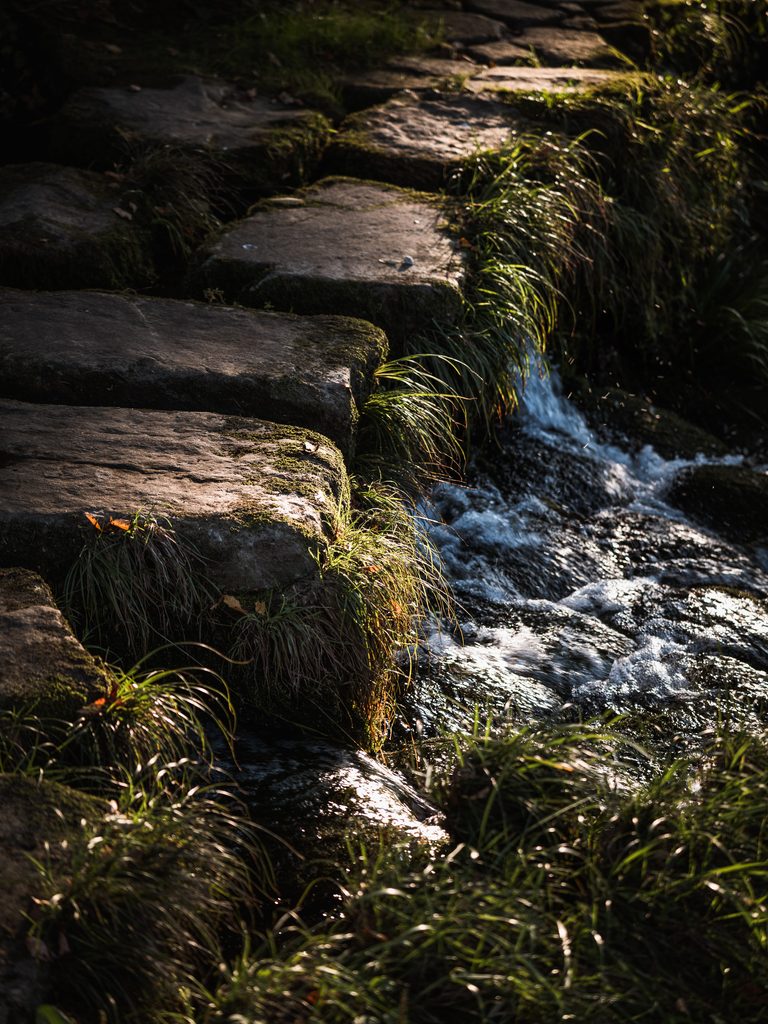
At my feet, a narrow stream found its way between the stones.
Only the leaves touched by sunlight shone brightly. As the wind passed through, the shadows of the plants moved across the surface of the water.
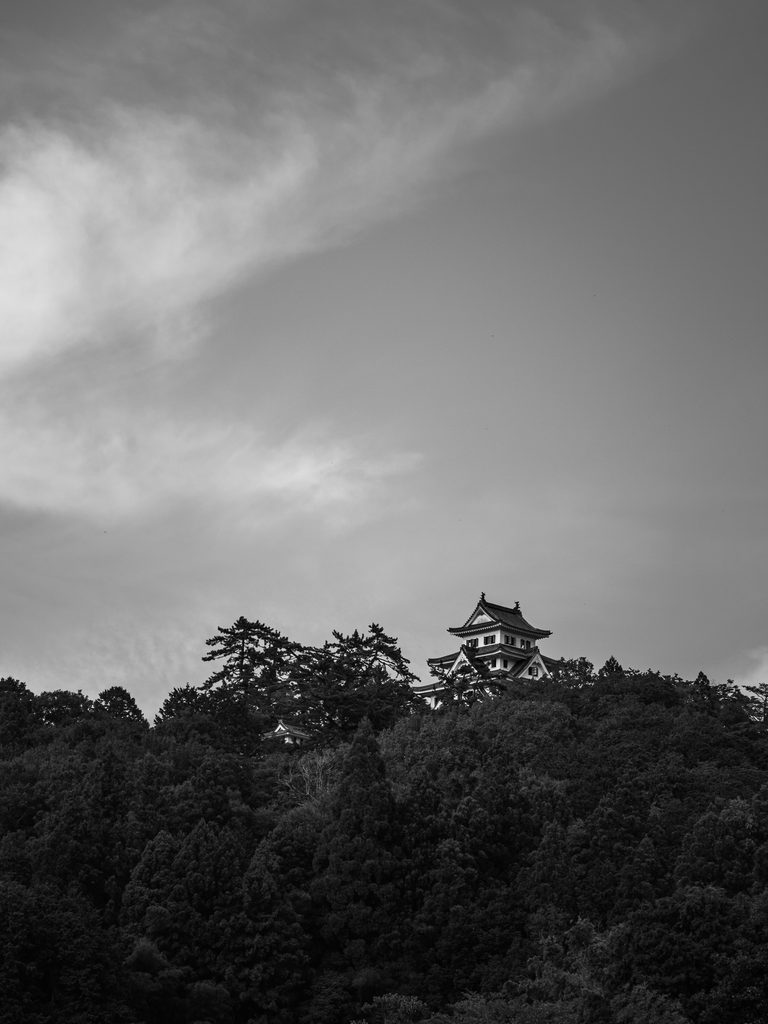
Beyond the mountains, I looked up and saw Gujo Hachiman Castle on Mount Hachiman.
The white castle keep appeared between the trees while clouds passed slowly overhead.
In autumn, the white keep is surrounded by brilliant red maple leaves.
The sight is known as “Tenshu Enjo”—the castle keep in flames.
Someday, I would like to see it for myself.
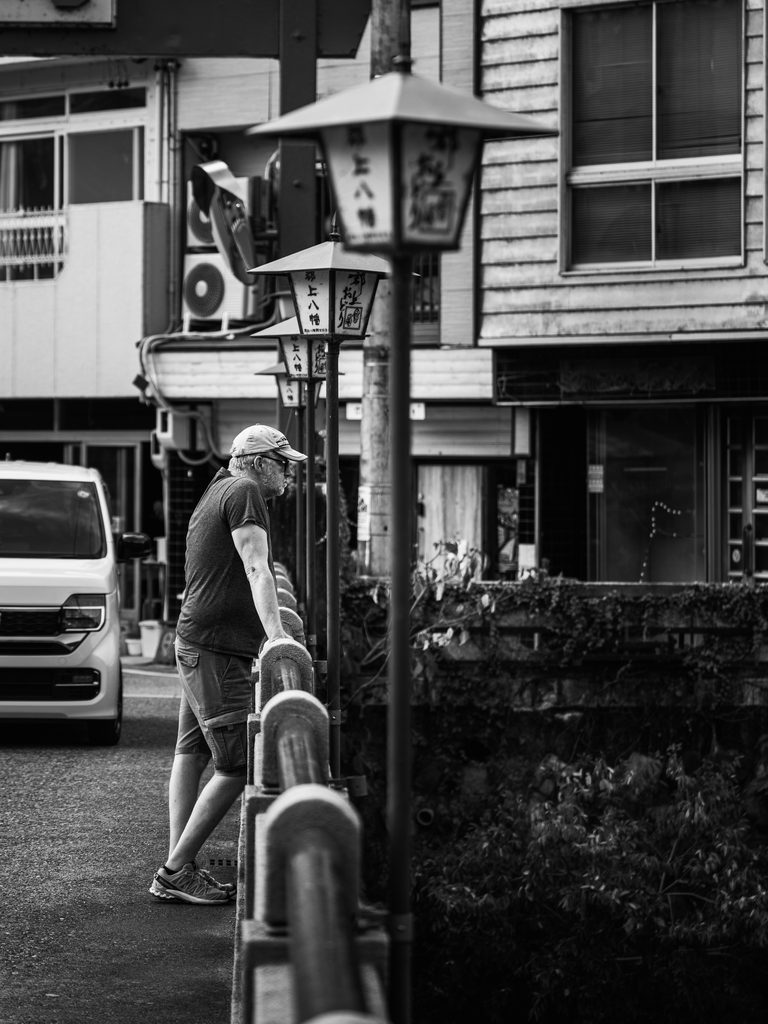
I had listened to water throughout the entire day.
The Yoshida River in the darkness.
The waterways between the houses.
“Sogi Sui” and the spring in “Ozaki.”
And the river reflecting the evening light.
People wake, go to school, work, return home, and eventually sleep.
In this town, all of it happens to the sound of water.
Gujo Hachiman was a truly wonderful place, where time seemed to flow gently.